The Problem
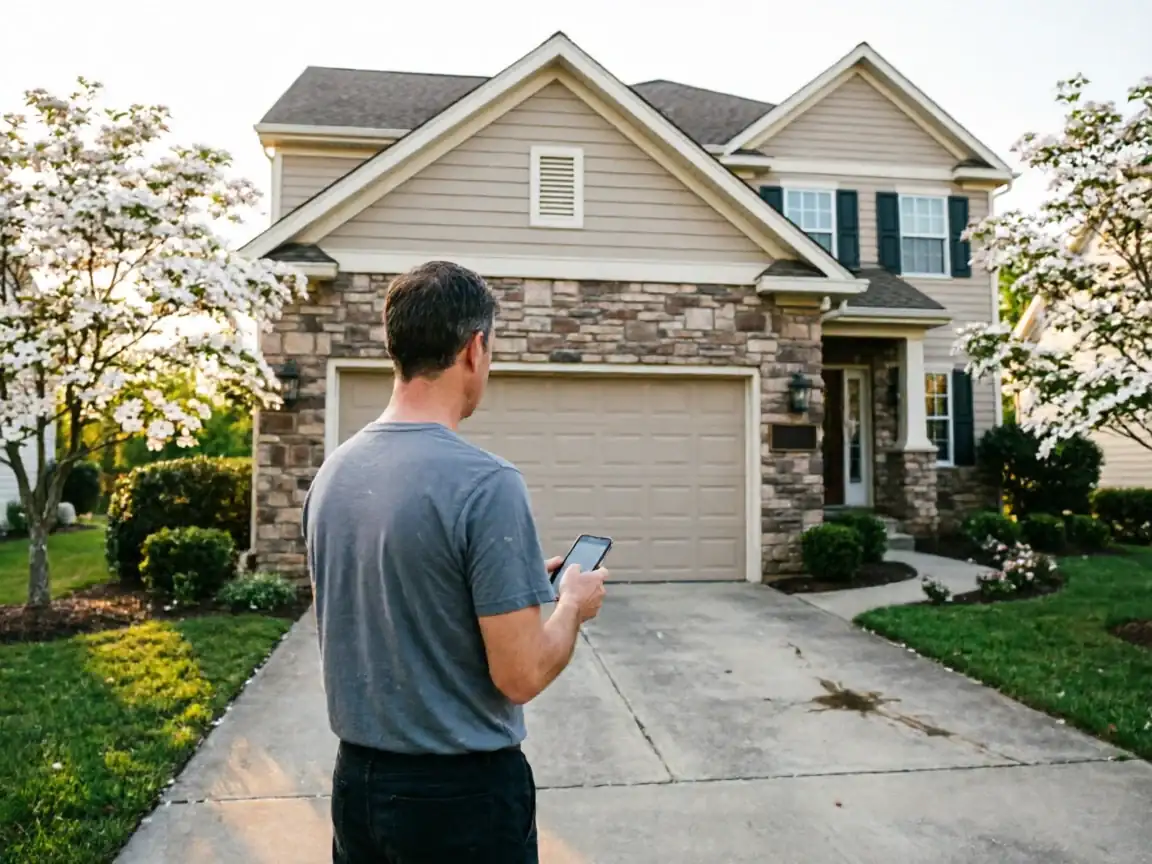
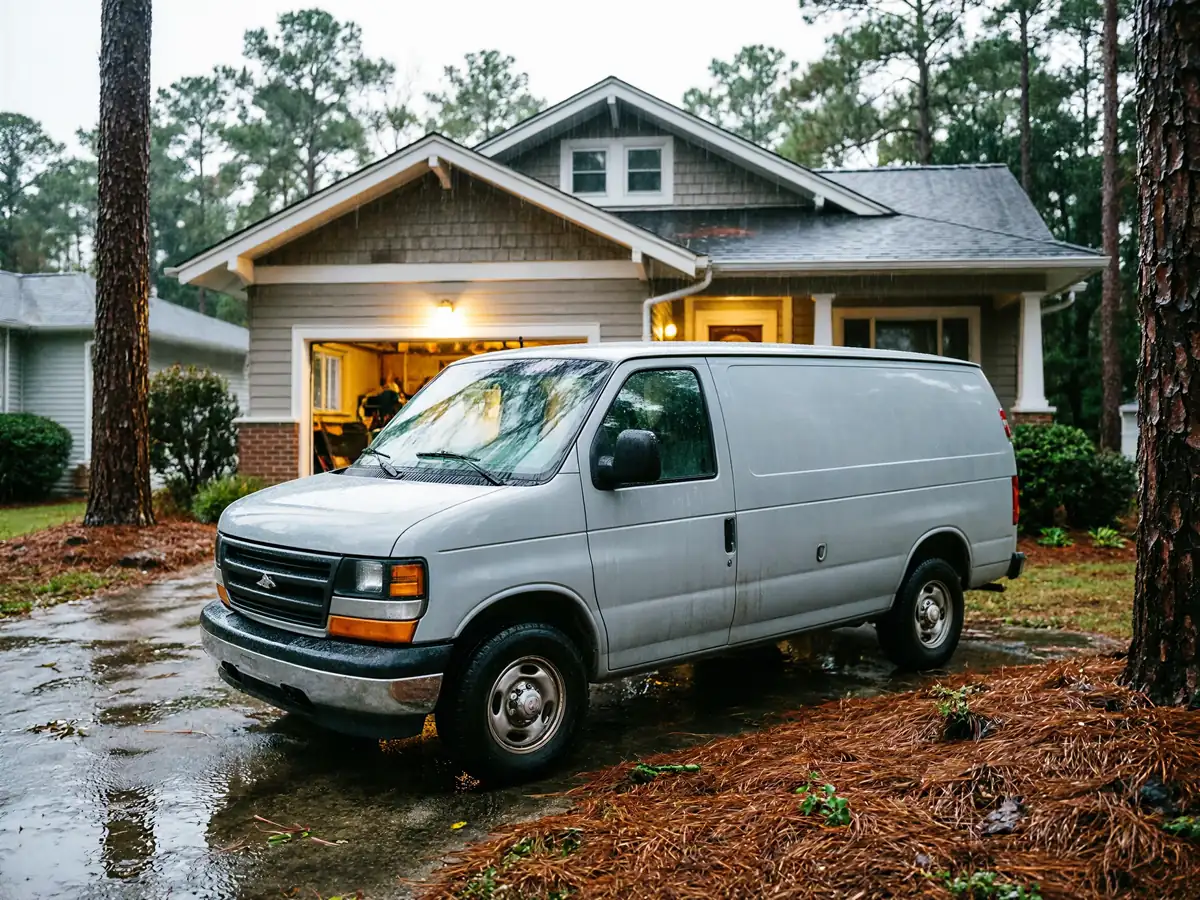
Most of the garage doors we open up in Fairfax were hung on houses built in the 1960s and 70s
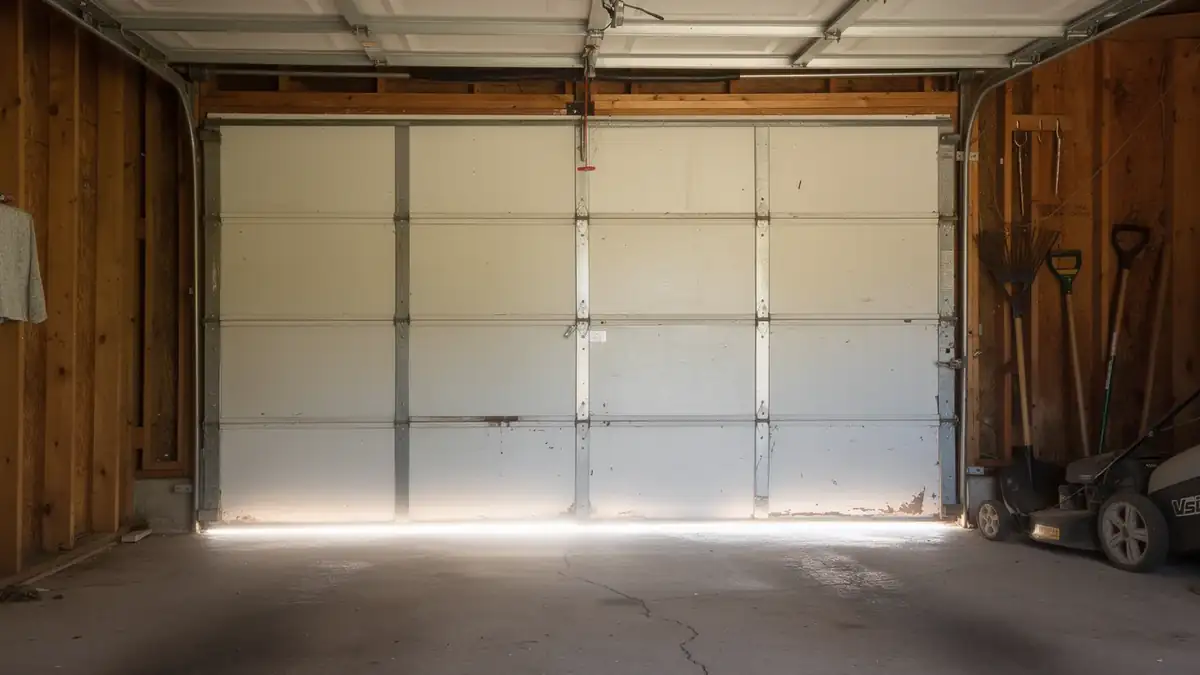
With the broader stock here running from 1940 up through 2015 and a median build year around 1978. That matters because insulation requirements for garage doors didn't exist when a huge share of these houses went up. The door you've got is a single layer of steel or aluminum with nothing behind it - no foam core, no thermal break, no weatherstrip rated for the swings we get.
On a attached garage, that panel is one wall of your house
In a cold winter the metal gets as cold as the outside air and radiates that cold straight into the room next to it, which in a lot of Fairfax floor plans is a laundry room, a mudroom, or a bedroom over the garage. Homeowners notice the symptom - a cold floor, a spike in the heating bill - long before they think to blame the garage door, because nobody told them the door was ever supposed to do thermal work in the first place.
This isn't a defect
It's just what building a door to 1960s and 70s standards looked like. The problem shows up now because the rest of the house around it has been updated - new windows, blown-in attic insulation, a newer furnace - and the garage door is the one component nobody touched.
When to Get Help
Call before the door fails outright, not after. In a severe cold climate like ours, a steel panel with no insulation contracts and expands hard every time the temperature swings, and on an older door that stress finds the weakest hinge or the weakest weld first. If you're hearing a new pop or groan when the door closes on a cold morning, that's the metal telling you something, not just settling noise.
Get someone out if the bottom seal has gone stiff and cracked rather than flexing, if you can see daylight at the corners when the door's shut, or if the door feels noticeably heavier to lift by hand in January than it did in July - that's the steel itself losing give in the cold, and it's putting more load on a spring system that was never sized for an insulated retrofit panel anyway.
We'll also say plainly: if the door is original to a house built in the 1960s or 70s, a service call to patch weatherstripping is a stopgap, not a fix. At some point the honest answer is replacement, and we'll tell you that instead of running another seal job on a door that's earned its retirement.
How Local Conditions Play In
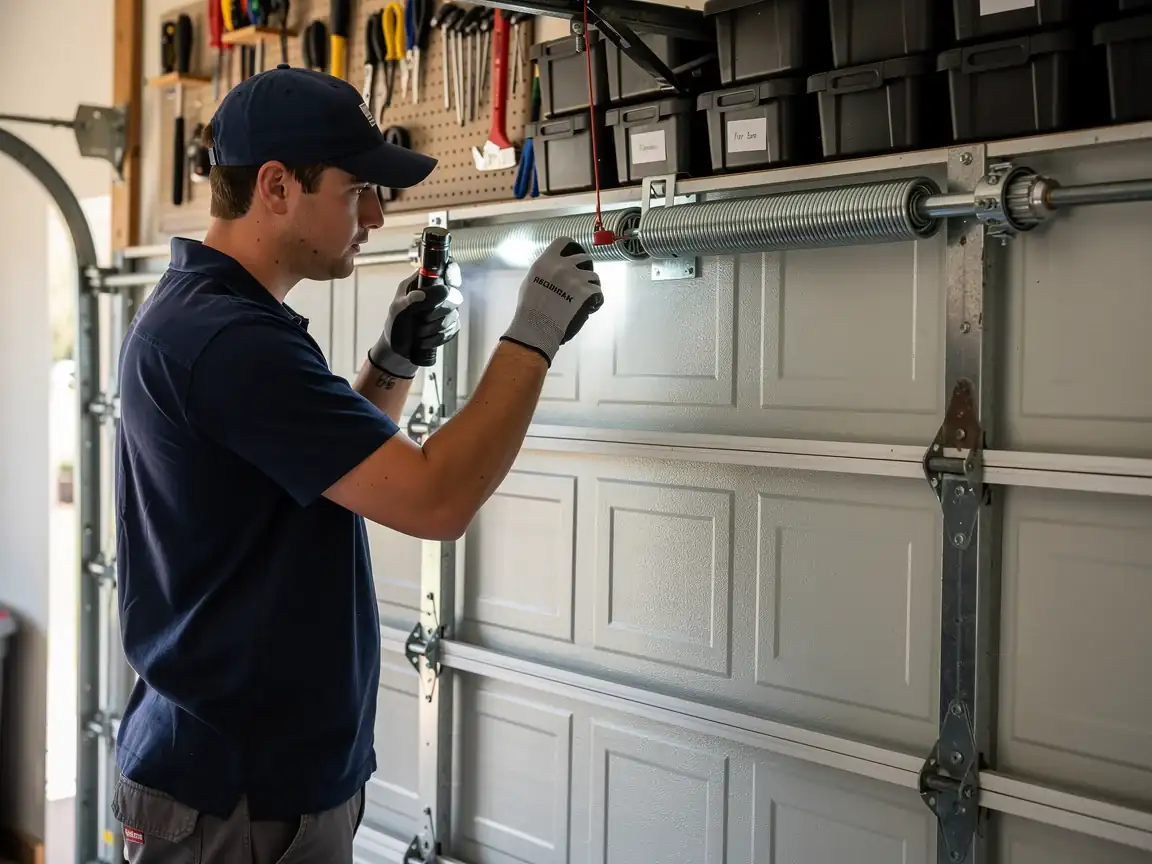
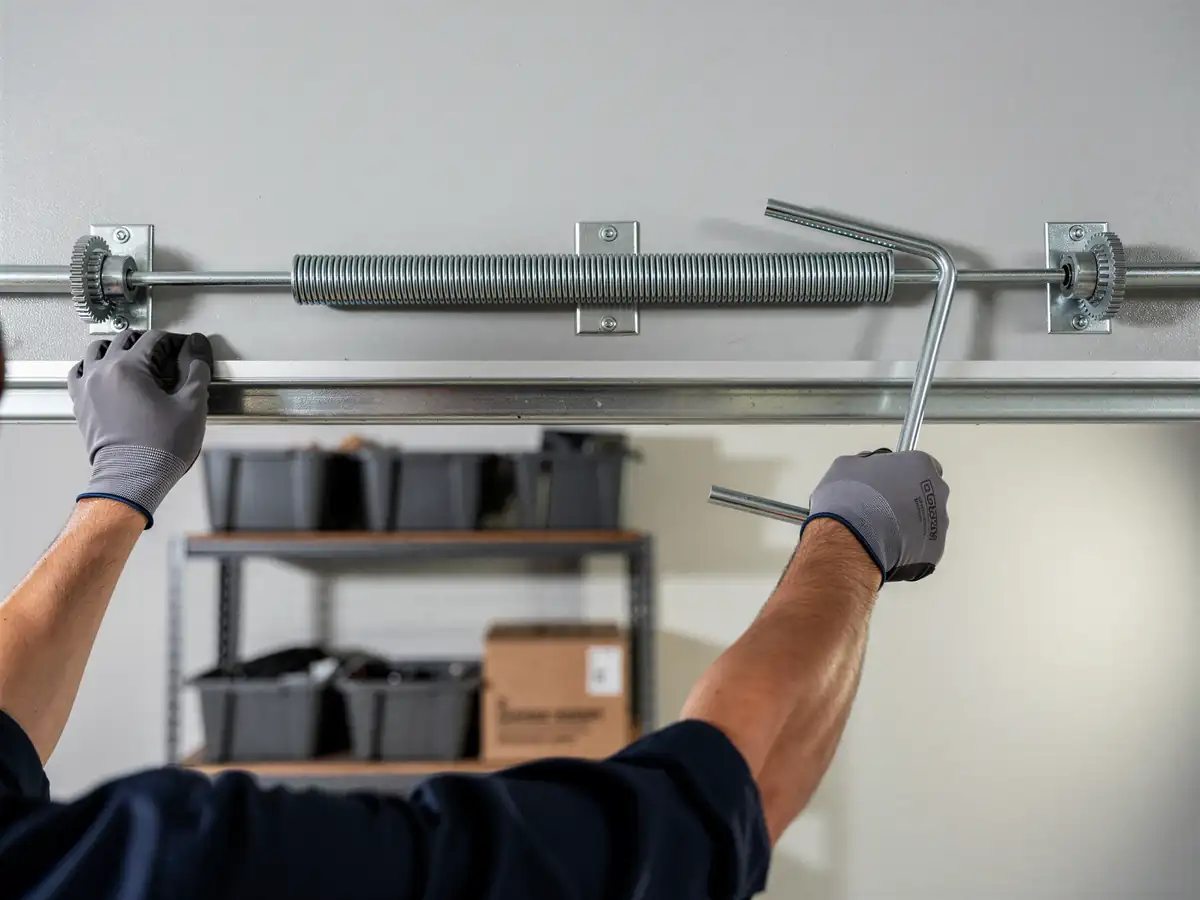
Fairfax sits in a cold-climate band with real winter severity, and that's the whole reason an uninsulated 1960s or 70s door is a bigger deal here than it would be somewhere mild. Cold doesn't just make the garage uncomfortable - it changes how the hardware behaves. Torsion springs lose a measurable amount of lifting power as the steel cools, nylon rollers get brittle and start cracking at the hub, and lubricant that was fine in August turns thick enough to slow the opener's travel in January.
On an uninsulated door, the garage itself tracks outdoor temperature almost exactly, since there's nothing stopping the cold. That means every one of those cold-weather hardware problems shows up faster and worse here than it would on an insulated door, because the components inside that garage are living at outdoor temperature most of the winter, not a buffered in-between.
This is also why we see so many spring failures cluster in the cold months across the neighborhoods around here - from the older blocks near Mantua and North Springfield to the mixed-vintage streets toward Lincolnia and Rose Hill. Same housing era, same climate load, same failure pattern.
What to Look At First
Start with the door itself, not the opener
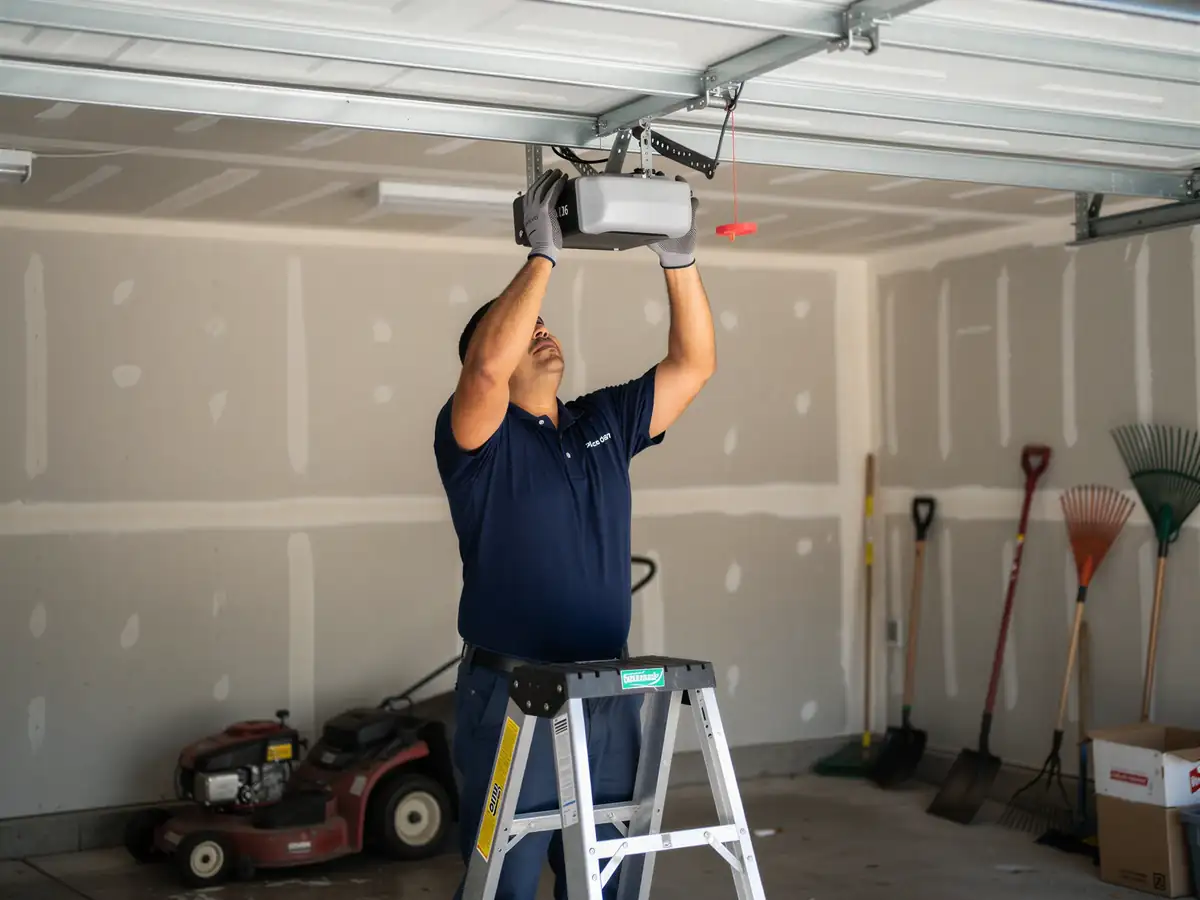
Most service calls we get start as 'the opener's broken' and end as a spring or a dead-cold hardware issue, because the opener motor just stalls out trying to lift a door that's gotten heavier and stiffer with age and cold.
Look at the panel material
If it's a thin single layer of steel with no visible core when you knock on it, you're looking at original or near-original construction from that 1960s-70s era of housing stock. That tells you the springs were almost certainly sized for that lighter original door, and any past repair that swapped in a heavier replacement panel without resizing the springs is a mismatch waiting to show up as a hard lift or a snapped cable.
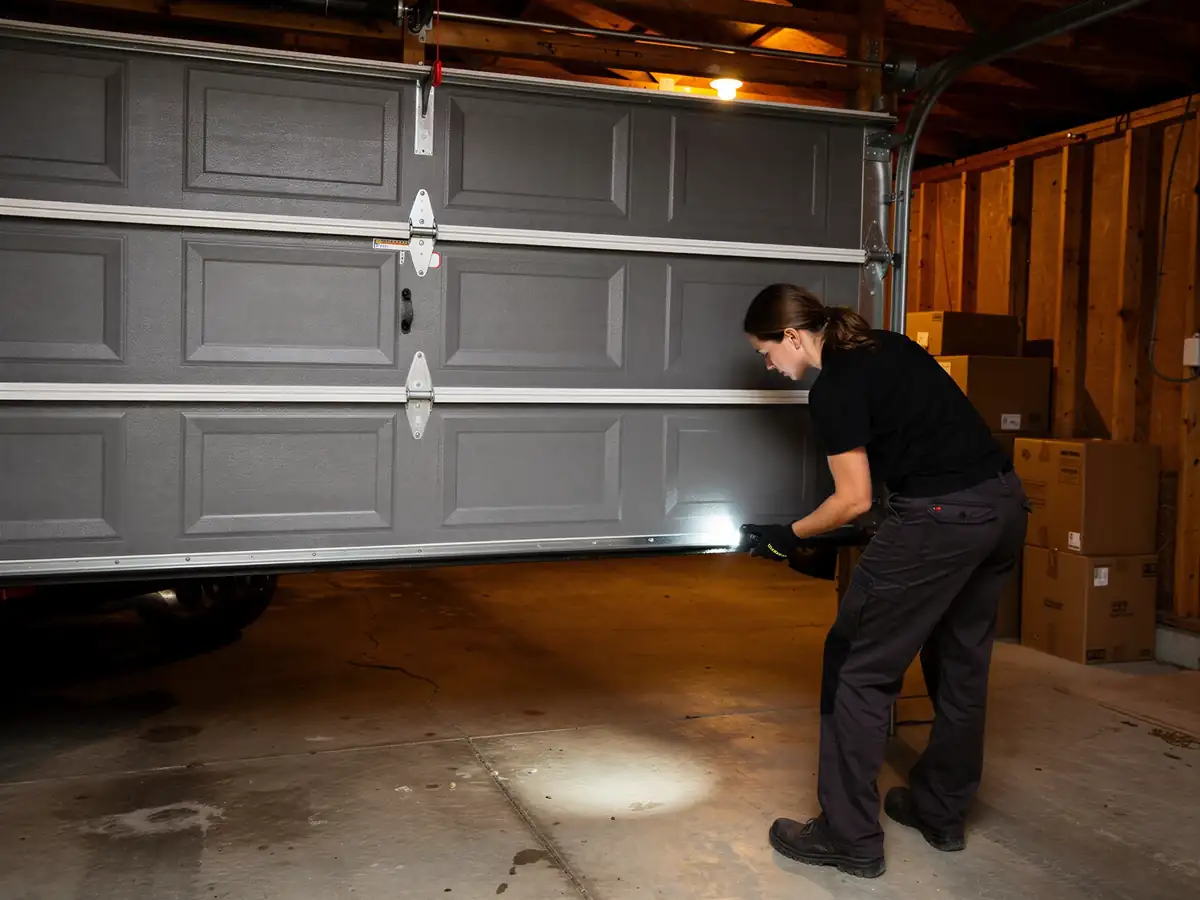
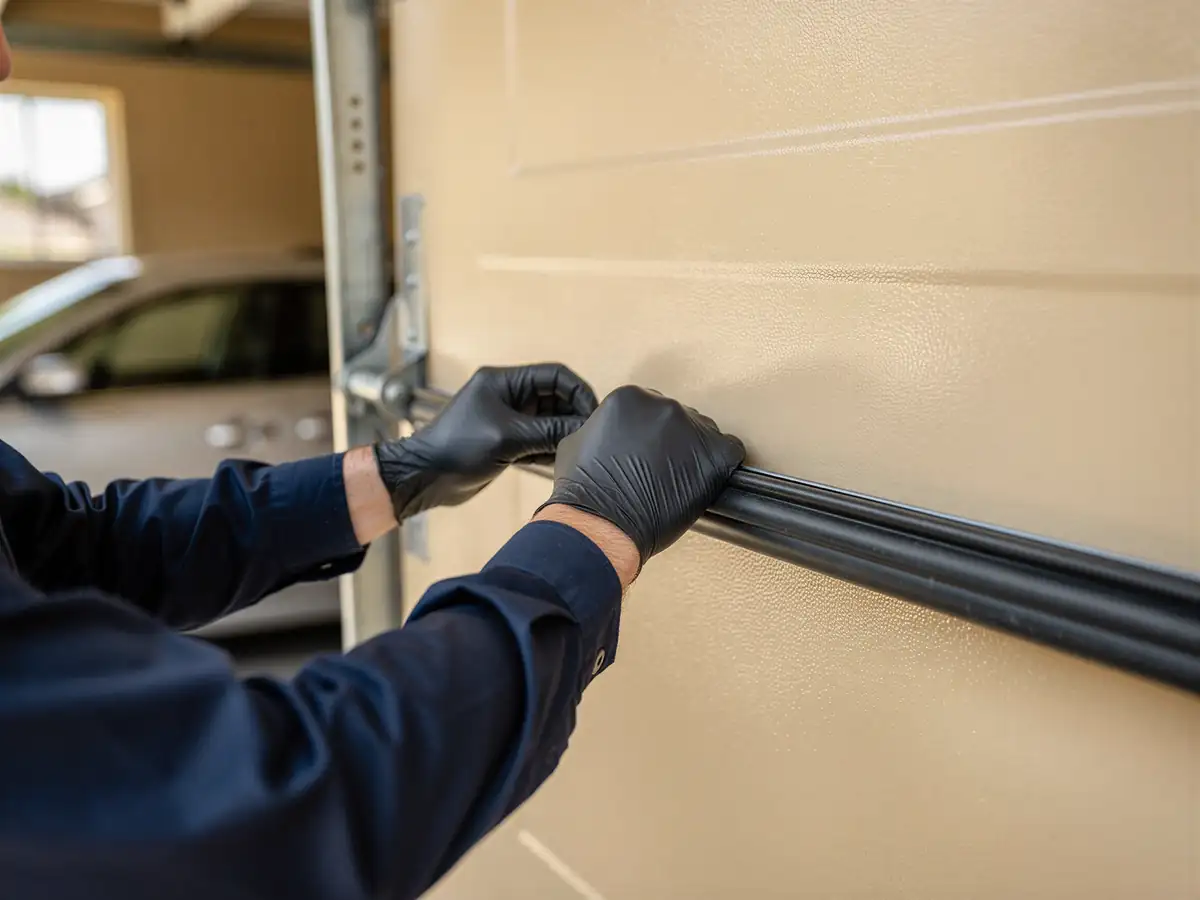
Next check the weatherstrip at the bottom and the seal where the door meets the frame on both sides
On an uninsulated door these are doing all the climate-sealing work, since the panel itself does none. If they're cracked or missing in sections, that's an easy, low-cost fix - and it's worth doing even if you're not ready to replace the whole door yet.
We won't tell you every old door needs replacing
Some just need the seals and a spring check. But if the panel's original to a 1960s or 70s build, it's worth an honest look before you spend more money patching it.