What That Sound Coming From Your Garage Door Is Trying to Tell You
A Fairfax-specific guide to garage door noises, tied to this area's 1960s-70s housing stock and cold winters - what to check before you call for a repair.
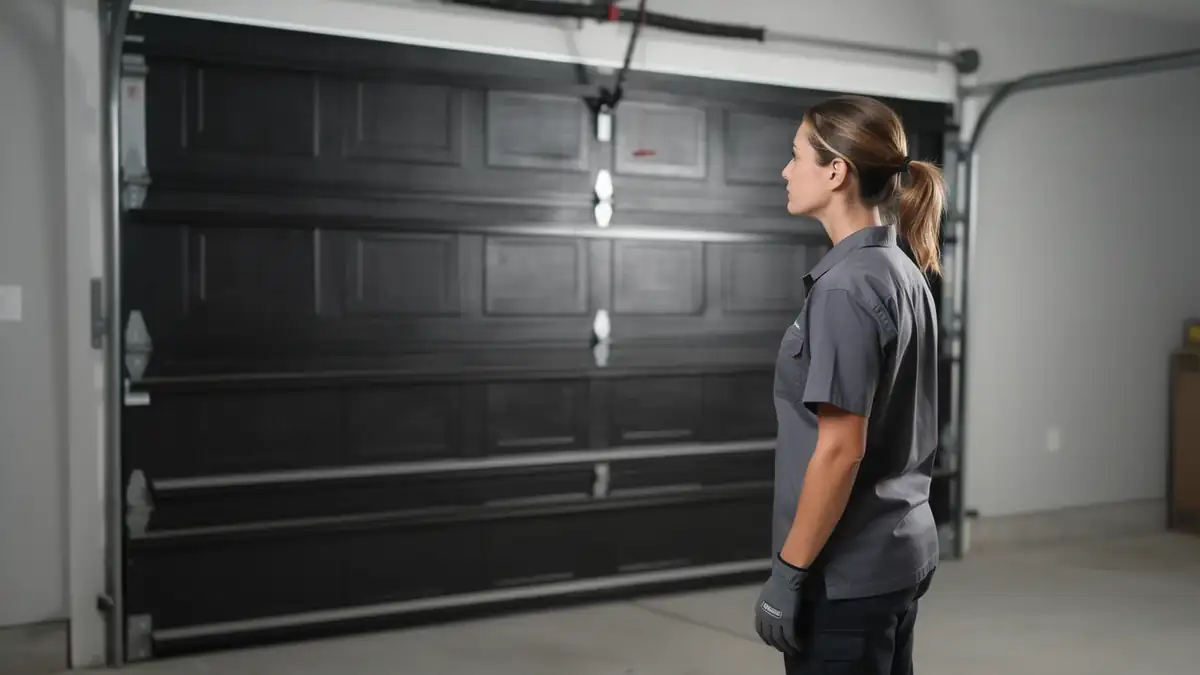
A lot of the houses around Fairfax went up between 1940 and 2015, but the median build year here lands around 1978, and most of the stock in the 38 named areas near town - Mantua, Merrifield, Wakefield, and the rest - is 1960s and 70s construction. That matters because those garages were built for lighter doors than what's on the market now. The original torsion springs, the steel track, the mounting brackets bolted into framing that's had 50-plus years to settle - none of it was sized for a heavier insulated door, and none of it was meant to last this long without attention. So when a door that age starts grinding, popping, or slamming on the way down, it's usually not a mystery noise. It's hardware that's been working past its design life finally telling you about it. The sound is data. A grinding roller means metal wearing on metal. A loud bang on the way up or down usually means a cable or spring under uneven tension. A door that shudders partway through its cycle is often a track that's slightly out of plumb from decades of minor shifts in an older foundation. None of this is alarming on its own, but it's not nothing either.
When to Get Help
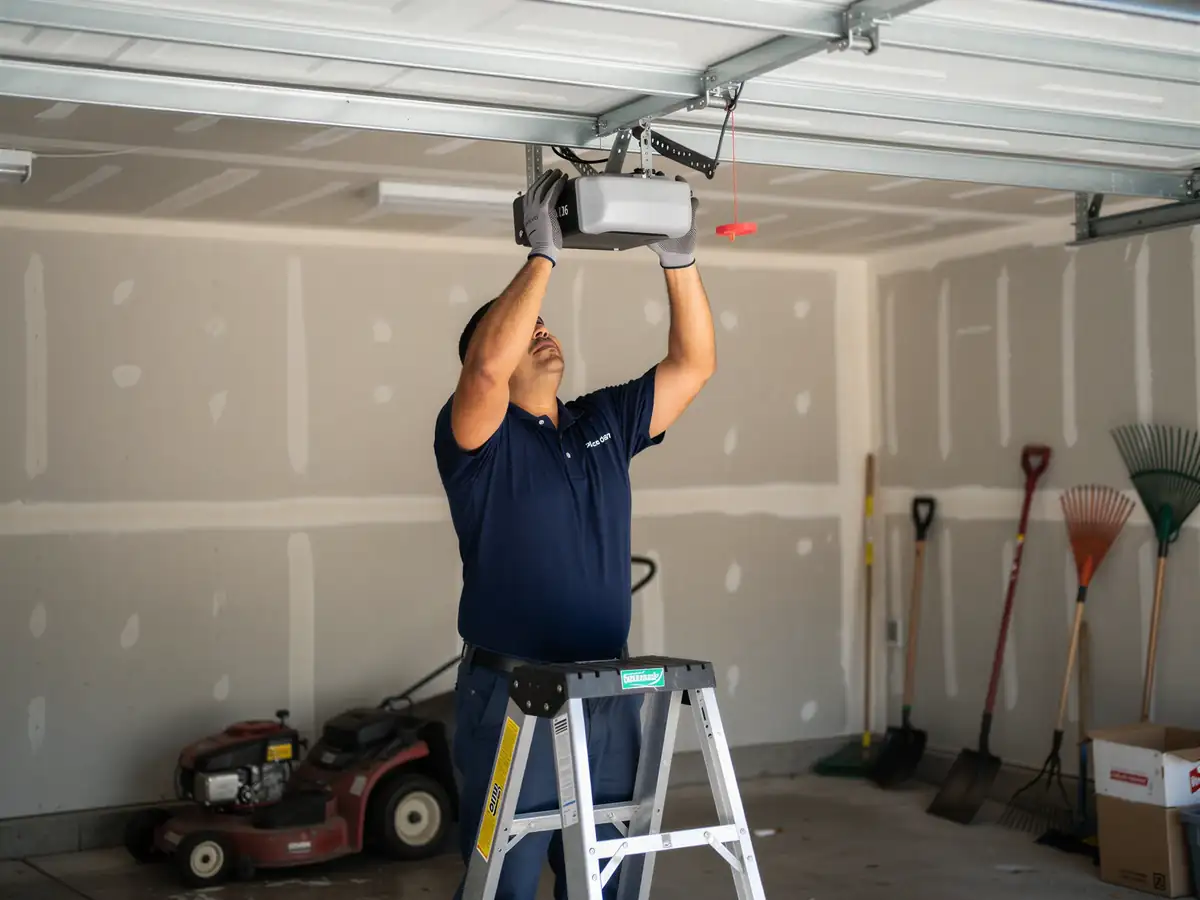
Some noises are fine to live with for a while. A little rattle from aging rollers on a 1970s-era track isn't an emergency. Other noises mean the door is close to failing in a way that can hurt someone or wreck the opener. A loud bang followed by the door refusing to move, or one side dropping faster than the other, means a cable or spring has let go or is about to. Don't put weight on the door, don't try to force it, and don't let the opener keep straining against it - that's how you turn a spring job into a track and opener job. If the door reverses itself right after closing, or closes on something without stopping, that's a safety sensor or limit issue and it needs a call, not a workaround. We don't recommend DIY spring work on these older torsion setups - the tension stored in a spring sized for a heavier door than it was originally built for is not something to guess at. That's the honest limit here: some of this hardware is old enough that a repair isn't worth it, and replacement is the better call once we're inside and looking at it.
How Local Conditions Play In
Fairfax sits in a climate band the federal data classifies as cold-severe, and that shows up in garage hardware in specific ways. Grease that was fine in October gets stiff by January, and a stiff lubricant makes a roller or hinge squeal that wasn't squealing a few weeks earlier. Steel track contracts in the cold, which can turn a slightly loose bracket - common in houses built in the 1960s and 70s - into a bracket that's now audibly rattling against the wall. Temperature swings also affect the torsion spring itself; a spring that's been quietly losing tension for years tends to announce it more in cold weather, because the cold steel is less forgiving of the extra load. None of this means the door is broken every winter. It means the noises that show up seasonally are often temperature doing what temperature does to old steel, not a new problem from nowhere. If a sound only happens on cold mornings and goes away by afternoon, that's worth mentioning when you call, because it points straight at lubrication and spring tension rather than a motor or sensor issue.
What to Look At First
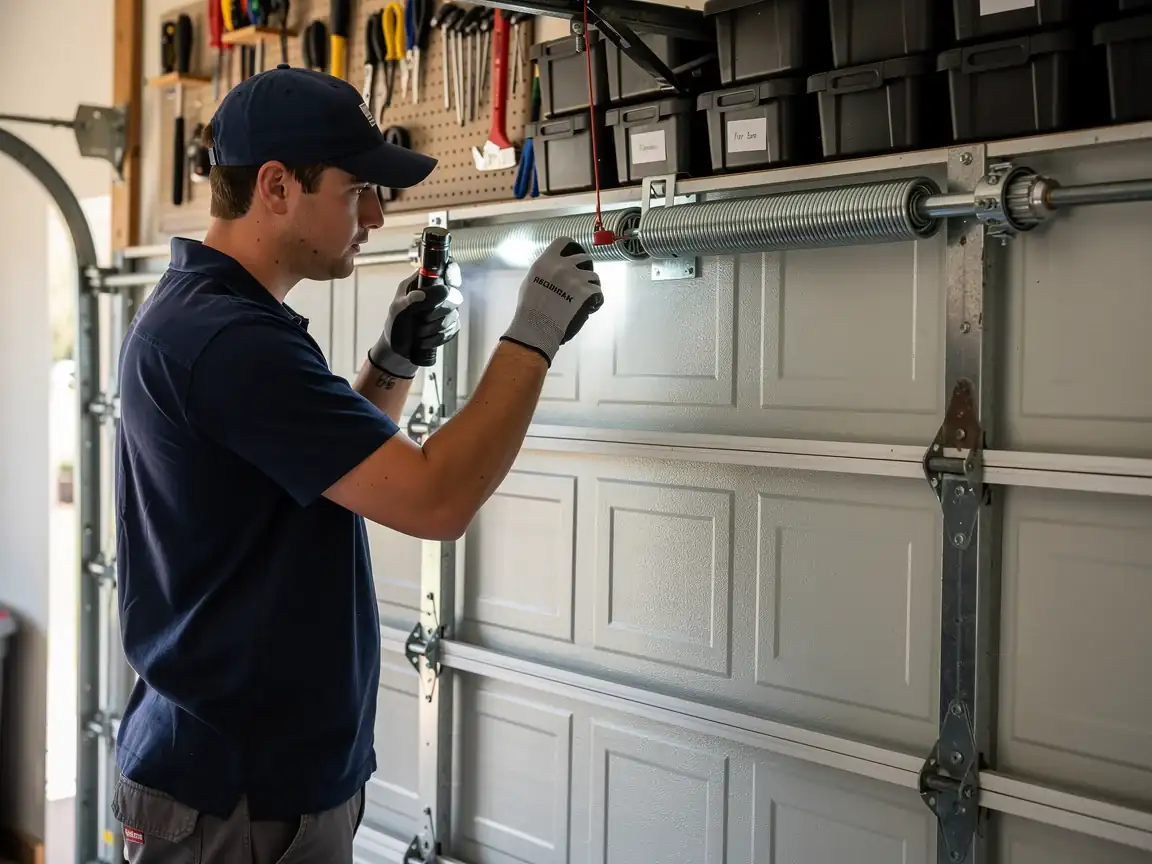
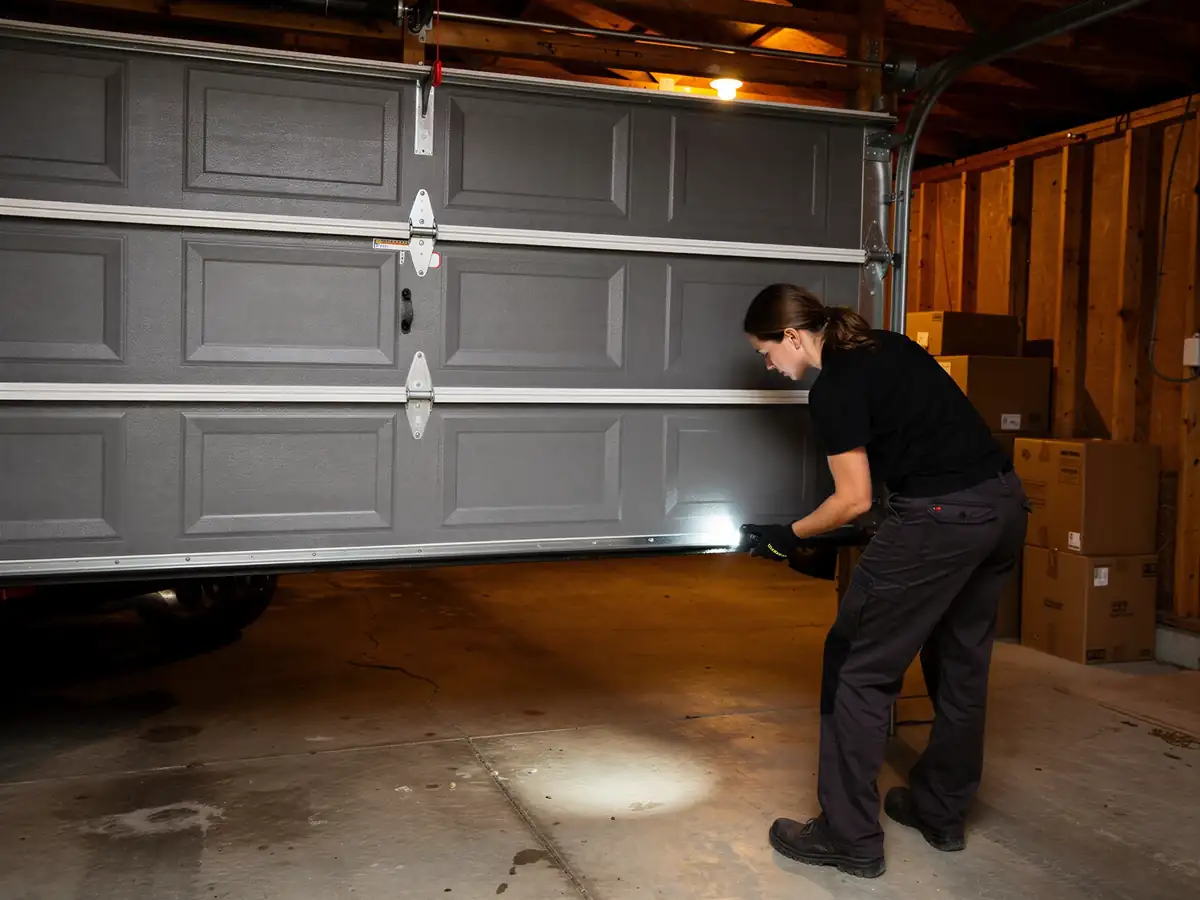
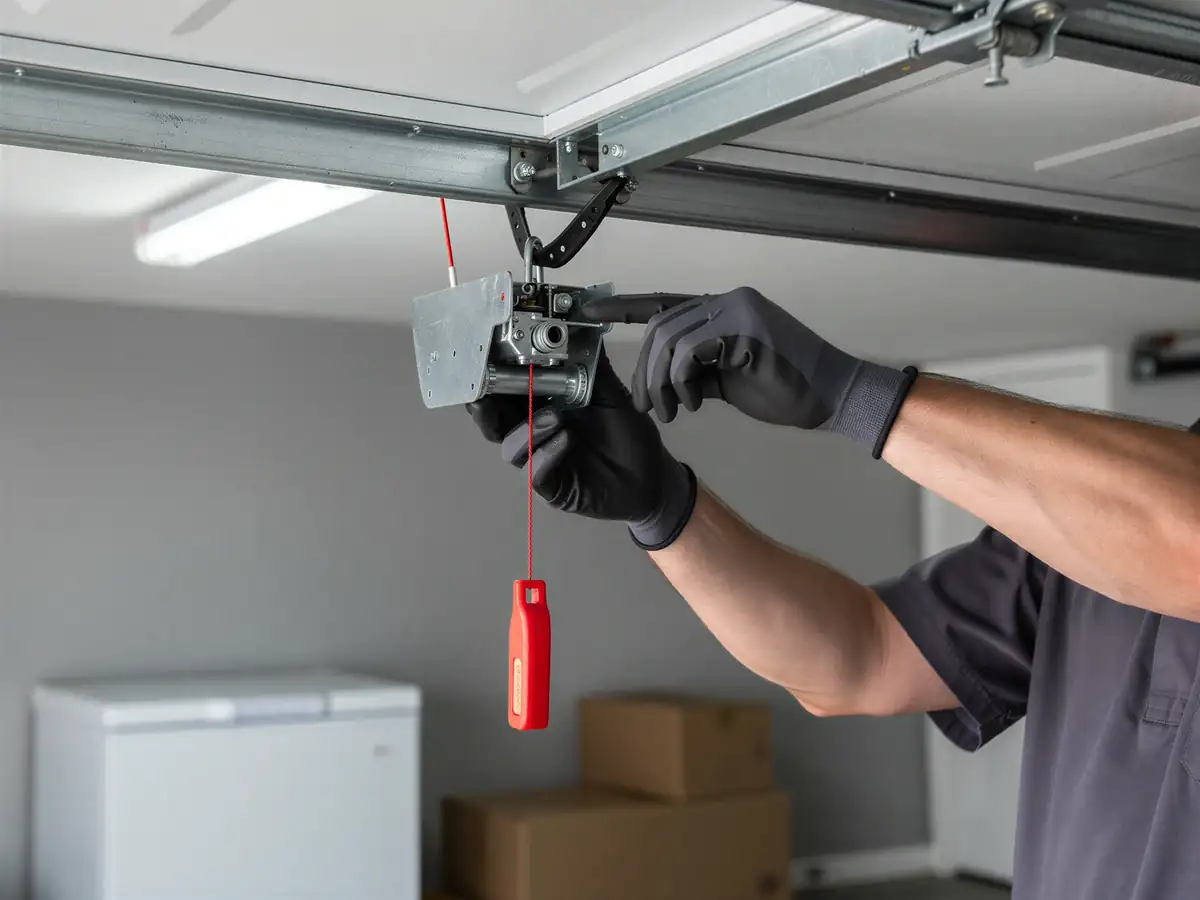
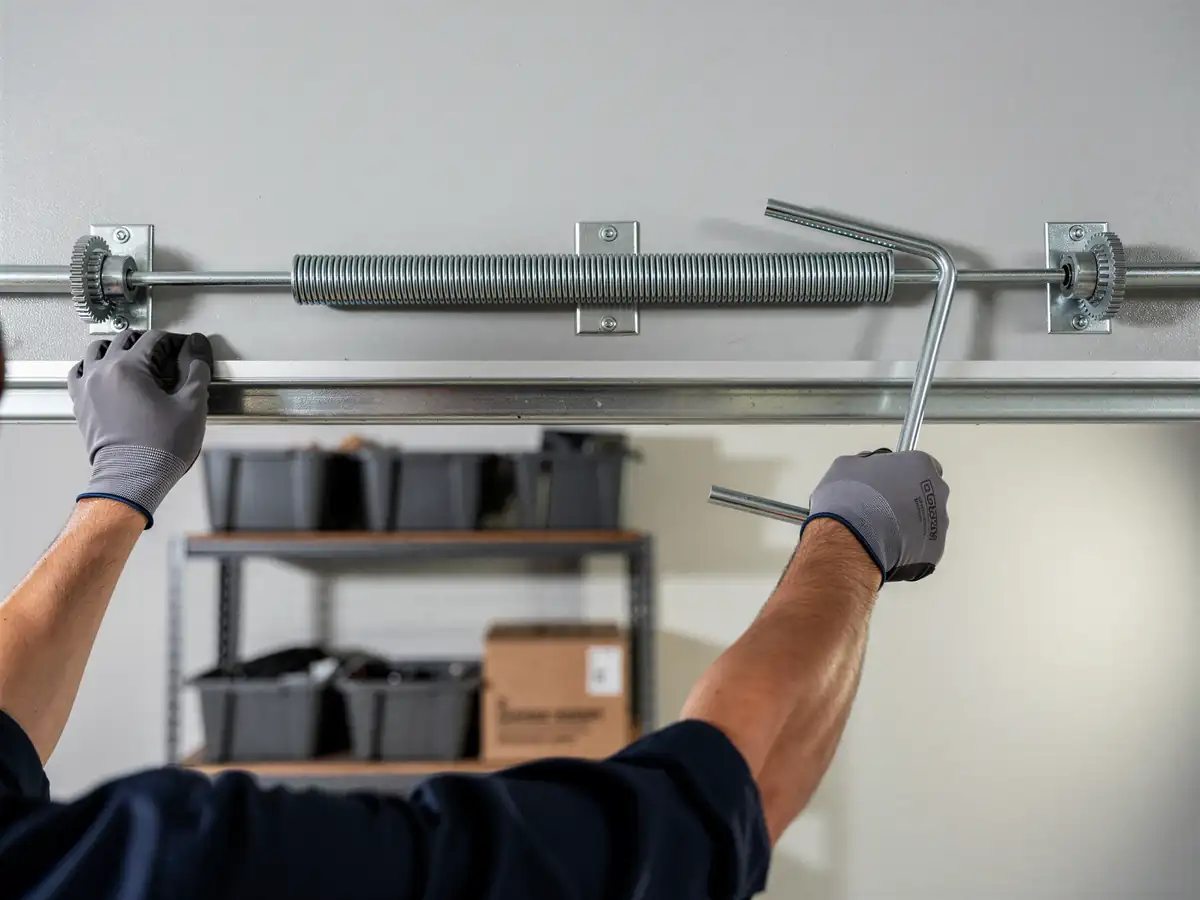
Before you call anyone, look at three things. First, the springs - on an older torsion door, check whether there's visible gap or unevenness where the spring winds around the shaft; don't touch it, just look. Second, the track and rollers - run the door by hand (with the opener disconnected) and watch for a roller that's visibly flat-sided or a track bracket that's pulled away from the frame, both common on houses from the 1960s and 70s that have had one owner's worth of adjustments and none since. Third, the opener's travel limits - if the door doesn't fully seat or reverses early, that's often a limit switch, not the door itself. With a median household income around $143,796 in this area, a lot of owners here are weighing a full replacement against another round of repairs on a 50-year-old door, and that's a reasonable question to ask out loud when we're on site. Write down when the noise happens - cold mornings, every cycle, only on the way down - before you call. That detail saves a diagnostic trip.
Straight answers about garage door repair in Fairfax. Still unsure? Ask us directly.
My garage door squeals every morning but stops by afternoon. Is that serious?
Usually not, and it points to cold-weather effects on grease and steel rather than a failing part. Fairfax sits in a cold-severe climate band, so stiff lubricant and contracted track hardware are common causes of a noise that fades once things warm up. Worth mentioning when you call, since it narrows the diagnosis before anyone shows up.
The door makes a loud bang and won't open. What now?
Stop trying to open it. A bang followed by the door not moving usually means a cable or spring has failed, and forcing the opener against that can damage the motor or drop the door unevenly. Don't put weight on it. This is the one noise that warrants a same-day call rather than a wait-and-see.
Is my old spring just going to need replacing eventually?
On a door this age - a lot of Fairfax-area garages are 1960s or 70s construction - the original torsion spring is often sized for a lighter door than what's installed now, so yes, most of these eventually need replacement rather than adjustment. We'll tell you honestly if a repair makes sense or if you're better off replacing the hardware outright.