Why It Happens Here
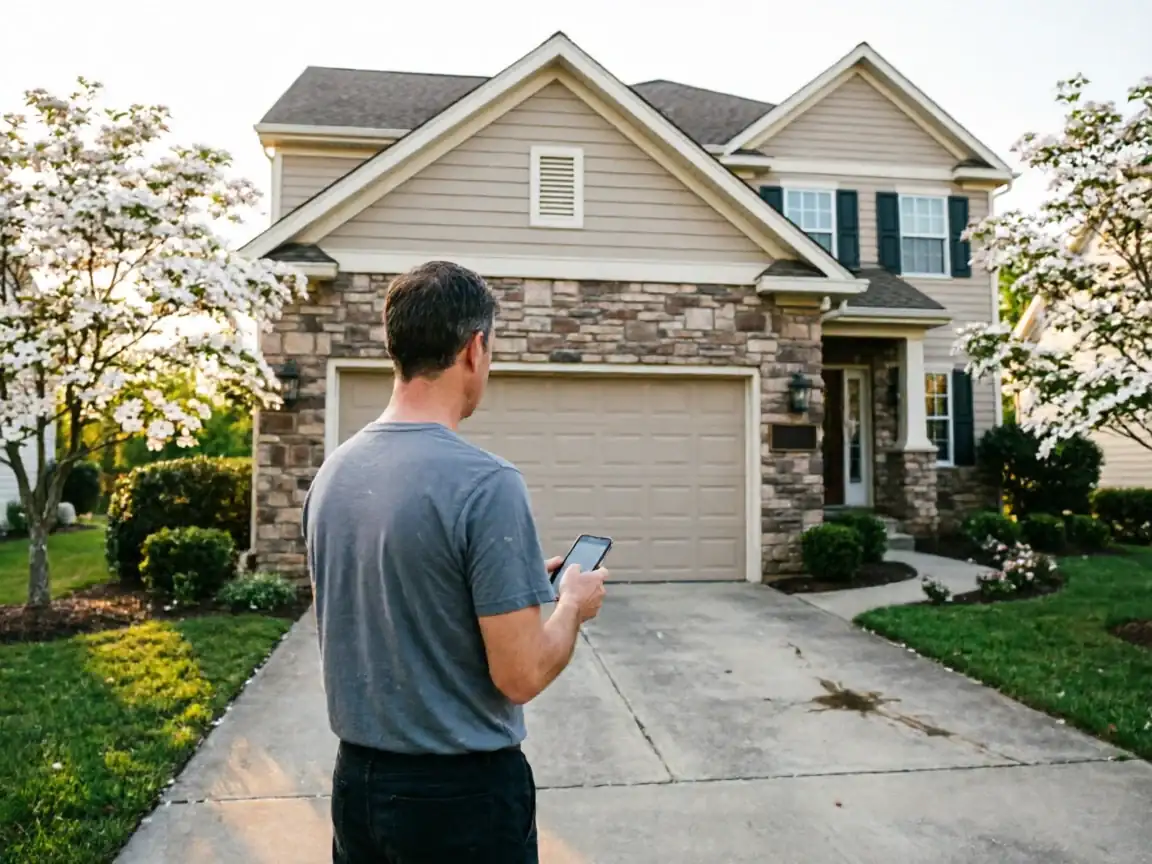
Most of the houses we get spring calls from in this area went up between 1940 and 2015
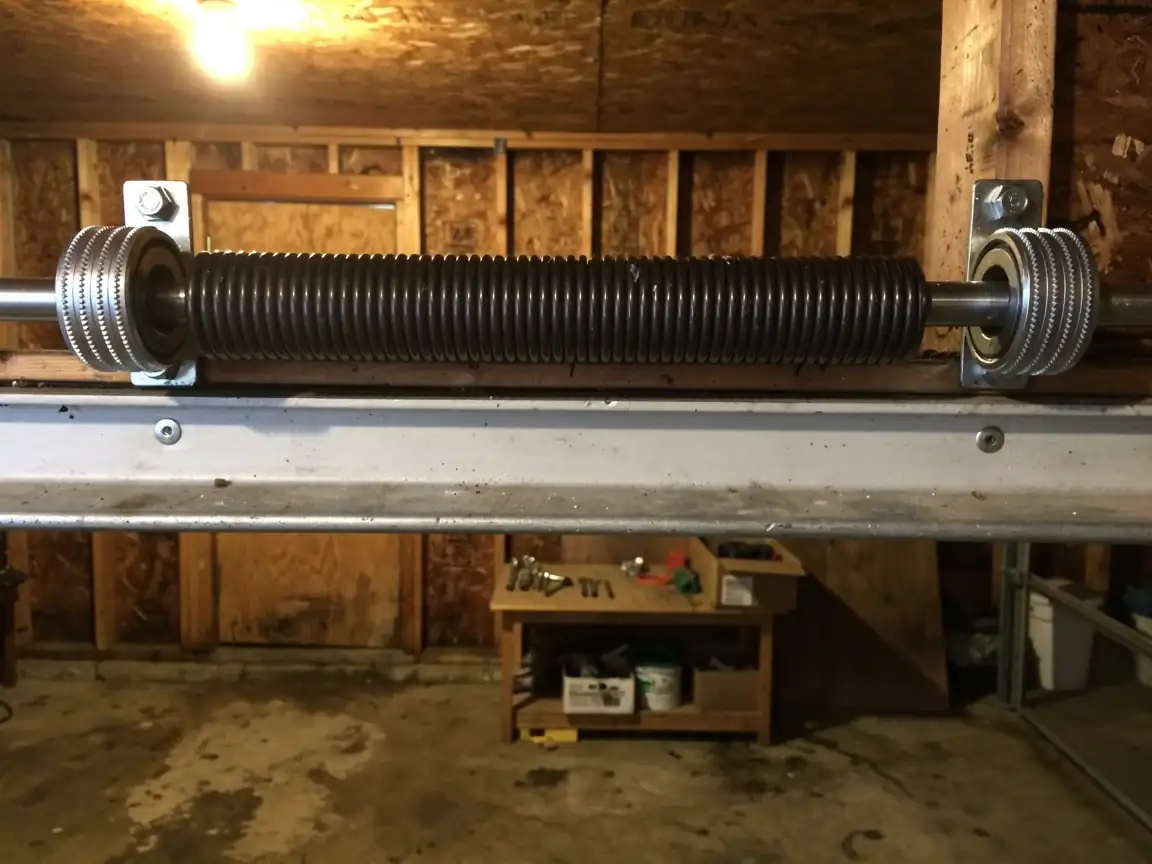
With the bulk of that stock dating to the 1960s and 70s. A torsion spring on a door that age is well past its rated cycle count, and the cold winters here don't help. Steel contracts in freezing temperatures, and a spring that's already fatigued from thirty-plus years of winding and unwinding loses what little flex it had left. That's when it snaps, usually on the first really cold morning of the season rather than in the heat of summer.
Doors on these older homes were also sized for lighter panel materials than what's common today
So when an owner swaps in a heavier insulated door without re-rating the spring, the original torsion spring is carrying more load than it was built for. We see this combination constantly: a 1970s opener bracket and track, paired with a spring that was never matched to the new door. Add a cold snap and something gives. It's not bad luck, it's wear plus weather plus a mismatch that nobody flagged at install.
What You Are Seeing
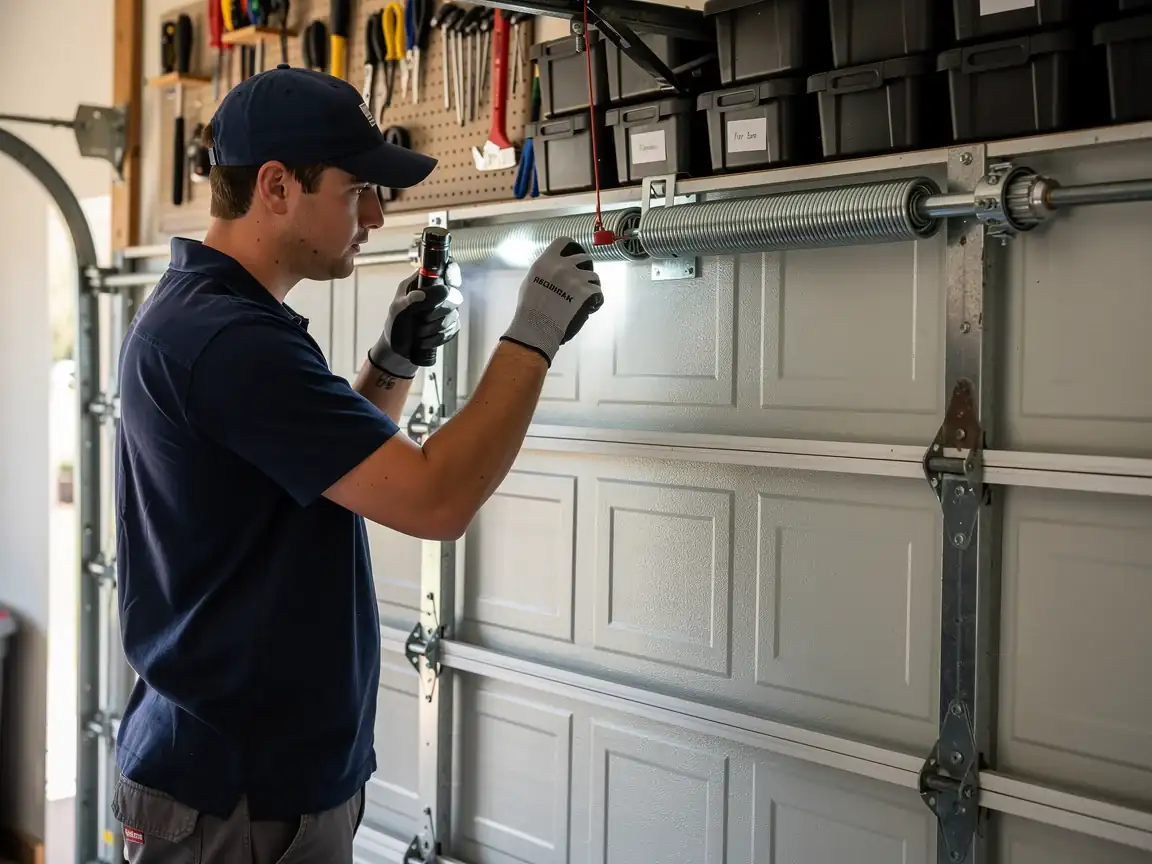
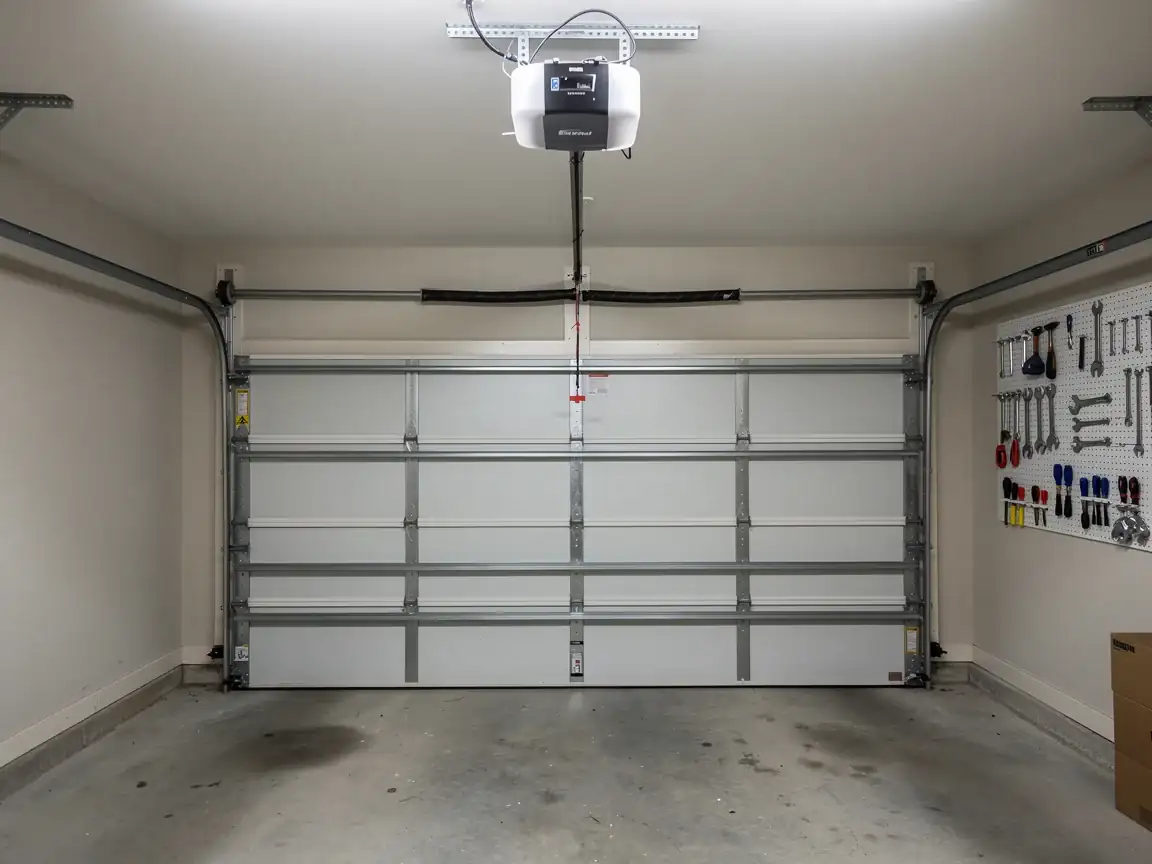
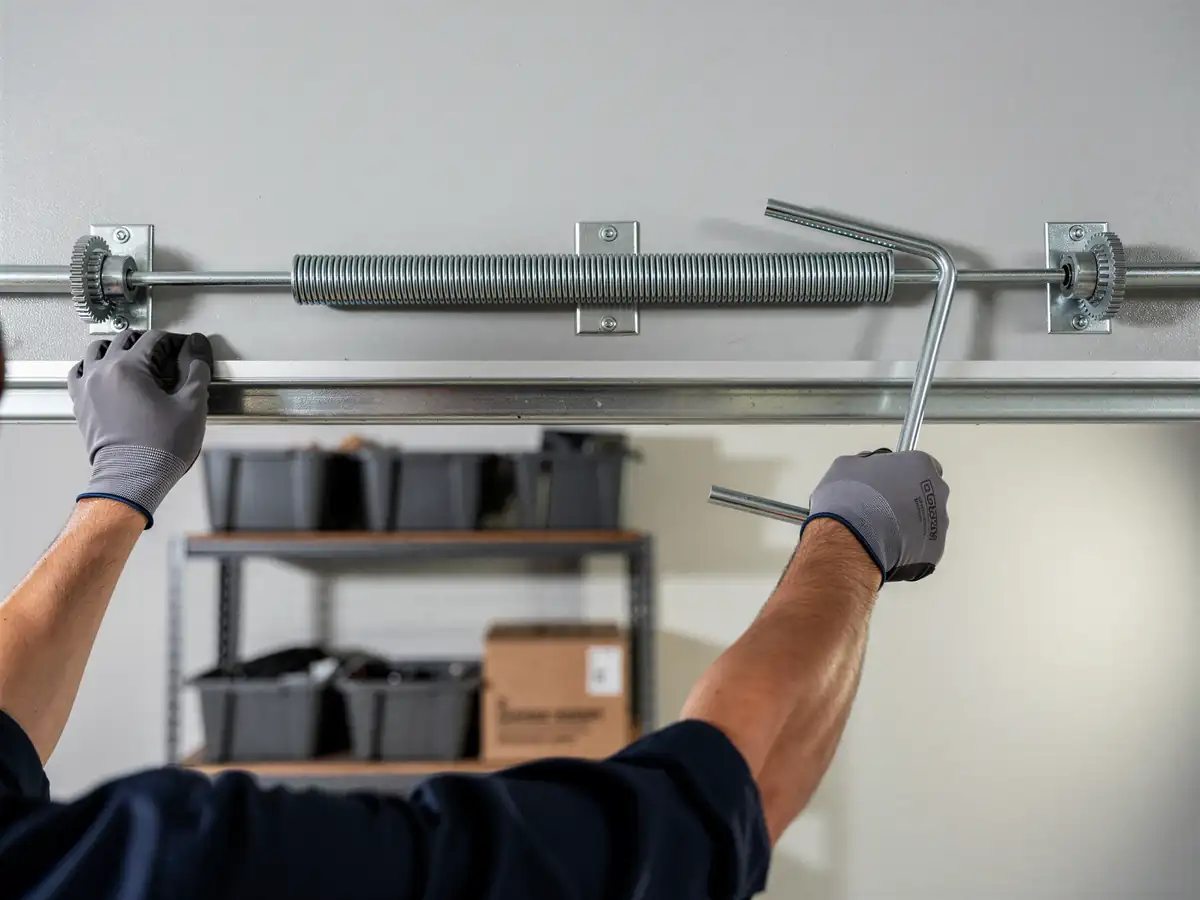
A broken torsion spring usually announces itself with a loud bang from the garage, often early morning or late at night when temperatures drop fastest. After that, the door won't lift, or it lifts a few inches and stops dead when the opener's motor hits a load it can't handle alone. If you look up at the top of the door, a snapped spring shows as a visible gap in the coil, sometimes with the two halves spread apart on the shaft.
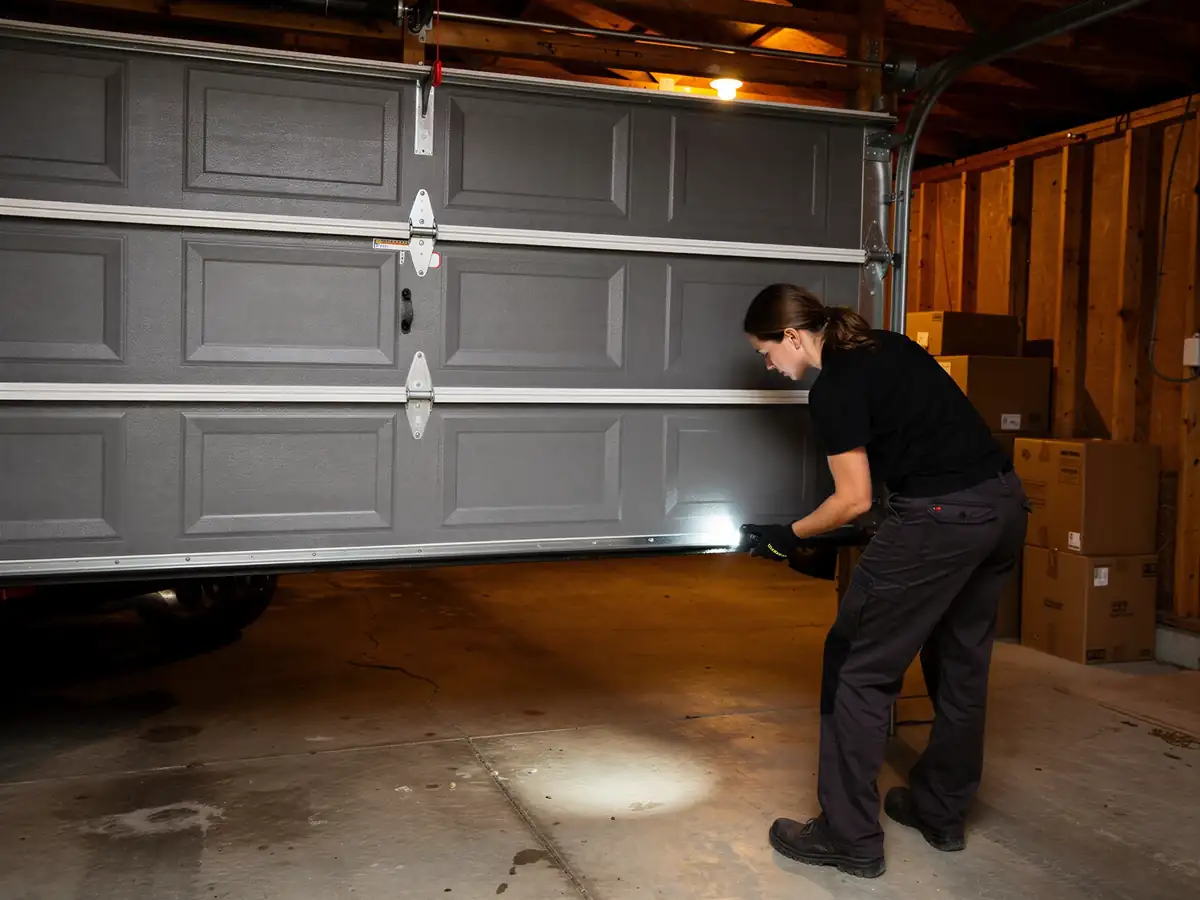
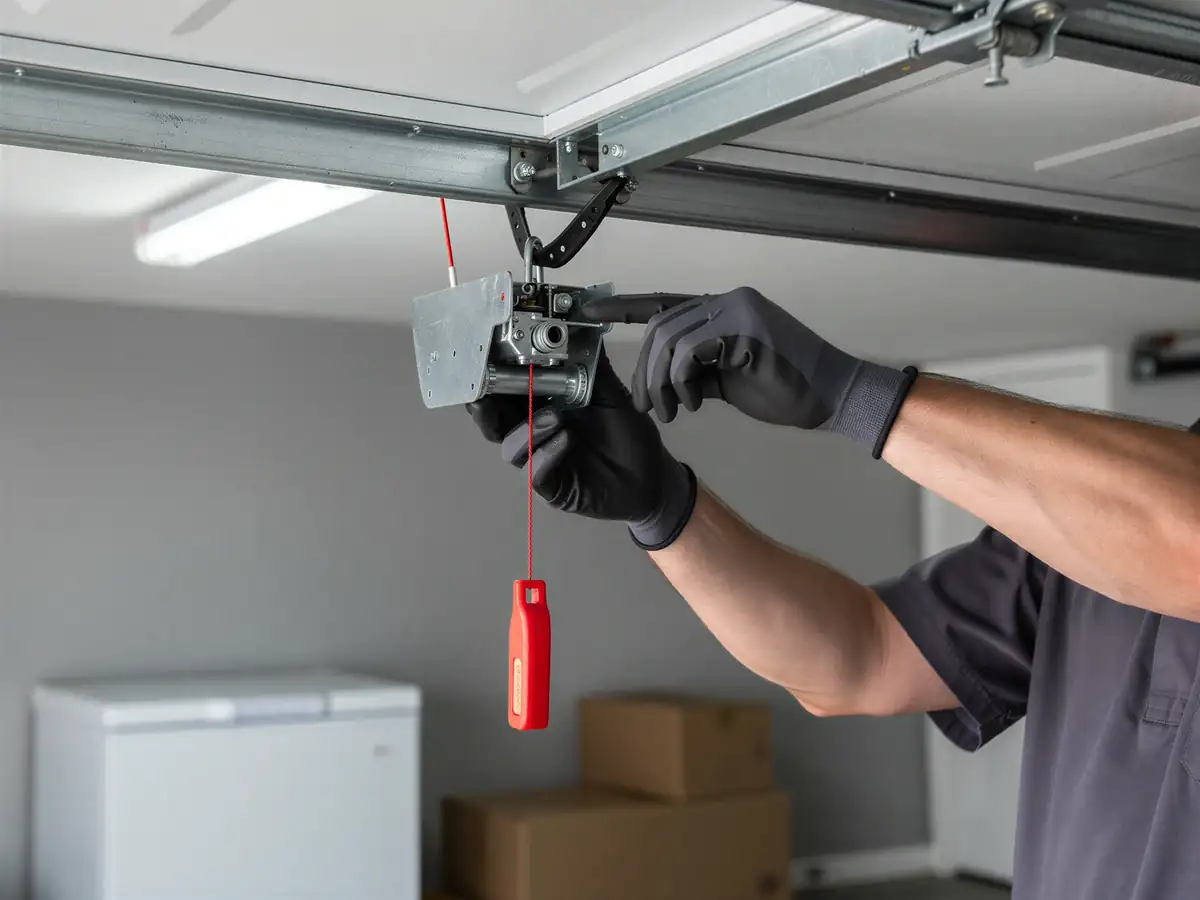
A failing spring, as opposed to a fully broken one, shows up differently: the door feels heavier than it used to, it drops faster than it rises, or it sags unevenly to one side when you try to lift it by hand. Cables can look slack at the bottom corners even though nothing is physically broken yet, because the spring is no longer pulling its share of the weight. None of these are safe to force through with the opener. A motor straining against a dead spring burns itself out trying to do a job the spring is supposed to help with.
The Complications
Double-wide doors carry two torsion springs on a shared shaft, and when one goes, the other is usually close behind, since they were wound and loaded the same way on the same timeline. Replacing just the broken one is a short-term fix at best. We check both every time.
On the older stock common across this area, the spring size on the shaft doesn't always match current manufacturer charts, because the door, opener, and hardware may have been swapped separately over the decades without anyone re-checking the combination. That means measuring wire diameter, coil length, and shaft size on site rather than ordering off a label.
Cold weather adds its own wrinkle. Winding a torsion spring under tension is dangerous work in any season, but stiff, cold steel takes more force to wind and holds less margin for error if a winding bar slips. We don't rush this step regardless of how long the homeowner has been without a working door. If a spring is wound incorrectly, it doesn't just fail again, it can fail violently.
How We Fix It
We measure the broken spring's wire size, inside diameter, and length against the door's actual weight rather than guessing from the old part
Since the installed spring isn't always the correct one to begin with. On double doors we replace both springs as a pair so they carry the load evenly going forward.
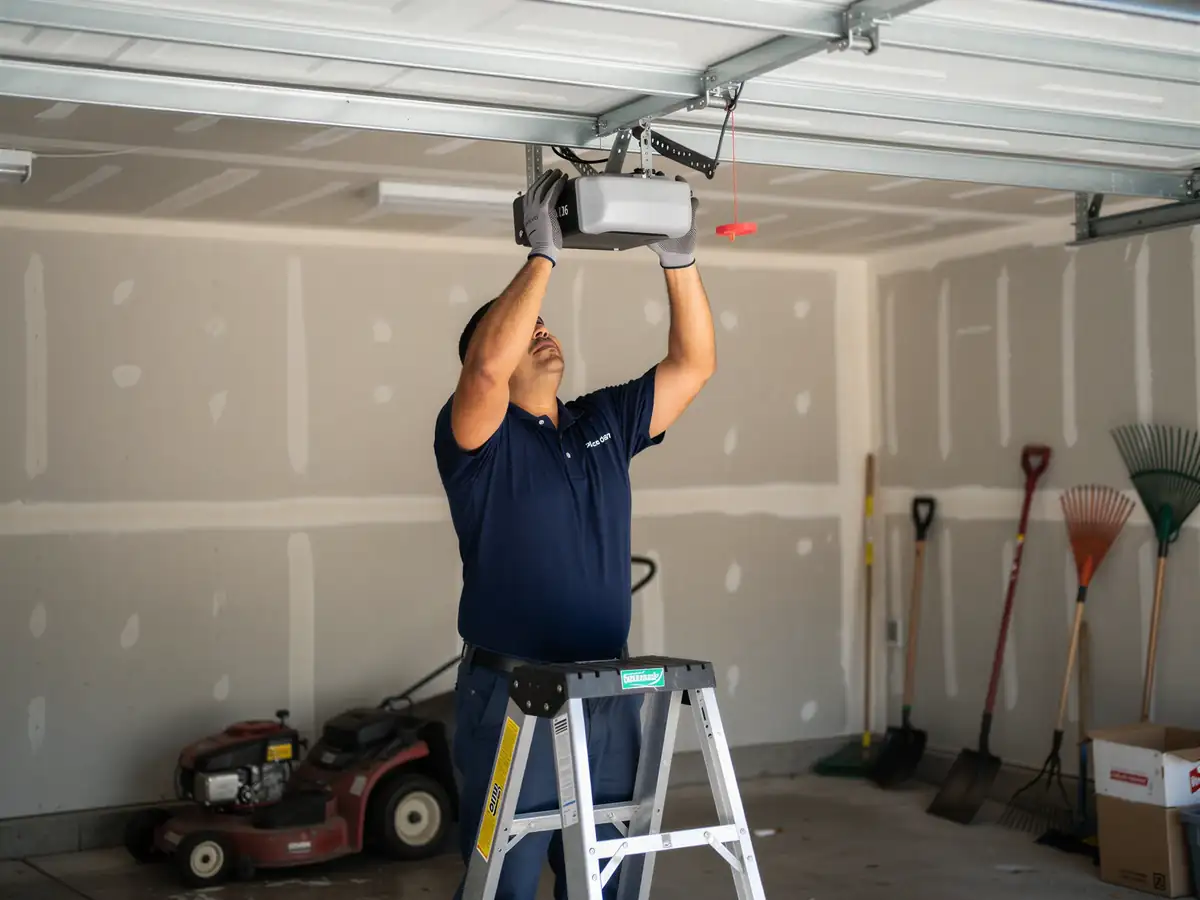
We use winding bars and a ladder stabilized against the track, not the door itself, and we check the cables, drums, and end bearings while the shaft is loaded off
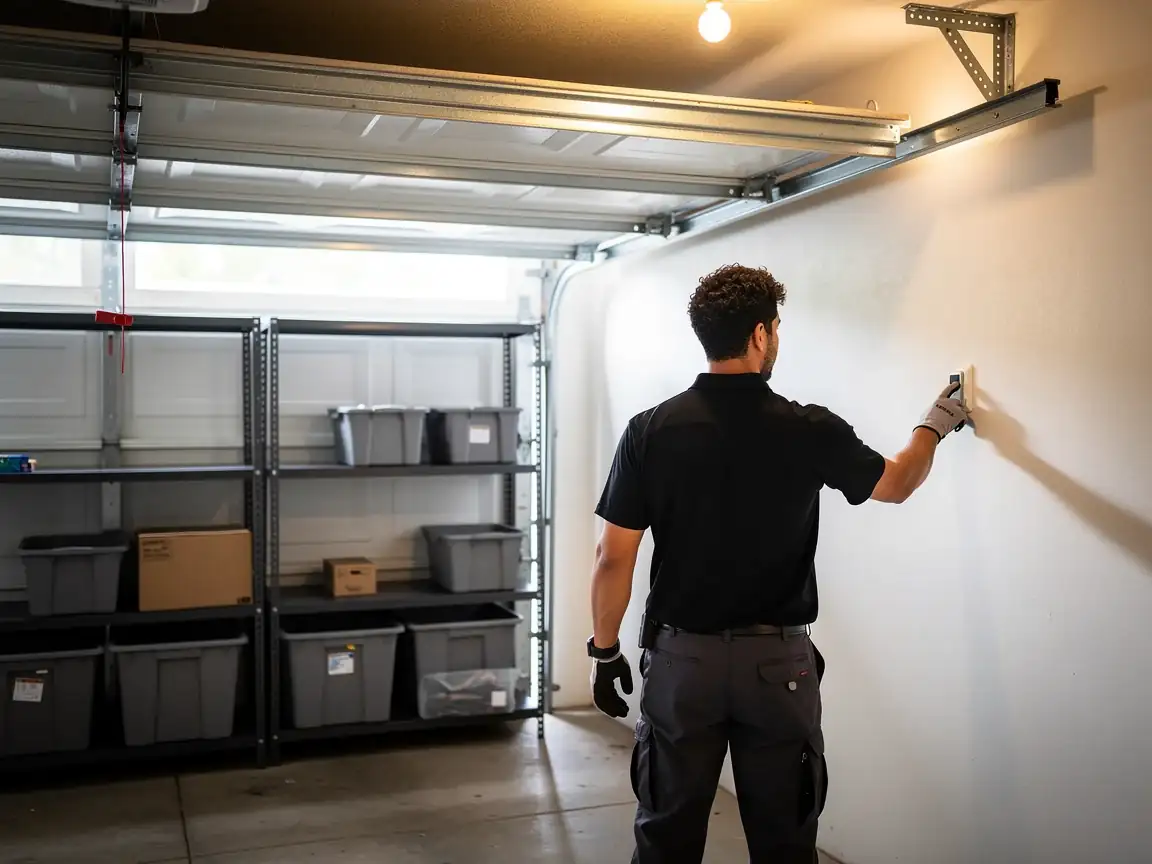
Because a cable that's frayed or a bearing that's seized will take out the new spring just as fast as the old one failed. If the opener's travel limits or force settings are off from compensating for the bad spring, we reset those too.
One honest limitation
If the track is bent, a panel is cracked, or the door itself is near the end of its service life, spring replacement alone won't solve the real problem. In that case we'll tell you straight that a new door is the better money, rather than sell you a spring job that leaves the underlying issue in place.