Why It Happens Here
Most of the housing across this service area went up between 1940 and 2015
With the median build year landing around 1978, and the bulk of the stock across the 38 named communities we cover dates to the 1960s and 70s. That matters for openers because a house built in that window has usually been through two or three opener generations already - the original chain-drive unit, a replacement in the 80s or 90s, and whatever's hanging there now. Each swap means new wiring run through an old header, sometimes spliced into boxes that were never meant for it.
The climate here is the other half of the problem
This is a severe cold-winter band, and garage door openers take that hard. Circuit boards that sit in an unheated garage go through repeated freeze-thaw cycles every winter, and the solder joints and capacitors on older boards don't love that kind of stress. Motors also draw more current trying to move a cold, stiff door, which shortens the life of the gear and sprocket assembly inside the unit. A house with a newer build date might dodge some of this, but a 1960s or 70s garage in a cold-winter service area like ours is set up for opener failure almost by design.
What You Are Seeing
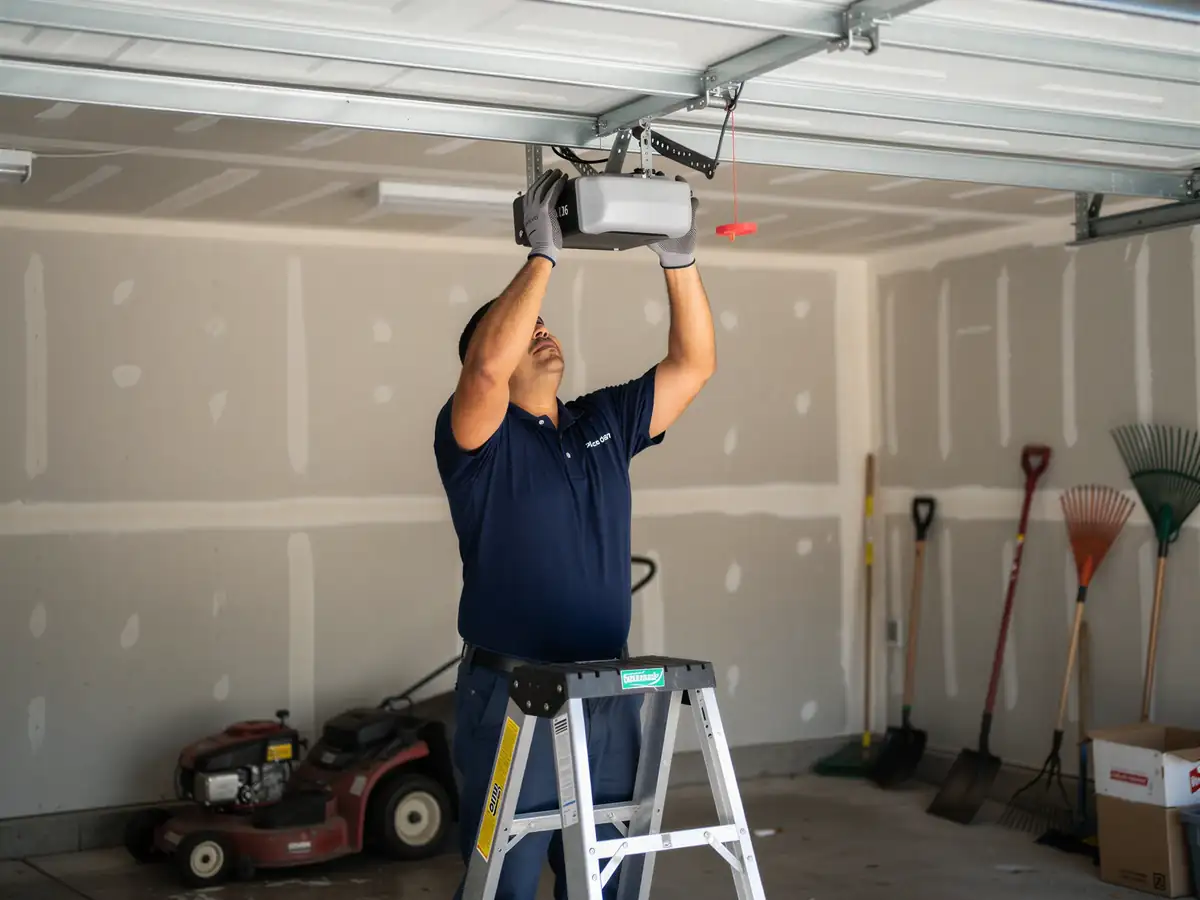
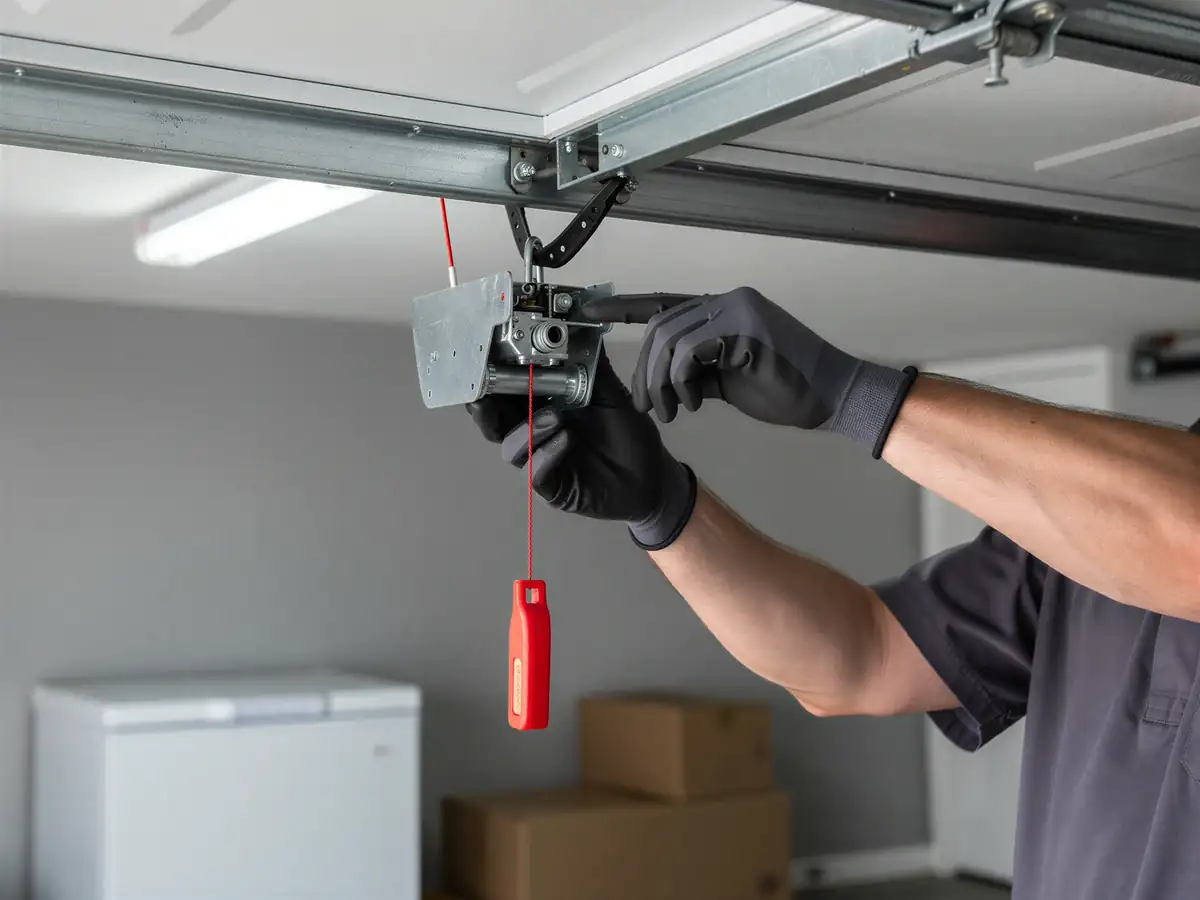
The most common call we get is a door that hums but doesn't move - the motor is trying, but the gear has stripped. That's a wear part, and in a house with an opener old enough to match the area's 1960s-70s housing stock, it's often reached the end of its life rather than failed from one bad event.
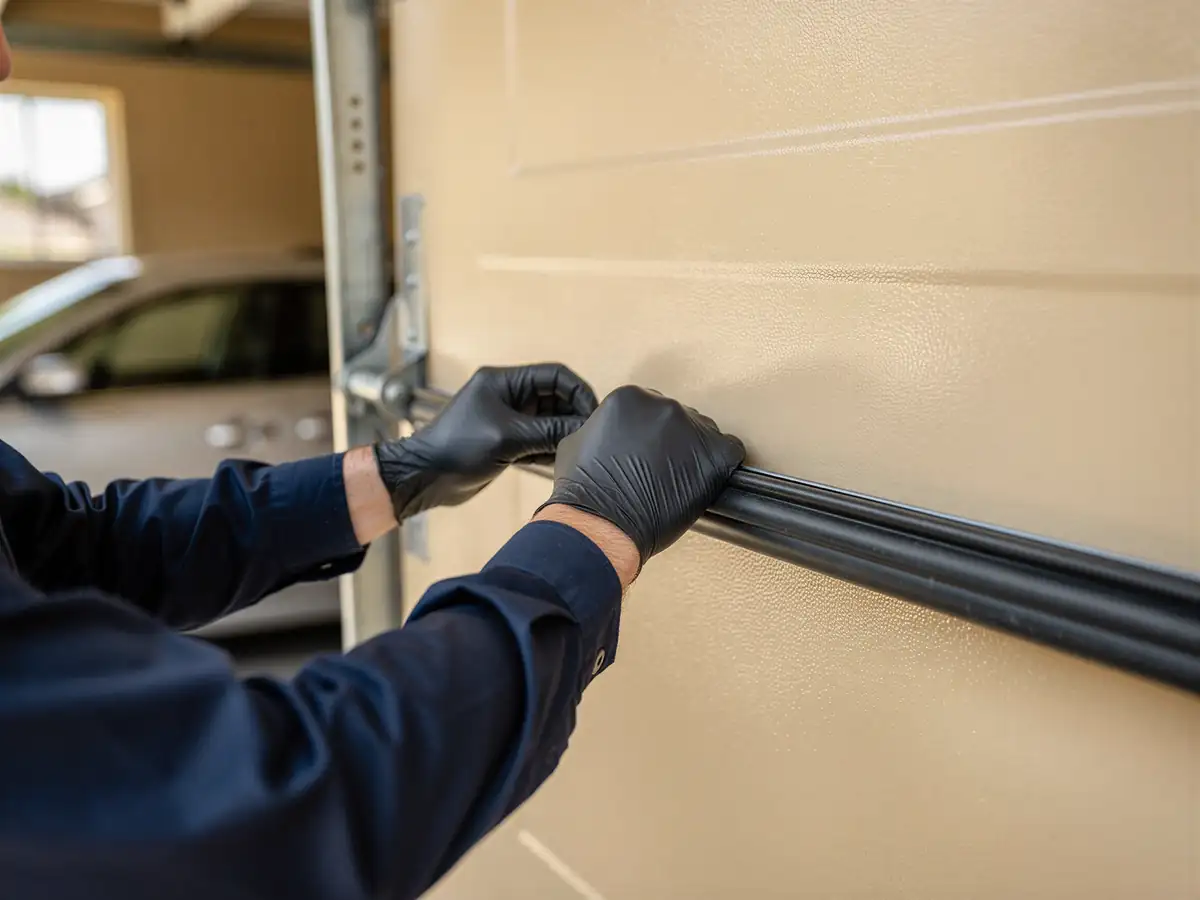
Close behind that is the remote or wall button that stops responding, which usually traces back to a logic board that's taken one too many cold mornings. You'll also see openers that run the full cycle but won't reverse properly on the safety sensors - a problem that shows up more in winter because the sensor alignment can shift slightly as a cold concrete slab contracts.
Less common, but real: a opener that reverses for no reason mid-close. That one is almost always a drive gear or a limit switch issue, not the safety sensors themselves, even though the sensors get blamed first.
The Complications
The honest complication is parts. An opener installed when a lot of this area's housing was built or renovated - through the 1960s, 70s, and on into the 1990s - may use a logic board or gear set that's no longer made. We carry common universal boards and gears on the truck, but if your unit is an older or discontinued model, we may need to order the part, and that can take a few days rather than a same-visit fix.
The other complication is decision-making, not mechanics. With median household income in this service area at $143,796 and the large majority of households here owning rather than renting across the roughly 181,054 households we serve, a lot of customers are weighing a $150 gear repair against a new opener that'll outlast the old one. We'll tell you straight which side of that line your unit falls on - we don't push a repair we don't believe in, and we don't push a replacement just because it's a bigger ticket.
How We Fix It
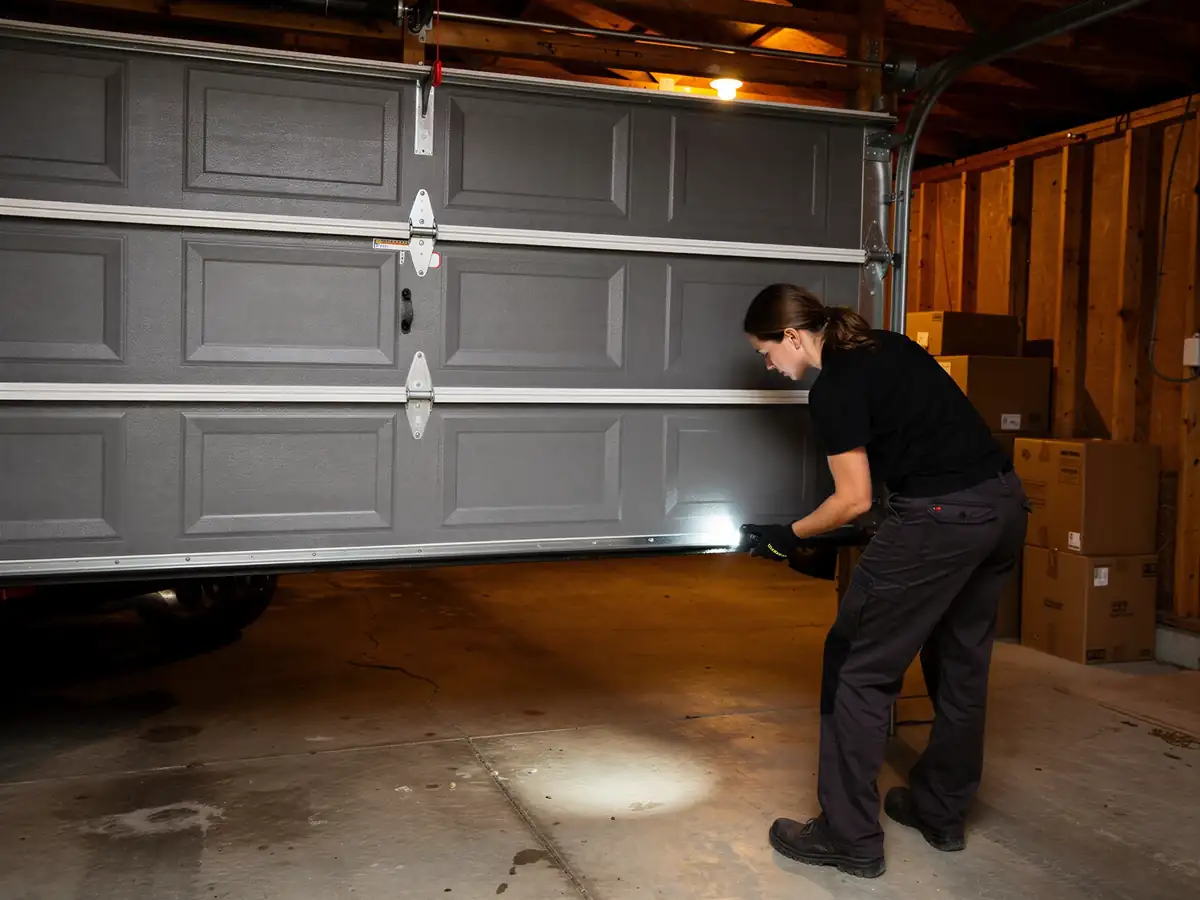
We start by running the opener through its full cycle and watching exactly where it fails
Humming without movement, failing to reverse, dropping connection - because that tells us whether we're looking at a gear, a board, a sensor, or a limit switch before we open the housing. For a stripped gear, swapping the drive gear and sprocket kit usually gets the unit back to full strength without replacing the whole opener.
For circuit board failures
Which we see more of here given how hard a severe cold winter is on an unheated garage, we test the board under load rather than just visually, since a board that looks fine can still be dropping voltage under motor strain. If your board matches a part we stock, that's a same-visit repair. If it doesn't, we'll quote the lead time honestly rather than guess.
We also recheck sensor alignment and limit switch settings as a matter of course
Since a concrete slab that's shifted slightly over a cold winter can throw both off even when the motor itself is fine.