Fairfax homes built mostly in the 1960s-70s see track misalignment from aging hardware and cold-season freeze-thaw. Here's what actually knocks a door off its rails.
A garage door comes off track when the rollers lose their line inside the track, usually because something is bent, loose, or worn past spec. In a lot of Fairfax neighborhoods the housing stock dates to the 1960s and 70s, with the broader area spanning construction from 1940 up through 2015 and a median build year around 1978. That matters here because a door built on original brackets from that era has had forty, fifty, sixty years of thermal cycling to work bolts loose and warp tracks a few degrees out of true. Once a track is even slightly bent, the rollers climb the lip on every open-close cycle instead of riding flat, and eventually one jumps the rail entirely. It's rarely a single dramatic event. It's months of small knocks - a car bumper tap, a slammed-shut door, a track bracket that was never quite plumb - that finally add up to a roller walking off the edge.
When to Get Help
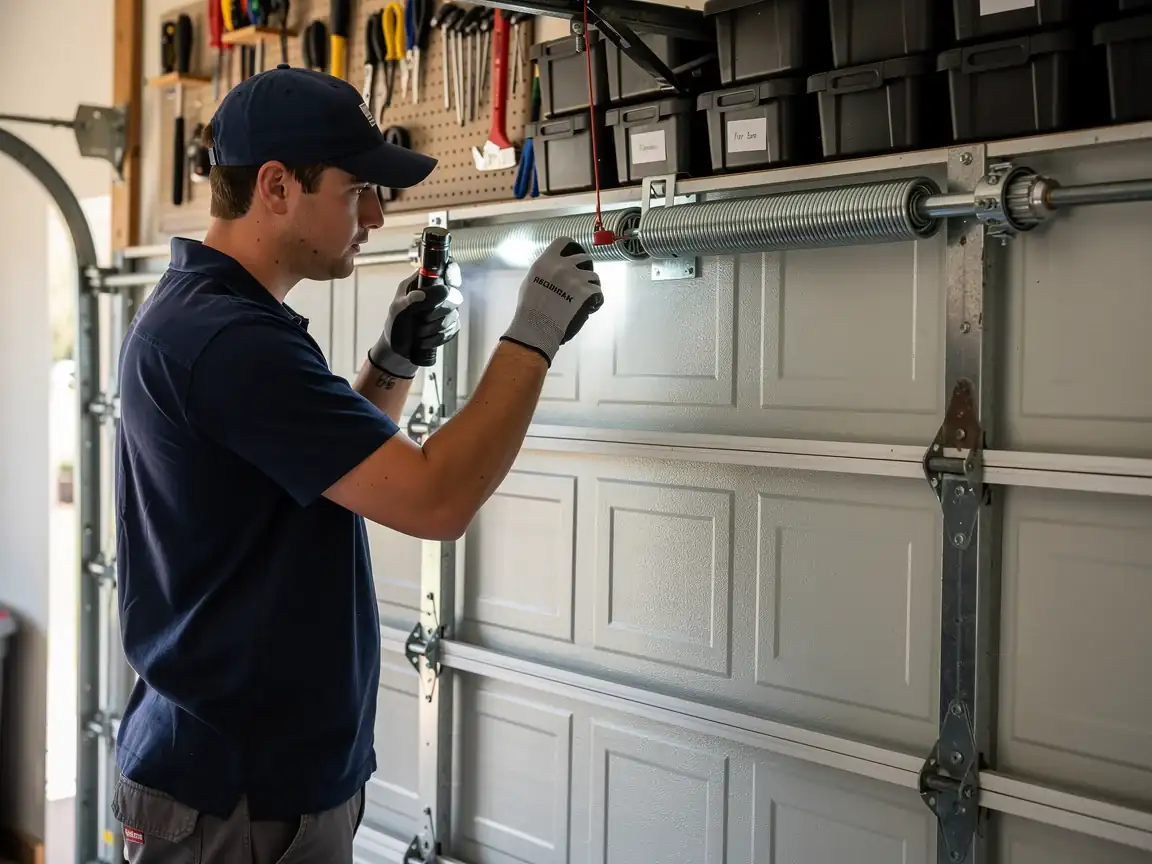
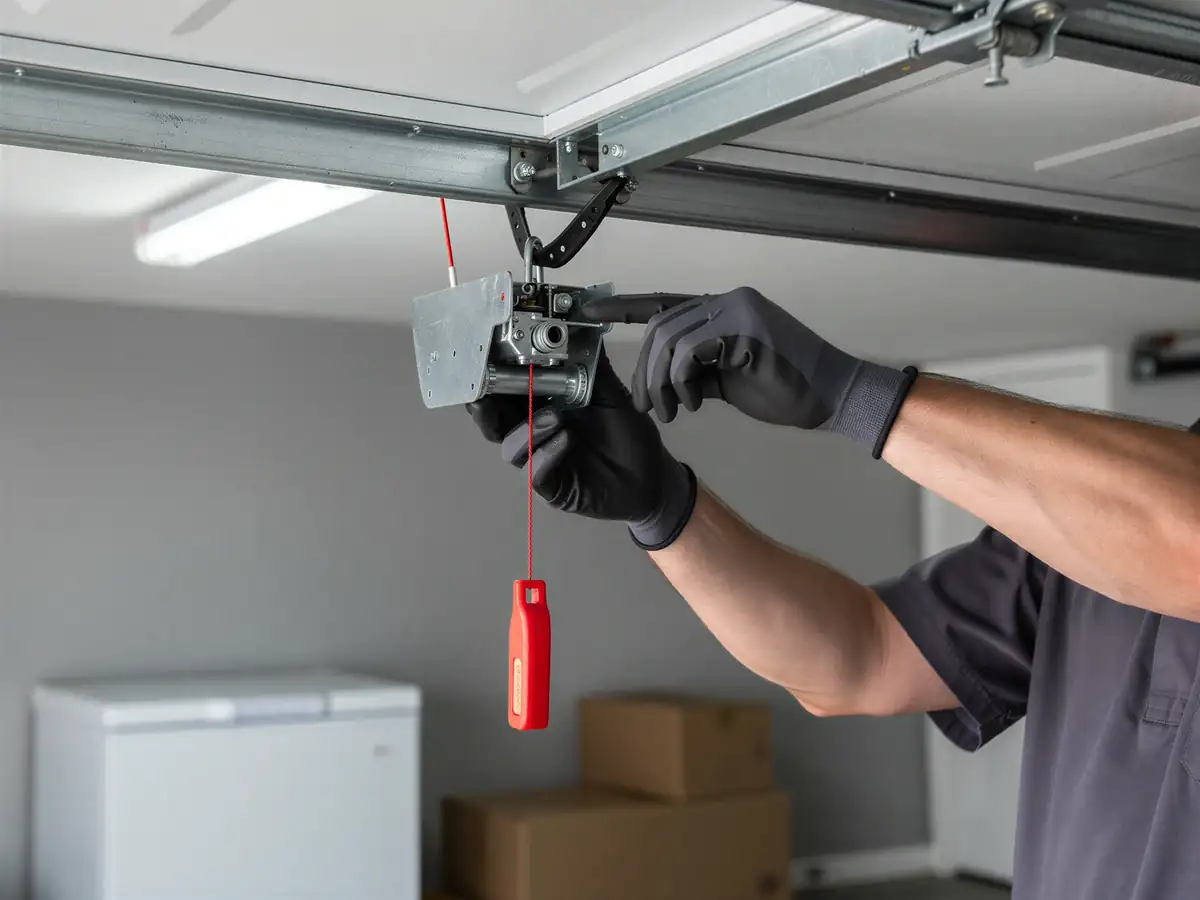
Call before you try to force the door back into the track yourself. If the door is partway open and visibly leaning or cocked to one side, the cables and springs are still under load, and pushing or pulling on a panel in that state is how people get hurt. If the door moves but grinds, catches, or makes a popping sound at the same spot every cycle, that's a track that's already bent and will only get worse with use. Homes in this area with original hardware from the 1960s-70s era often have tracks and brackets that were never upgraded, so a door that's run fine for years can go off track suddenly once a bracket finally lets go. If the opener still runs but the door doesn't move with it, stop using the opener - that's usually a sign the door is already off the rail and the opener is fighting against it.
How Local Conditions Play In
Fairfax sits in a cold, severe climate band, and that cold does real work on garage door hardware over a winter. Metal track brackets contract in freezing temperatures and expand again once the garage warms, and that cycle, repeated every winter since a house was built, slowly loosens the lag screws holding the track to the framing. On houses from the 1960s and 70s stock that makes up most of this area, those original fasteners were never designed to be checked or re-torqued, so a bracket that's been loosening for decades can finally give without warning on a hard freeze morning. Ice buildup at the bottom panel is another factor - a door that's frozen to the slab and gets forced open by the opener can rack sideways and pull a roller out of its track in one motion. None of this is unique to one house; it's a function of age and weather working together across a lot of similar homes in this part of the area.
What to Look At First
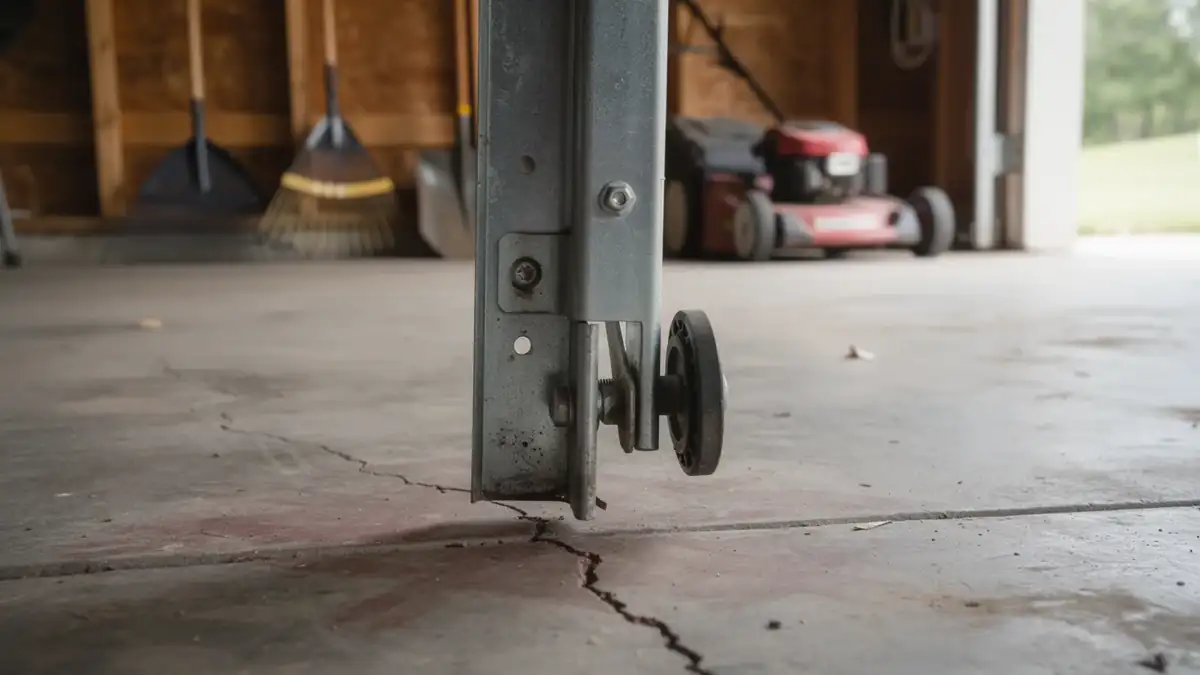
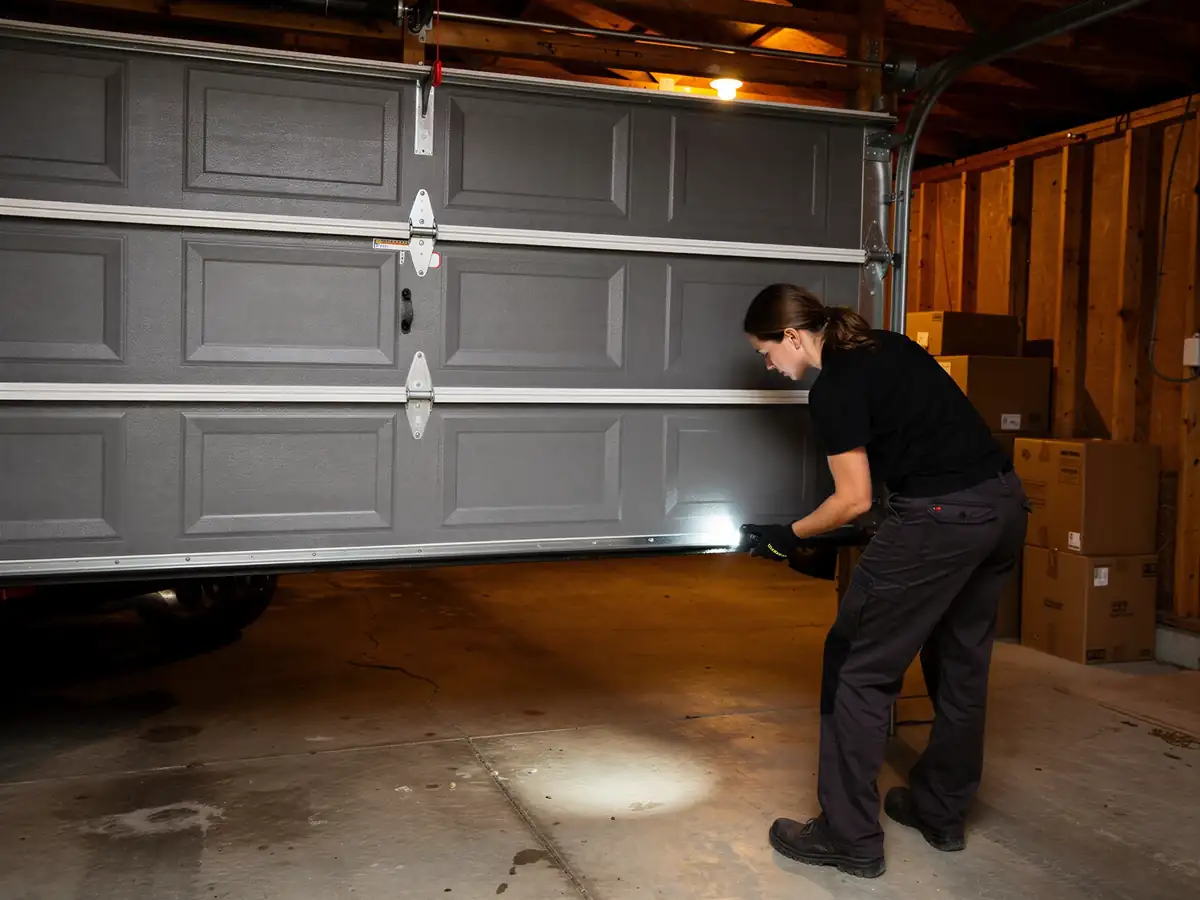
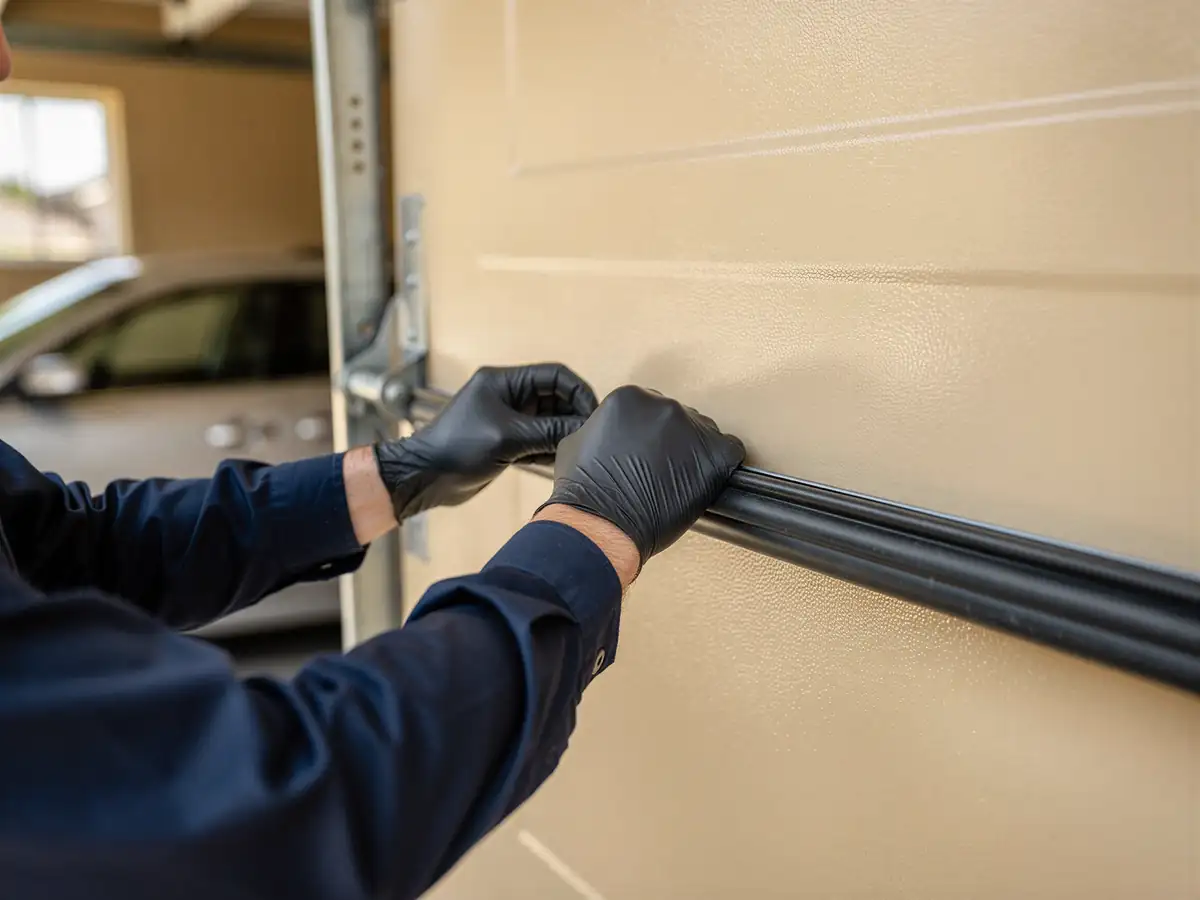
Before calling anyone, look at the track itself - is there a visible gap, bend, or separation from the wall bracket anywhere along its length. Look at the rollers you can see from the floor; a roller with a flat spot or a loose stem will wander inside the track well before it jumps out. Check whether the problem is on one side only, which usually points to a single bad bracket or roller, versus both sides, which more often means the door itself has racked out of square. I'll be straight about the limit here: if the track is bent in more than one spot, or the door is an original panel from a decades-old build, bending the track back rarely holds - replacing that section of track is usually the better use of money than fighting with a hammer and a level. Owner-occupied houses across this area number in the tens of thousands, and a fair share of them are carrying original track hardware that's simply reached the end of its working life.
Straight answers about garage door repair in Fairfax. Still unsure? Ask us directly.
Can I push a garage door back onto its track myself?
Not if the door is partway open. The springs and cables are still carrying tension at that point, and pulling on a panel can snap a cable or drop the door. If it's fully closed and off track at the bottom only, it's safer, but if you're not sure which situation you're in, don't force it.
Why did my door go off track suddenly after years of working fine?
On homes with original hardware from the 1960s-70s era common across this area, brackets loosen gradually from decades of temperature cycling. A bracket that's been working its way loose for years can finally let go all at once, especially after a hard freeze, which is why it feels sudden even though the wear was years in the making.
Is a bent track always a replacement, or can it be straightened?
A single mild bend near one bracket can sometimes be straightened and re-secured. A track bent in more than one spot, or on a door with original decades-old hardware, usually isn't worth straightening - the metal has fatigued and it'll bend again. Replacing that section is the more reliable fix.