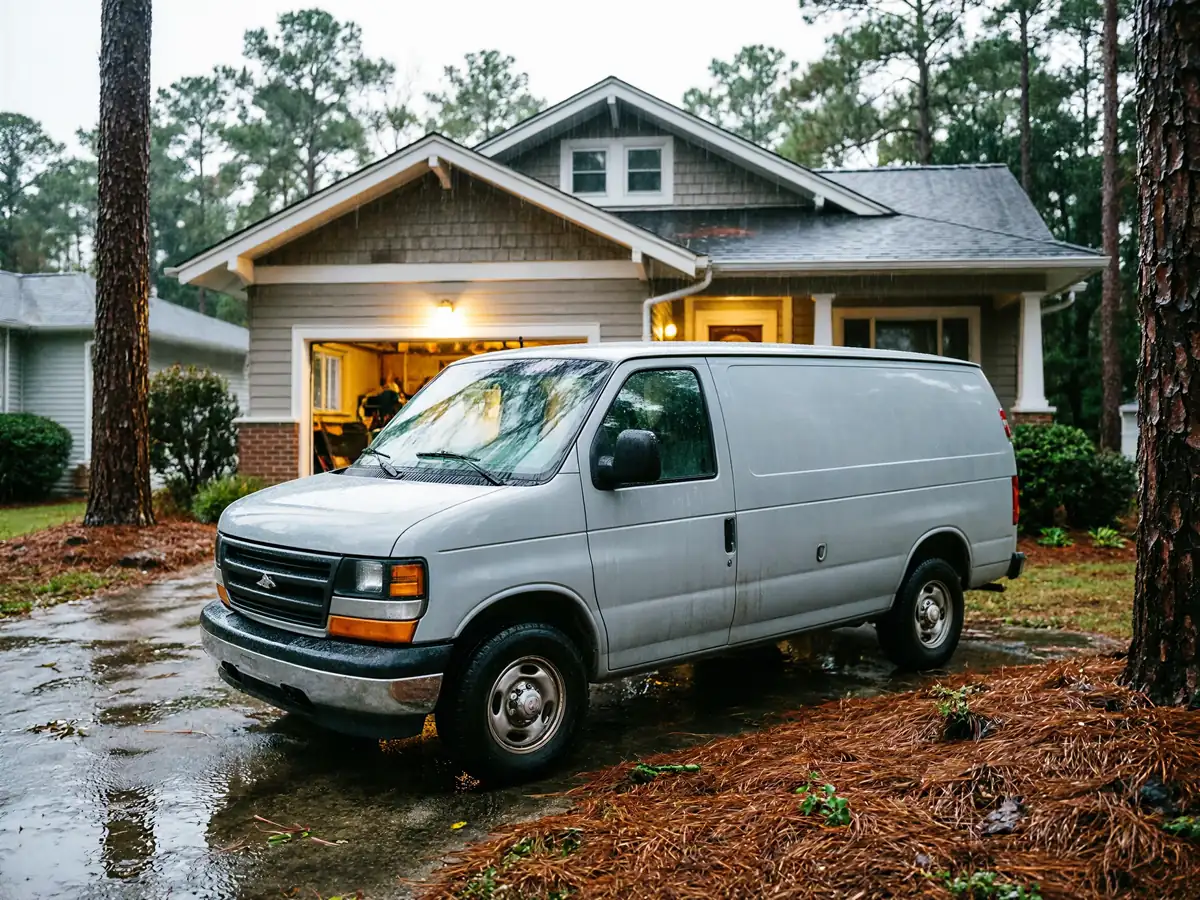
What We Check First Before Touching Your Fairfax Garage Door
Fairfax Garage Door Pros explains what a technician checks first on Fairfax, VA homes, where 1960s-70s doors meet cold-climate wear on original hardware.
Most of the houses we get called to sit in neighborhoods built out through the 1960s and 70s, with the wider range across the area running 1940 to 2015 and the typical build landing around 1978. That matters because a door from that era usually carries its original torsion spring, original track brackets, and sometimes the original opener drive gear - parts that have been working every day for decades longer than anyone planned. The failure doesn't announce itself. A spring that's been cycling since the Nixon administration doesn't snap cleanly; it fatigues, loses tension unevenly, and starts throwing the door off balance by a few degrees a year until one morning it won't lift past knee height. We also see a second pattern in homes closer to 1940s-50s construction: single-layer steel panels with no insulation, hung on hardware that was never rated for the openers people have since bolted on. Neither problem is dramatic until it is. The door looks fine right up until the cable frays through or the spring lets go while someone's hand is on the bottom panel. The age of the house tells us more about what's likely wrong than the symptom the owner describes on the phone.
When to Get Help
Call before the door stops working, not after. If a double door has gotten noticeably heavier to lift by hand over the past month, the spring is losing tension and it's a matter of weeks, not years. If the door slams the last six inches instead of settling, the opener's force setting has been creeping up to compensate for something mechanical - usually a spring or a binding roller - and that's a workaround, not a fix. Fraying on either cable, visible rust at the bottom bracket, or a track that's pulled away from the wall on one side are all things that turn into an emergency call on a weekend if you wait. Given the median household income across this service area sits well above $140,000, most owners we talk to would rather spend on a scheduled repair than a weekend emergency rate - but that only works if the call happens while the door is still operating, even poorly. One honest limitation: if the spring has already let go and the door is down with nobody able to move it, that's a same-day priority call, not a next-week appointment, and we treat it that way.
How Local Conditions Play In
Fairfax sits in a cold climate band with severe winter conditions, and that changes how steel hardware behaves compared to a mild-climate town. Torsion springs lose a measurable amount of lifting force as temperature drops - a spring that's already fatigued from age has less margin to give, so the first hard freeze of the season is when marginal springs actually fail, not during the summer when the owner first noticed the door felt heavy. Lubricant on rollers and hinges thickens in cold weather too, which is why a door that opened fine in October can start grinding or hesitating by January even though nothing mechanically changed. On original hardware from the 1960s and 70s stock that makes up most of this area, there's usually no factory lubrication schedule anyone followed, so decades of cold-warm cycling without maintenance shows up as corrosion at the hinge pins and stiff rollers in the track. We see this consistently across the older sections near Mantua and Merrifield, where the housing stock and the winter exposure line up to produce the same failure pattern call after call.
What to Look At First
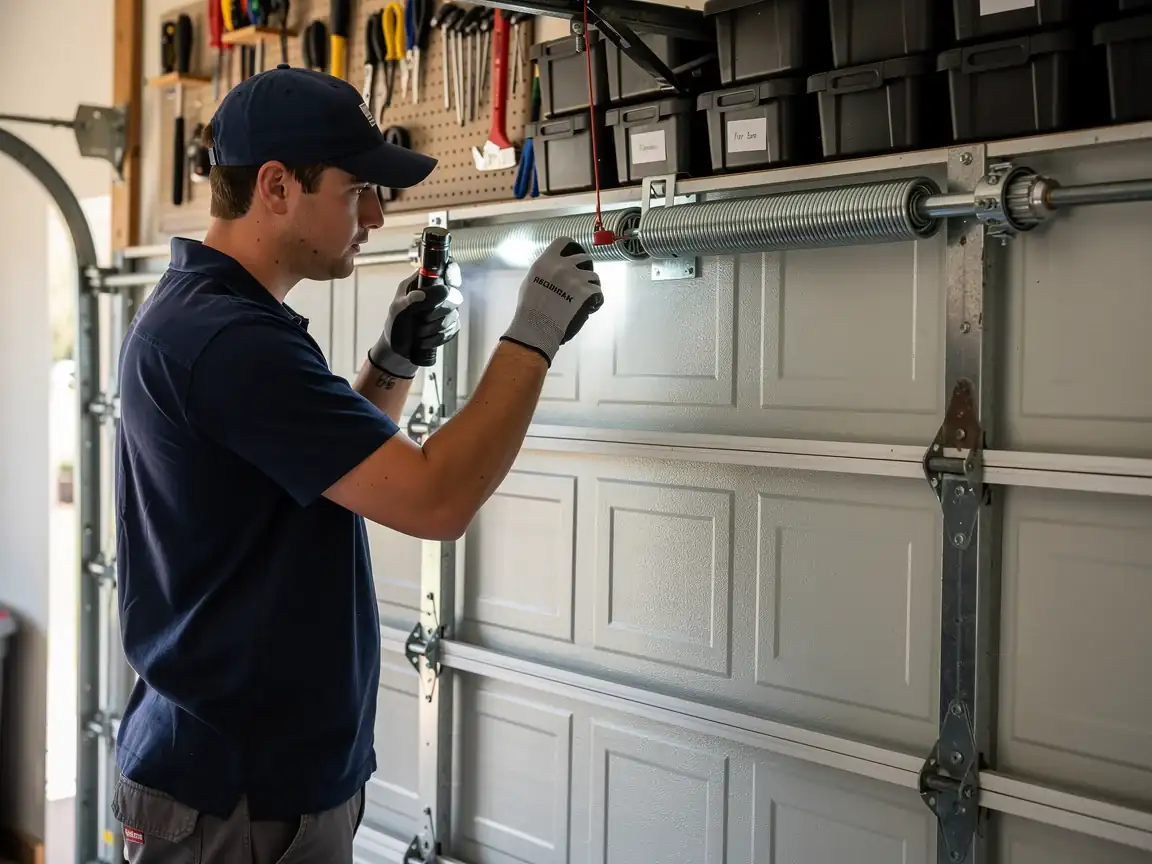
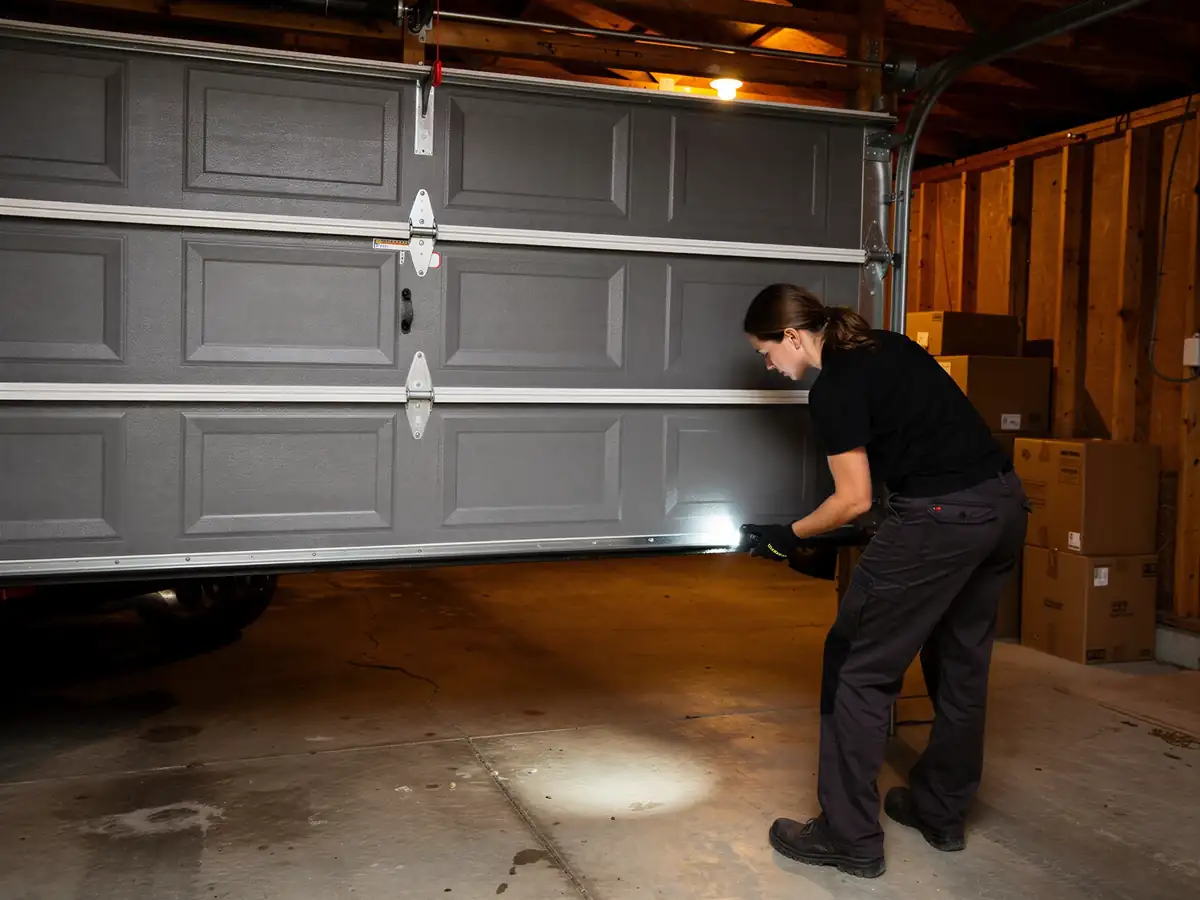
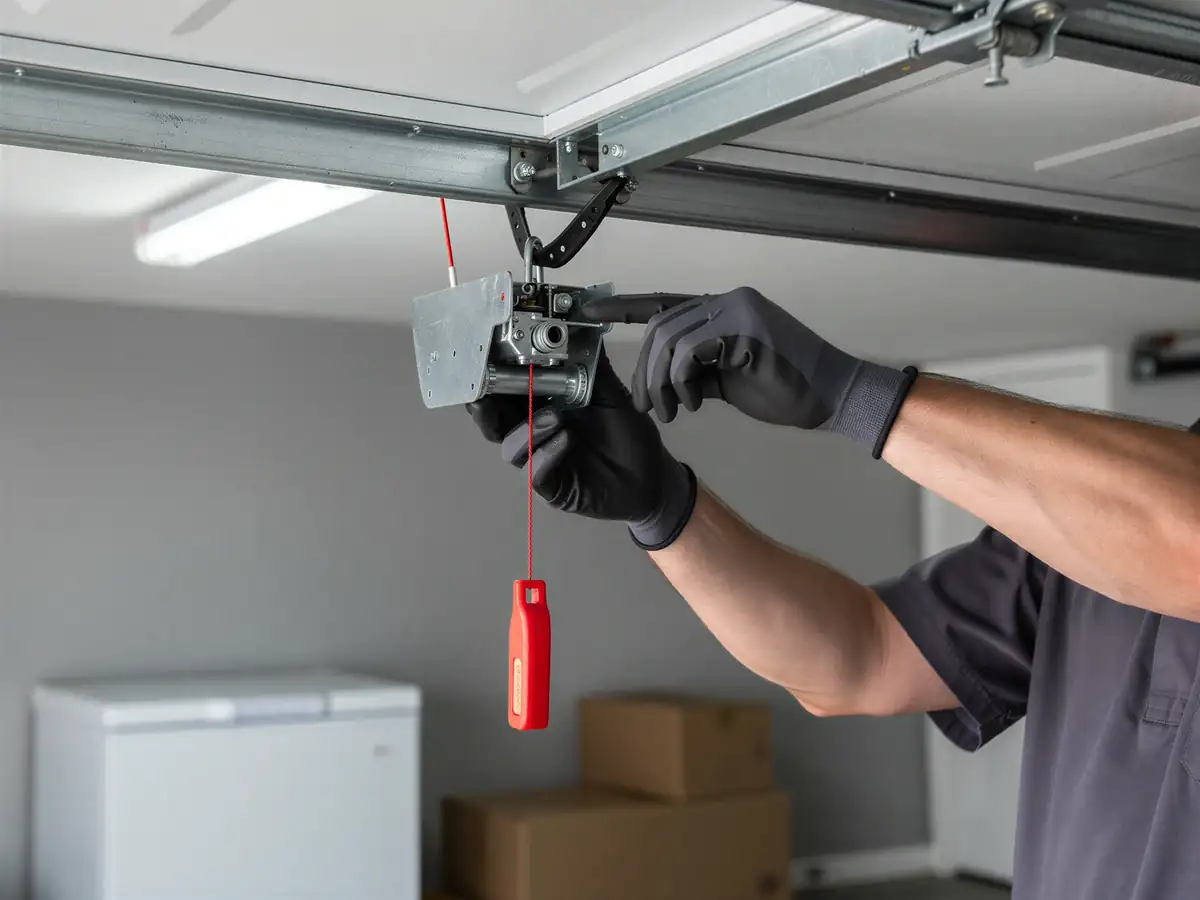
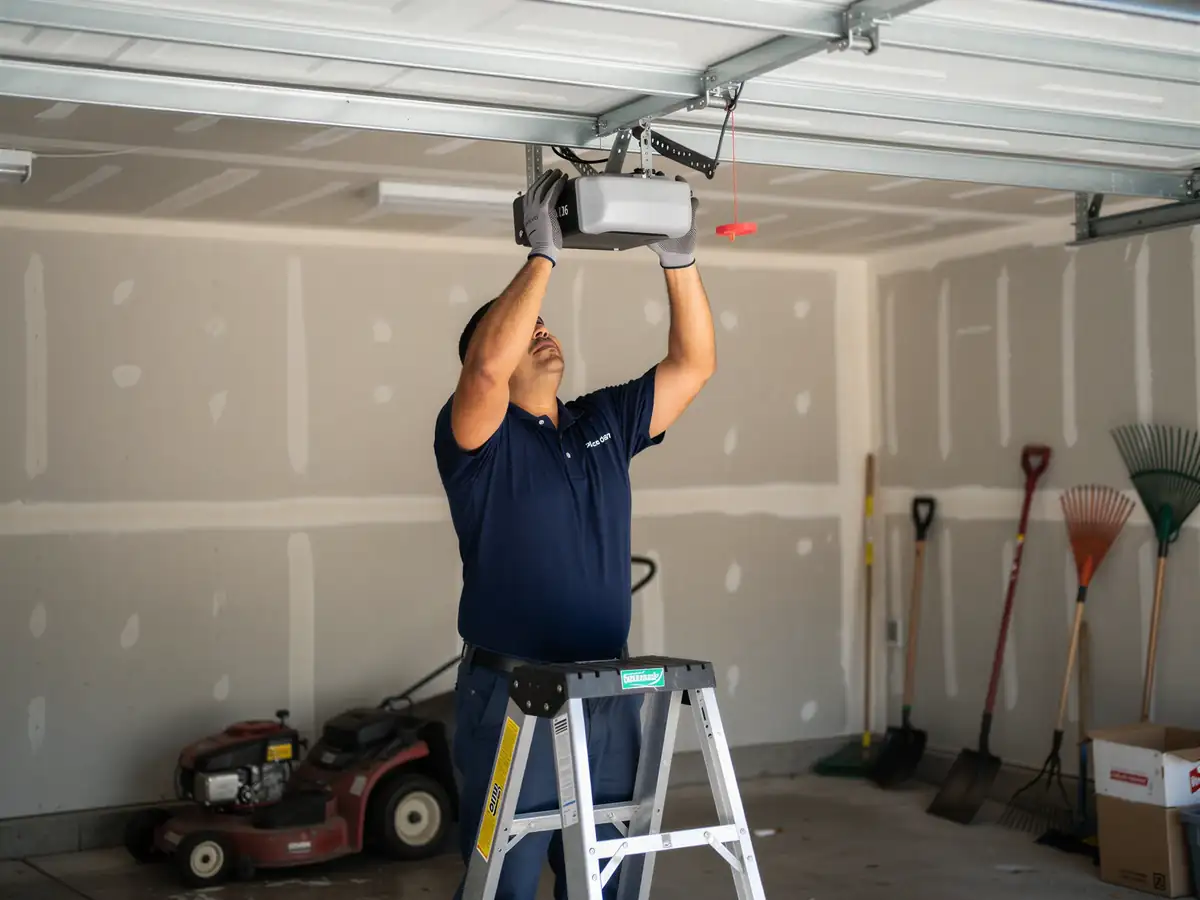
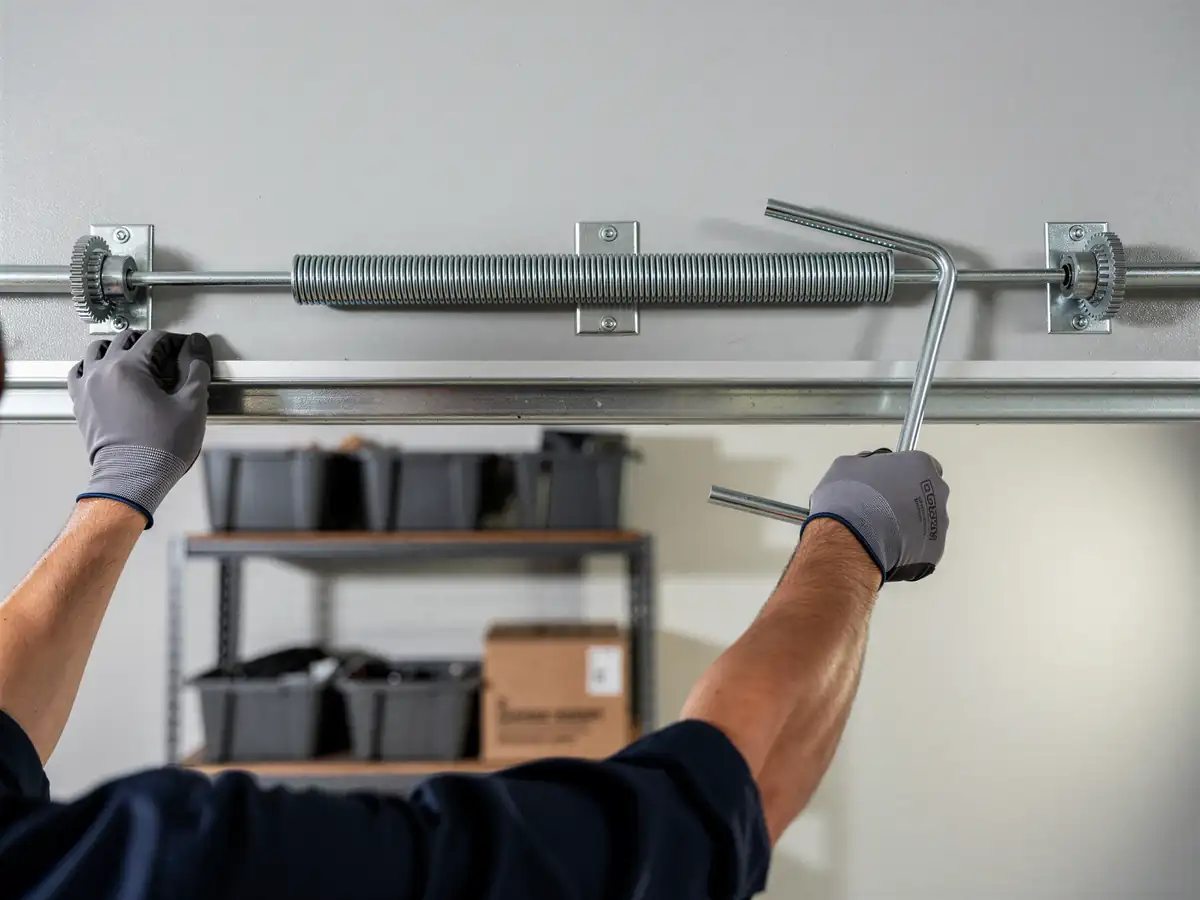
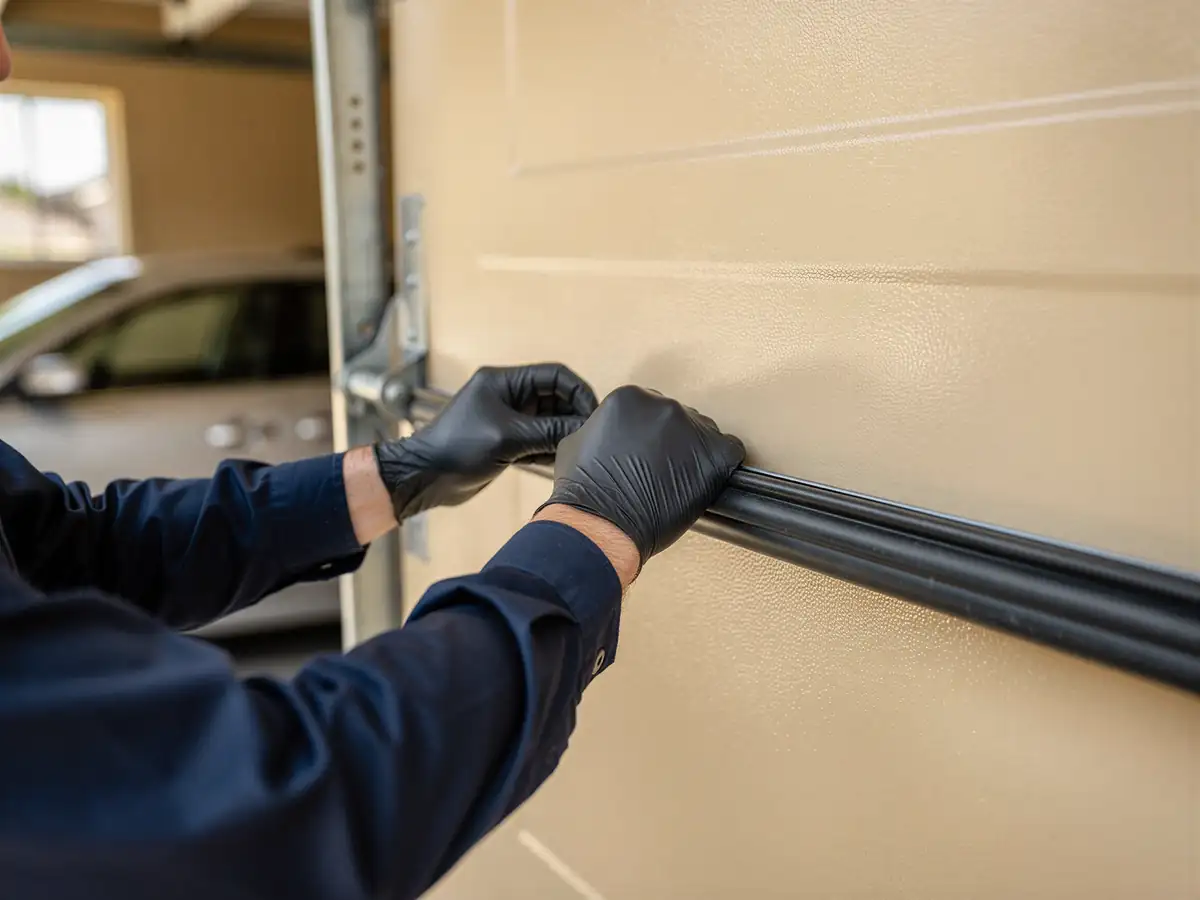
Before touching an opener or diagnosing a remote, a technician checks the spring tension by hand-lifting the door halfway and letting go - if it drifts up or drops, the spring is off, and that's the root cause behind most of what gets blamed on the opener. Next is the cable condition at both drums, since a fraying cable on an older torsion system is the thing most likely to cause an injury, not the spring itself. Then the track alignment and the hinges at each panel joint, checking for the rust and stiffness that cold-climate cycling produces on hardware that's never been lubricated. Only after those three are confirmed does the opener's force and travel settings get checked, because adjusting force on an opener compensating for a bad spring just hides the real problem a little longer. On houses closer to the 1940s-50s end of the build range, we also check whether the door itself is insulated steel or a single uninsulated layer, since that changes whether replacement or repair makes more financial sense. We don't pretend every door is worth saving - sometimes a single-layer panel from that era has corroded through at the bottom and the labor to patch it costs more than a new door section.
How it works
From “it’s stuck” to “it’s fixed”
01
Tell us what’s wrong
Describe the symptom - won’t open, loud bang, opener runs but the door won’t move.
02
On-site diagnosis
A technician tests the door under power and by hand and finds what actually failed.
03
Clear, up-front plan
You get the fix that’s needed and what drives the cost - before any work starts.
04
Repaired & tested
The repair is done, the door is set true and tested, and the work area left clean.
Not sure which repair your door needs in Fairfax, VA? Describe what it’s doing - every job starts with a diagnosis.
Straight answers about garage door repair in Fairfax. Still unsure? Ask us directly.
How old does a garage door have to be before the spring is a concern?
Given that most homes in this area were built in the 1960s and 70s, a lot of original torsion springs are now 50-plus years into a lifespan they were never designed to cover. Age alone isn't a failure, but combined with cold-weather cycling every winter, it's the single most common reason we get called out.
Does the cold actually affect a garage door spring?
Yes. In a cold climate band like this one, steel springs lose some lifting force as temperature drops, and a spring that's already fatigued from age has less tension in reserve. That's why failures cluster in the first hard freeze of the season rather than spread evenly through the year.
Is it worth repairing a door from a 1940s or 50s house?
Sometimes, sometimes not. If the panel is single-layer steel and has corroded through at the bottom, the labor to patch it can cost close to a new section. We'll tell you honestly when replacement is the better spend instead of running up a repair bill on a door that's near the end of its life.