Why It Happens Here
Walk through the 38 named areas we cover and you'll see the same pattern
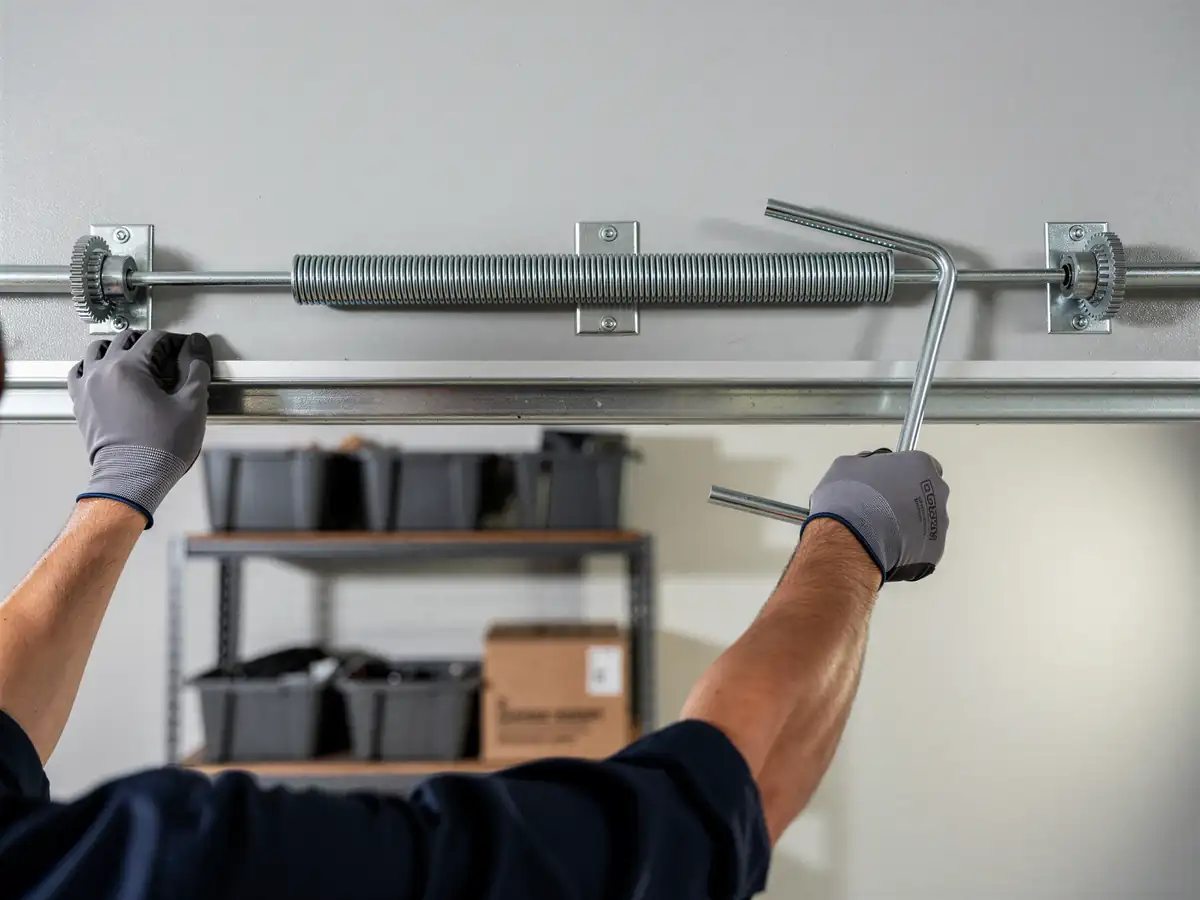
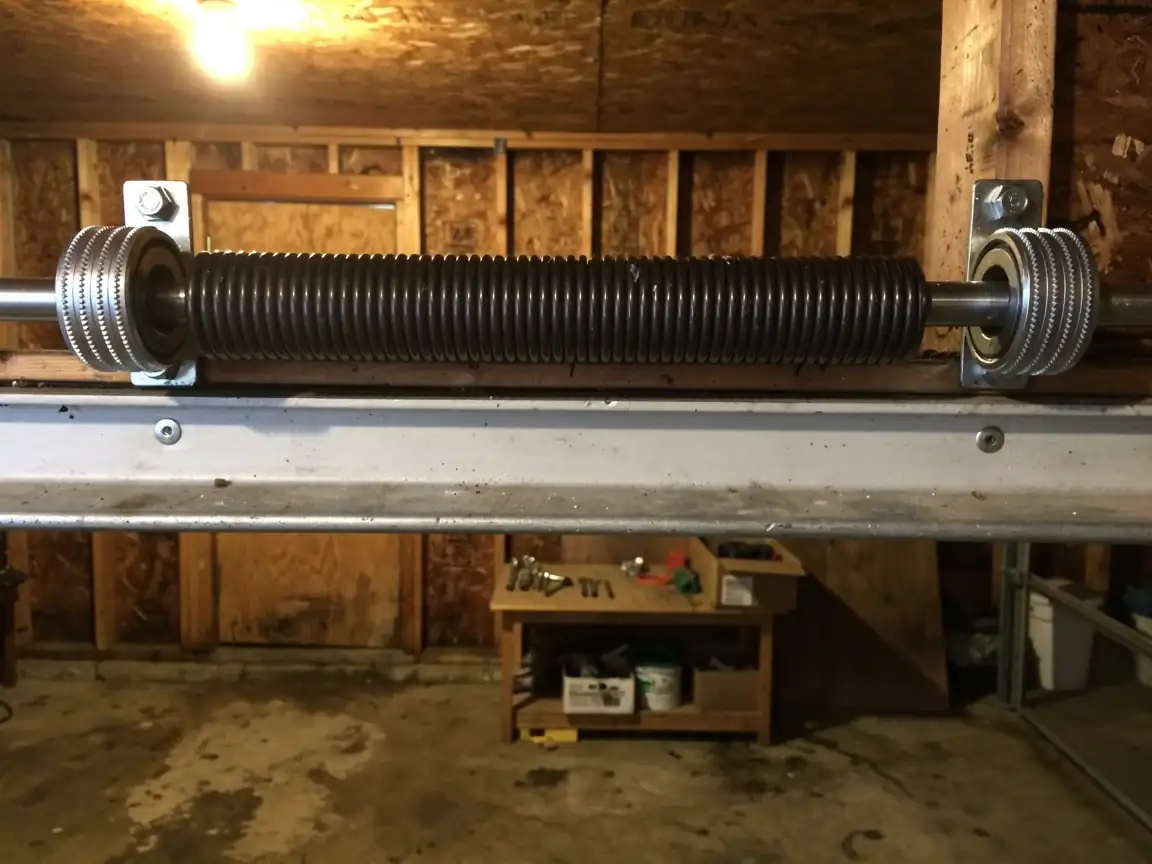
Houses built between 1940 and 2015, with the bulk of that stock going up in the 1960s and 70s. That's a 50-to-60-year-old torsion spring system in a lot of these garages, sized for a lighter wood door that may have since been swapped for a heavier steel one without anyone re-rating the spring.
Fairfax sits in a severe cold climate band, and that matters more than people think
Steel springs lose tension and go brittle faster through repeated hard freezes and thaws than they would in a mild climate. Nylon rollers crack in cold snaps. Lubricant in old bearings thickens up overnight and the door strains against it on the first lift of the morning - which is exactly when the cable frays or the spring finally lets go.
Put an older spring system in a cold climate and you get failures concentrated in winter
On doors that are decades past when they should have been serviced. That's the core of what we see house to house here, not a generic wear-and-tear story.
What You Are Seeing
A door that used to lift in one smooth motion now hesitates, jerks, or needs a shove partway up. That's usually a torsion spring that's lost tension gradually, something common on original hardware from the 1960s-70s builds across this area. You may also hear a loud bang from the garage in cold weather - that's a spring breaking outright, often first thing in the morning when the metal is coldest and least flexible.
On opener-equipped doors, you might notice the opener straining, reversing on its own partway down, or the chain skipping. Older chain-drive units paired with an aging spring system fight each other - the opener tries to compensate for a door that's heavier to lift than it should be, and that shortens the opener's life too.
Rust streaks on tracks or hinges, especially on the north-facing side of the garage where sun never hits the steel, point to moisture sitting through repeated freeze-thaw cycles rather than a one-time weather event. None of these are cosmetic - they're the visible end of hardware that was sized for a different decade.
The Complications
The honest complication with houses from this era is parts. A torsion spring wound to 1960s or 70s door weight and track geometry isn't something we pull off a generic shelf - we measure wire gauge, coil diameter, and length against the actual door, because a wrong-rated spring on an old track is a safety problem, not a convenience one.
Cold makes the job harder too. Steel contracts in deep cold, which changes torque on a spring that's already near its working limit, and it's not unusual for a spring that held through a mild stretch to fail during the first hard freeze. We can't speed up how fast a part ships if it's a less common size, and on some of the oldest doors in this area, an exact panel match isn't available at all - at that point patching isn't worth it and full panel or door replacement is the straighter path.
We'll tell you when that's the case rather than stretch a repair that won't hold through another winter.
How We Fix It
We start by measuring the door and the existing spring, not just replacing like-for-like
Since a lot of these original setups were undersized or over-tensioned from a prior repair somewhere along the way. On a 1960s or 70s door, that means confirming door weight and track type before cutting a new spring to size.
For opener issues tied to spring strain, we address the spring first
An opener fighting an underpowered spring will keep failing even with a new motor. We lubricate and check rollers and hinges for the kind of freeze-thaw rust common on older steel hardware in this climate, and we replace what's worn rather than just greasing over it.
Where a part for an older door isn't available or the door itself has reached the end of its service life
We'll say so plainly and lay out what a full replacement costs instead of pushing a repair that won't last another season. That's the limitation we'd rather name upfront than have you find out in January.