The Complications
The median home in Fairfax Station was built around 1982
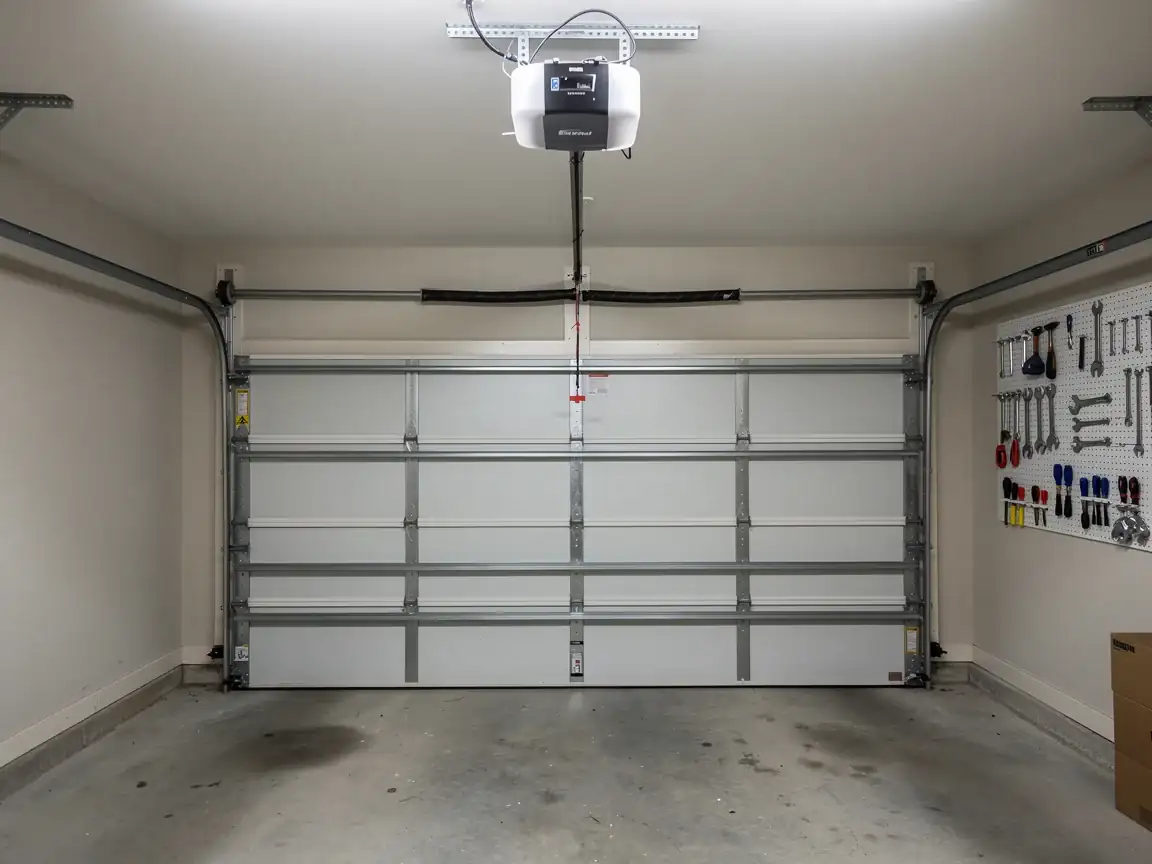
And that number matters more than it sounds. A door that age has usually had the opener swapped once, maybe twice, but the spring, the hinges, the track brackets and the drum hardware behind the opener almost never get touched unless something breaks outright. Nobody replaces a torsion spring that hasn't snapped. So when we're called out here, we're frequently looking at forty-plus-year-old steel doing the actual lifting, bolted to brackets that have never been re-torqued since the house was framed.
That's a different problem than you'd find in a neighborhood built in the 1960s
Where the door itself is usually original too and due for full replacement. Here the door panels are often newer than the lifting hardware underneath them, which means the failure point is hidden - a spring that's lost tension gradually, a cable with internal fraying you can't see from the garage floor, a center bearing plate that's worn oval instead of round. The cold-weather swings this area gets don't help; steel contracts, lubricant thickens, and a spring already near the end of its life gives out on the coldest morning of the year, with the heaviest door of the week sitting half-open.
Time on the Job
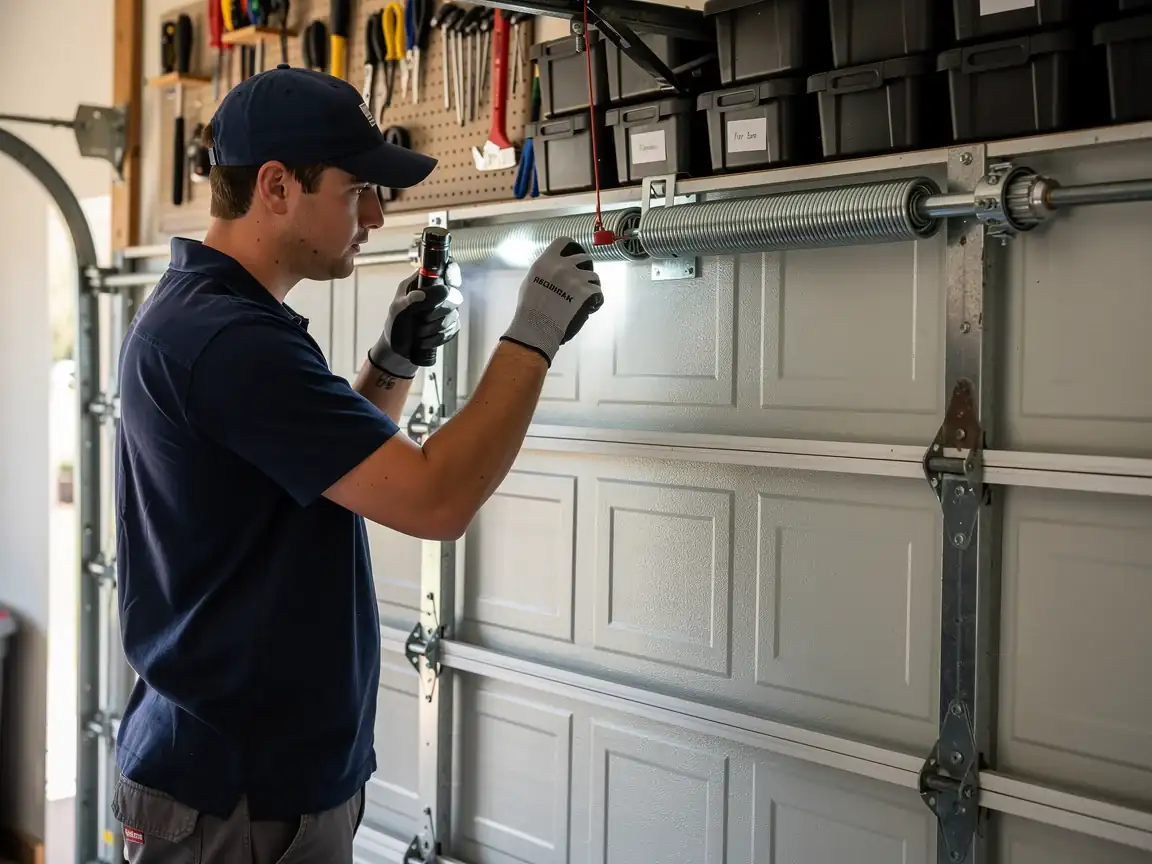
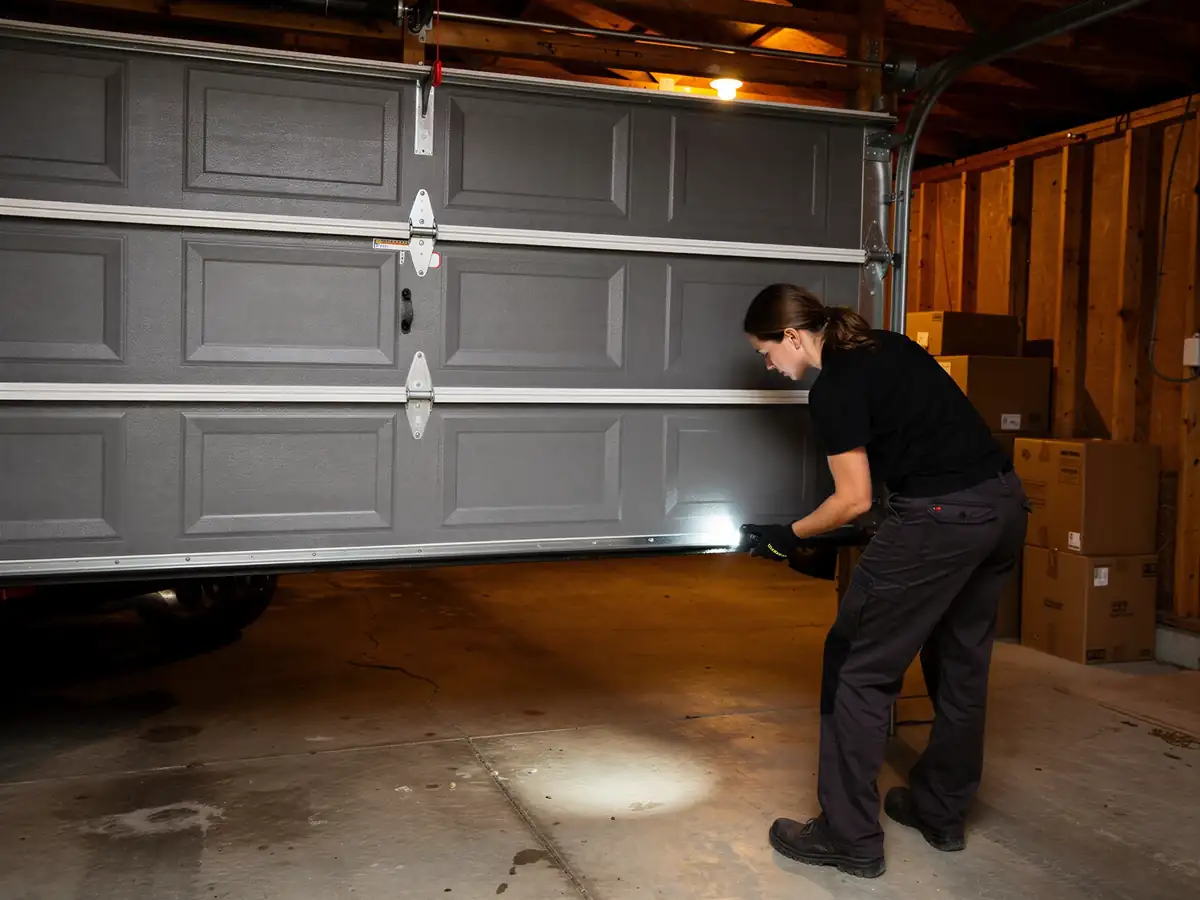
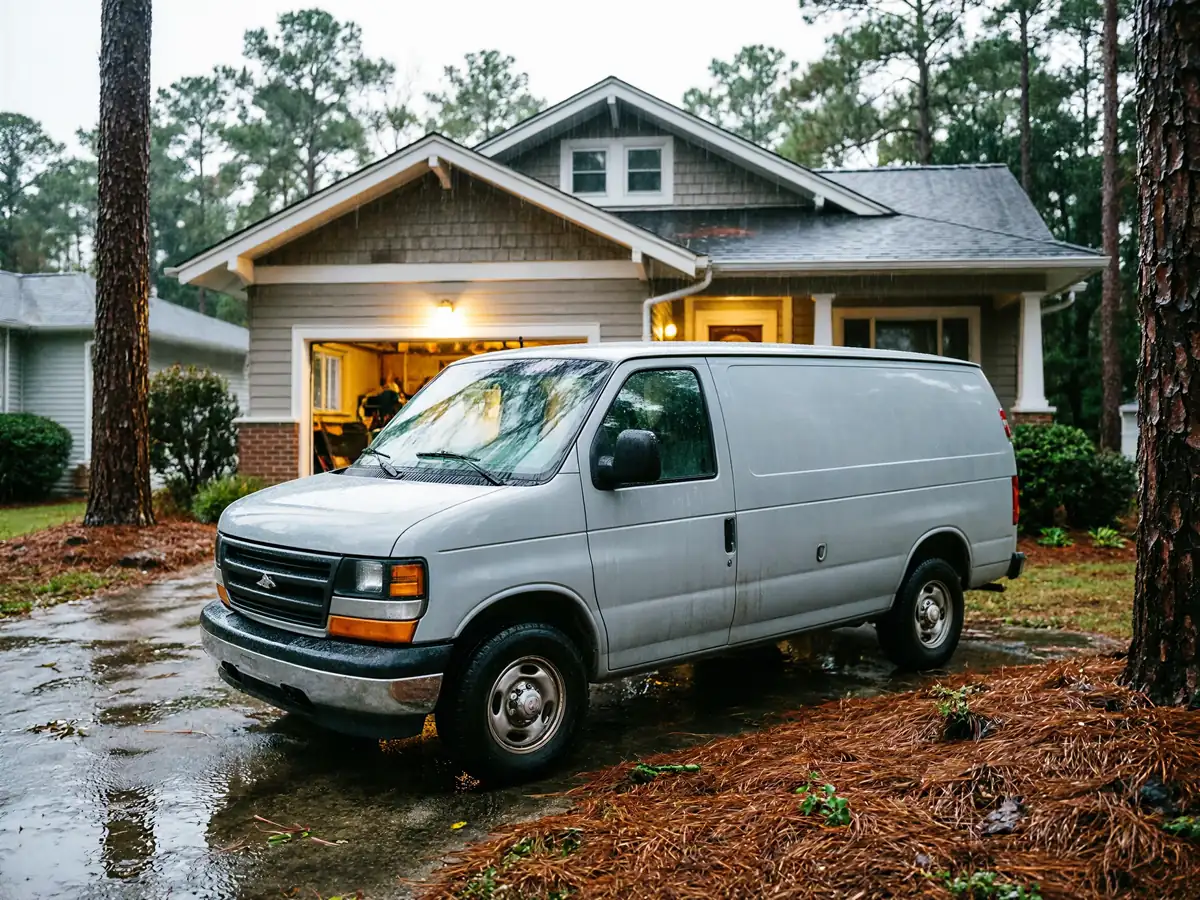
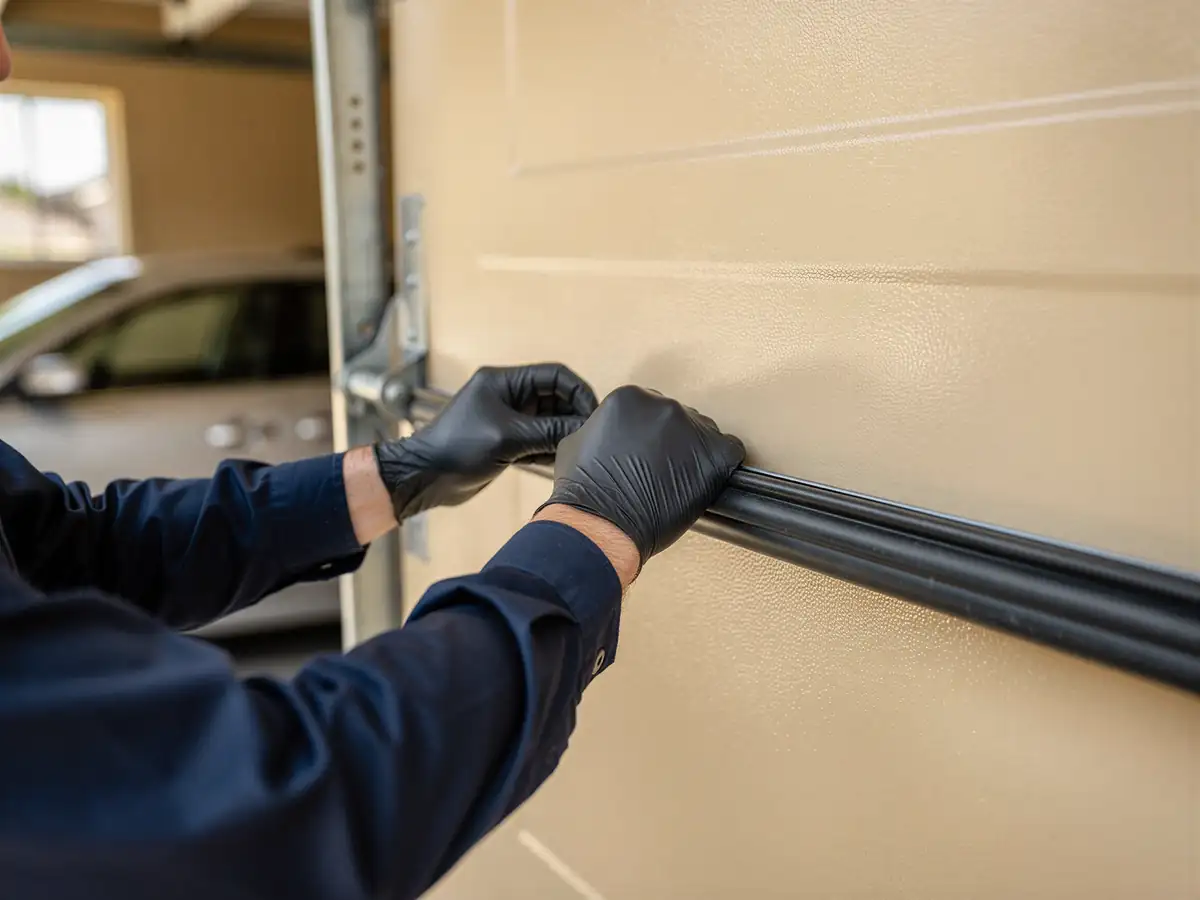
We come out from Fairfax, about 5 miles, so there's no separate branch or local crew based in Fairfax Station itself - just a standard trip out and the same tech doing the work. A maintenance visit on a door this age runs longer than it would on a five-year-old door, because we're not just lubing rollers and checking the sensor eyes. We're checking spring tension against the actual door weight, inspecting cable wear at the drum, torquing bracket bolts that have backed off over decades of thermal cycling, and looking at the bottom seal and weatherstripping for the kind of hardening that cold winters cause over time.
We won't pretend every visit takes the same amount of time. A door that's had one owner and zero maintenance since 1982 takes longer to go through properly than one that's been serviced on a schedule. We'd rather tell you that up front than rush it.
What You Are Seeing
If your door is original to a house from the early 1980s, the signs we hear about most are a grinding or popping noise on the way up, a door that seems to hesitate or jerk partway through the cycle, or an opener that strains and then stalls - which usually isn't the opener's fault at all, it's a spring that's lost enough tension that the motor is doing work it was never built to do. On these older setups we also see galvanized cable starting to show rust bloom at the drum end, especially on the side less sheltered from weather.
A household income of $212,128 in this area means a lot of garages double as workshop or storage space, with more weight hanging on the track - shelving, cabinets, sometimes a second freezer - than the door and hardware were sized for in 1982. That adds stress to original springs that were never generous on margin to begin with.
Booking a Visit
With roughly 4,159 households in this part of the service area
A fair number of them still running on original 1982-era hardware, we try to book maintenance visits in blocks rather than one-off emergency calls - it's the more honest way to deal with a door that's overdue rather than actually broken. If yours is making noise but still opening and closing, that's exactly the stage where a tune-up catches the spring or cable before it becomes a Saturday-morning no-go.
- 4,159 households
You can see our coverage for this area at Fairfax Station coverage
And the full rundown of maintenance service across Fairfax is on our garage door maintenance page.
How We Fix It
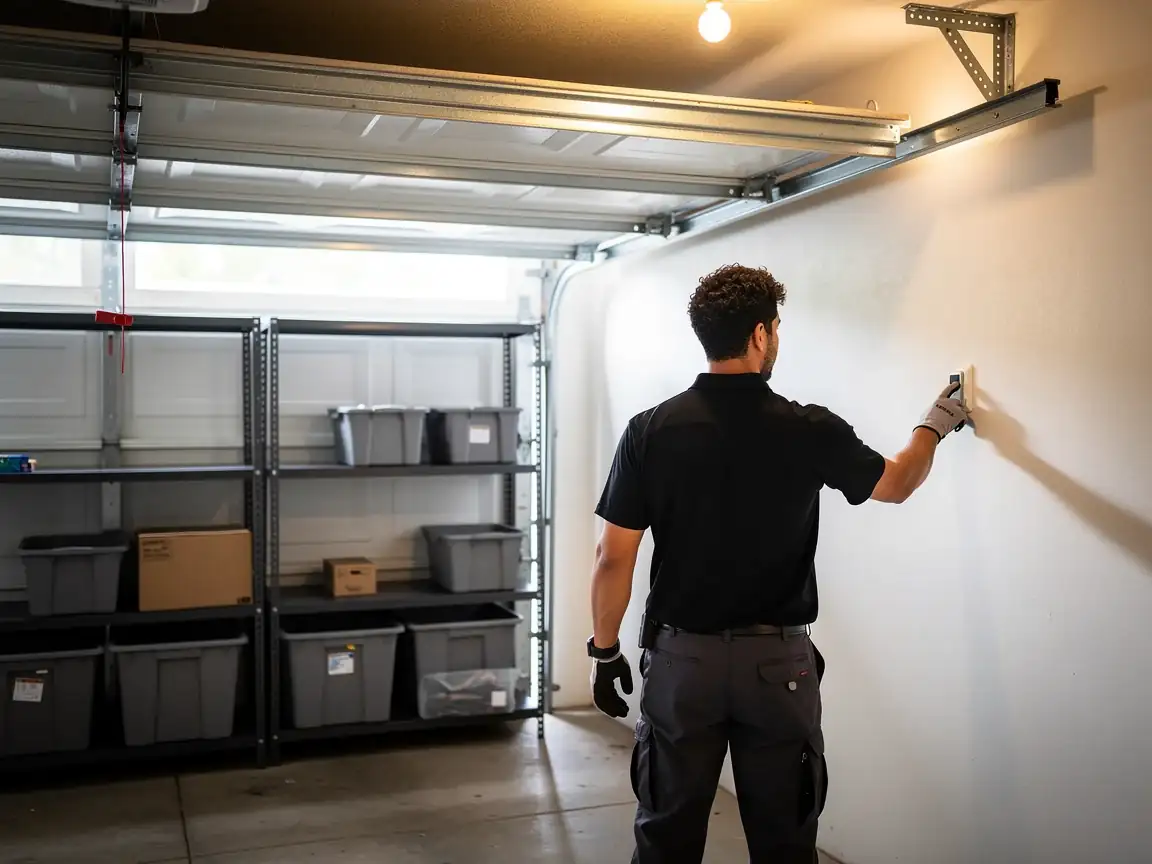
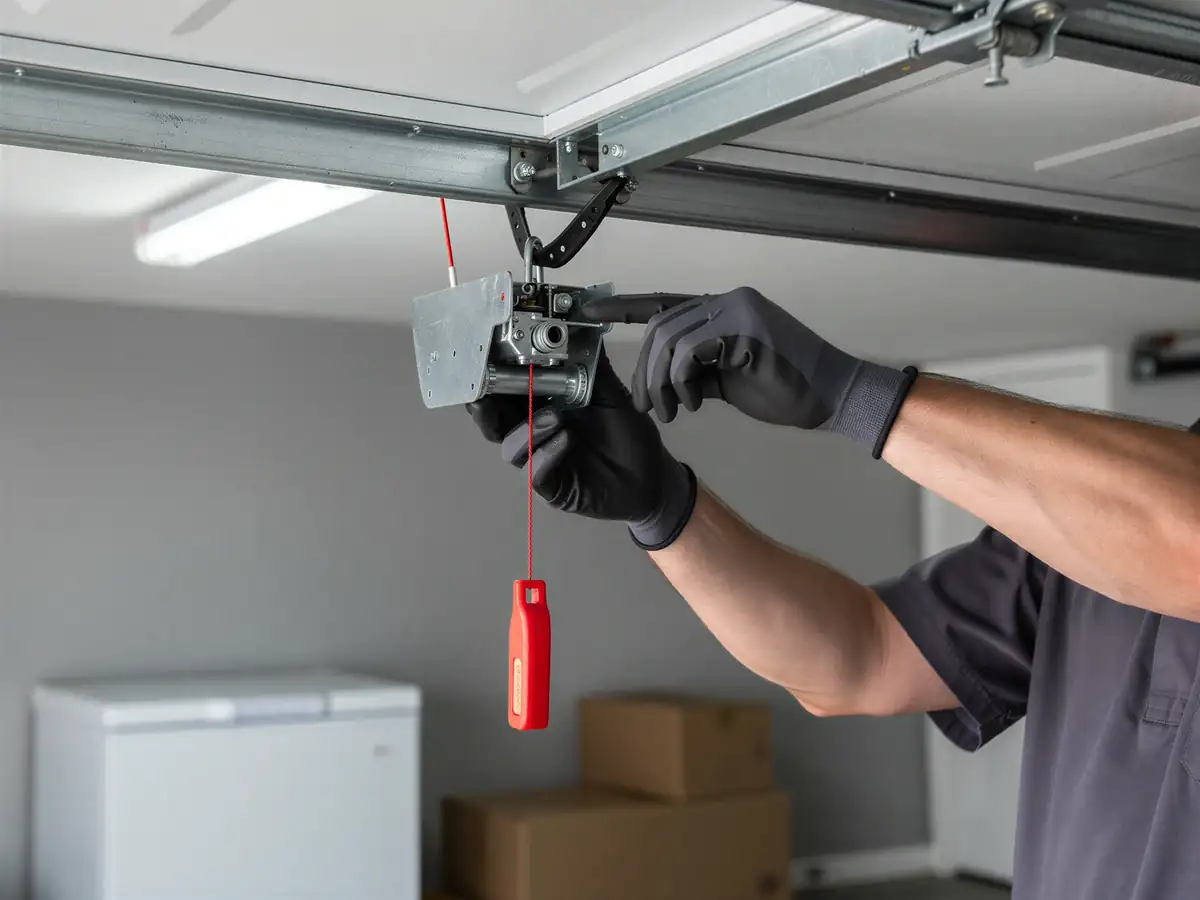
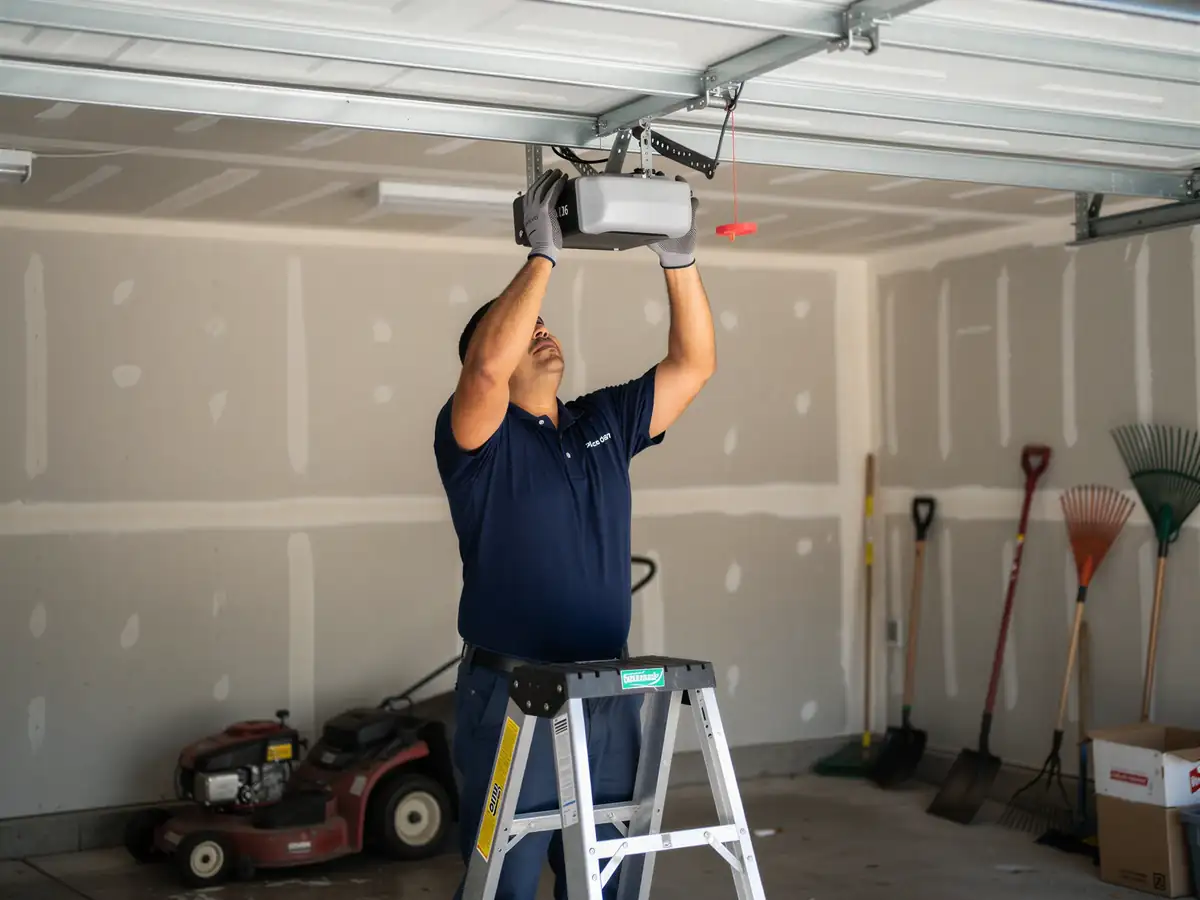
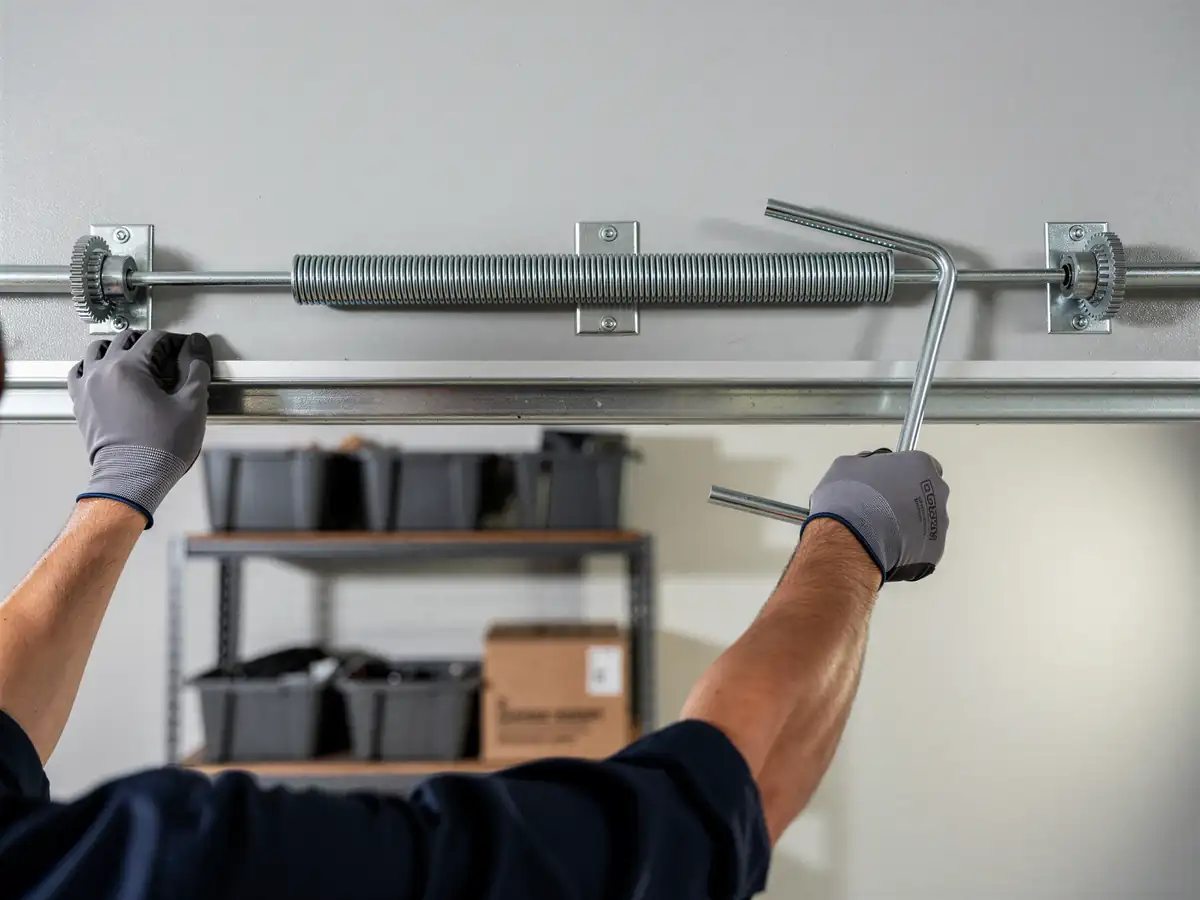
On a door this old, maintenance means more than a squirt of lube on the rollers. We check torsion spring wind and tension against the door's actual weight, inspect the cable and drum for wear that doesn't show from the floor, torque every bracket and hinge bolt that's loosened over the decades, and test the auto-reverse and force settings on the opener - which on an older unit are sometimes set wrong from the start and never corrected.
We'll be straight with you here: if the spring is original from 1982, we're probably not going to tell you to just lube it and move on. Metal fatigues, and a spring that old on a door carrying extra garage storage weight is closer to the end of its working life than the middle. Sometimes the honest maintenance call is telling you the spring needs replacing now, on a schedule, rather than waiting for it to let go on its own.