What You Pay
Wakefield sits about 4 miles from our Fairfax shop
And the quote you get here isn't shaped by distance - it's shaped by what's already bolted to your house. Across the wider service area the median home dates to 1978, but Wakefield's stock runs older, built mostly around 1968, which puts it in the same 1960s-70s wave that covers a lot of this region. That means more jobs here involve swapping out a single 7-foot opening built to older framing tolerances, not the 8-foot openings common in houses built after 1990.
- 4 miles
Household income in this part of the service area runs well above the regional median
North of $220,000 versus roughly $144,000 area-wide - and we see that reflected in the door choices: more insulated steel and composite requests, fewer bare single-layer doors. We'll give you a number after we look at your opening and your current track, not before. A flat per-door price without seeing the header and jambs is a guess, and we don't quote guesses.
One honest limitation
If your opening has settled or the framing is out of square, which happens on houses from this period, that adds labor we can't price sight unseen.
Can You Do This Yourself
A new door is heavier work than most repair jobs, and on a house from the late 1960s the opening itself is often the complication, not the door. Framing from that era wasn't always cut to a standard width, so a big-box door ordered to spec sheet dimensions can end up a half-inch off on one side - enough to bind a track or rack a panel within the first year.
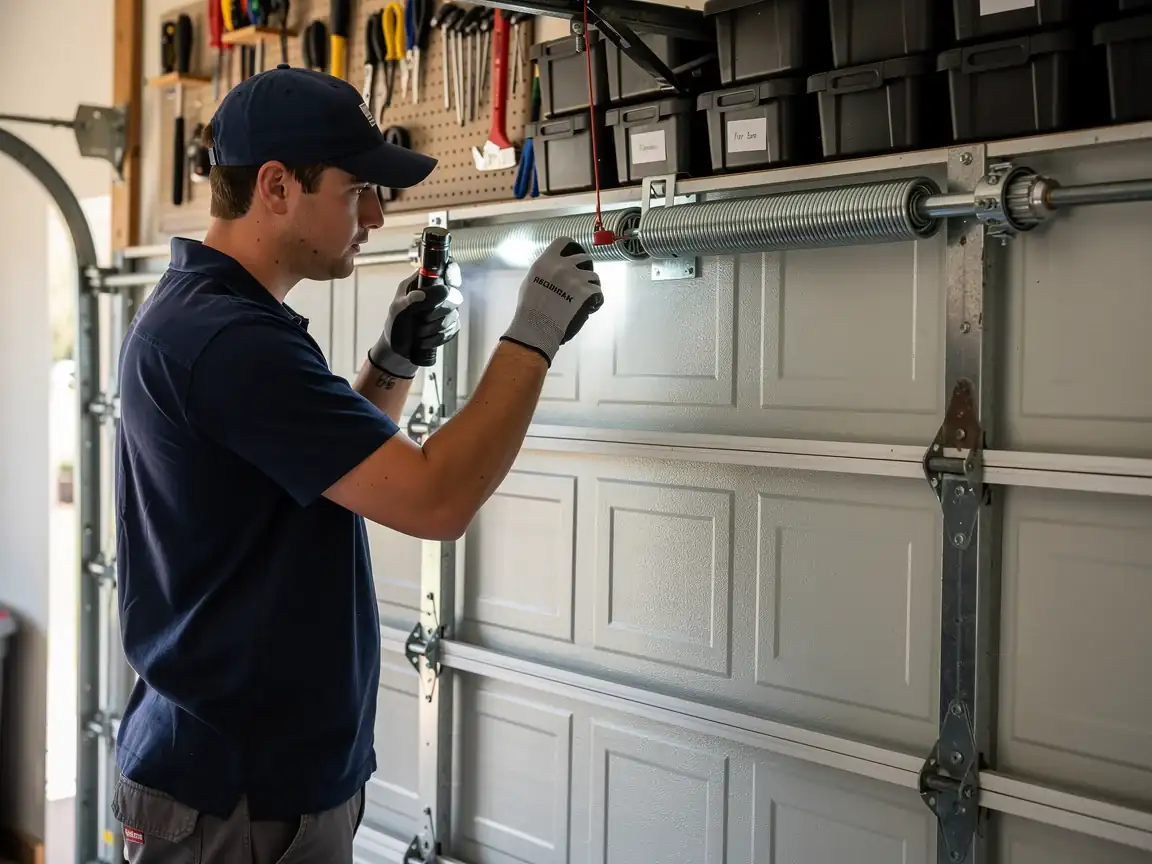
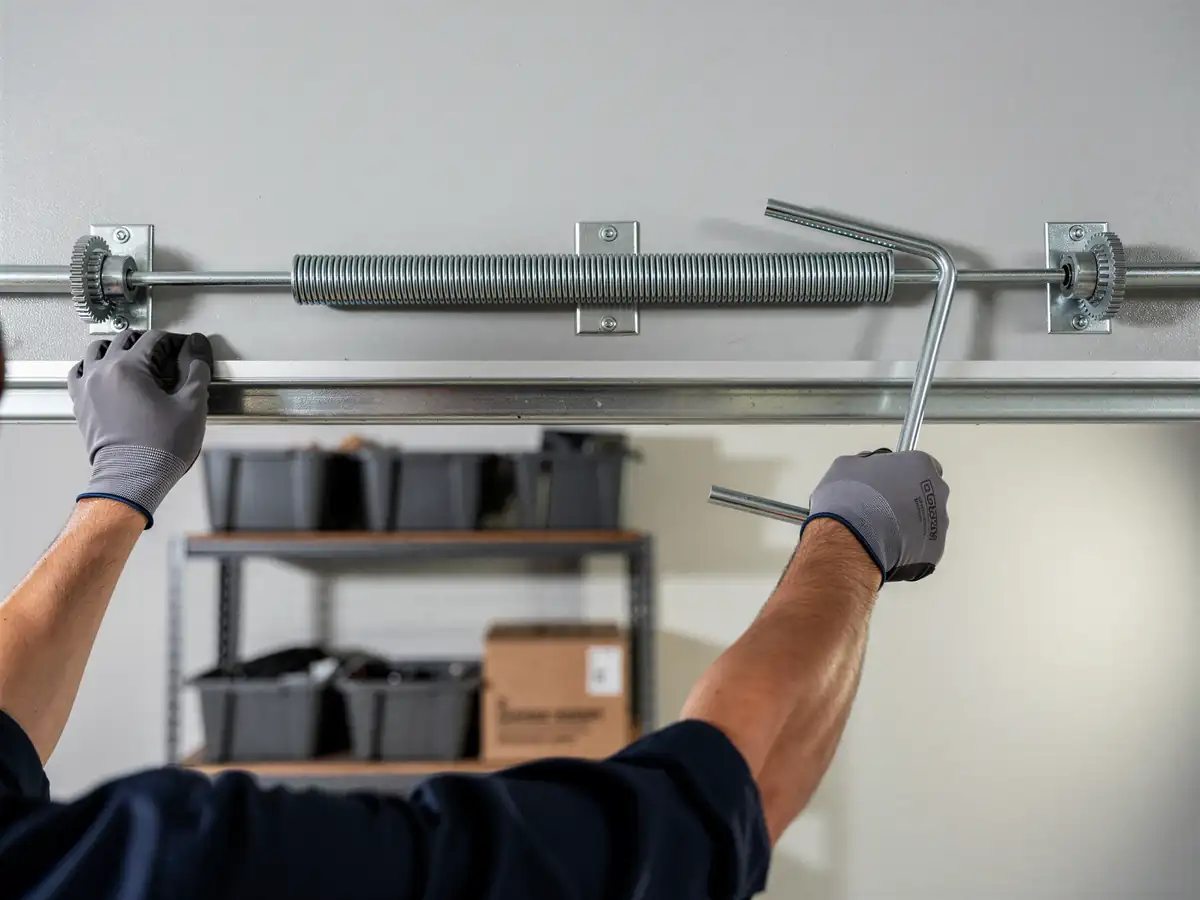
If you're set on doing it yourself, measure the rough opening twice, check it for square with a diagonal measurement, and don't trust that the old door's dimensions match the new one you're buying - torsion spring sizing in particular has changed over the decades, and an undersized spring on a modern insulated door will wear out the opener motor fast.
We won't talk you out of a DIY job on a single, simple opening if you're handy and have a helper. Where we'd push back is a double-wide door going into an older frame, or any job where the old header shows signs of sag - that's two people and a long day, and getting the spring tension wrong on a double door is where most self-install injuries happen.
Parts We Carry
For a 1968-era house we're usually working with a 7-foot opening and sidemount or low-headroom hardware rather than the taller clearances found in newer construction. We carry torsion springs sized for that range of door weight, steel doors in both single-layer and insulated options, and tracks cut for the lower headroom you tend to find in garages built before the 1980s.
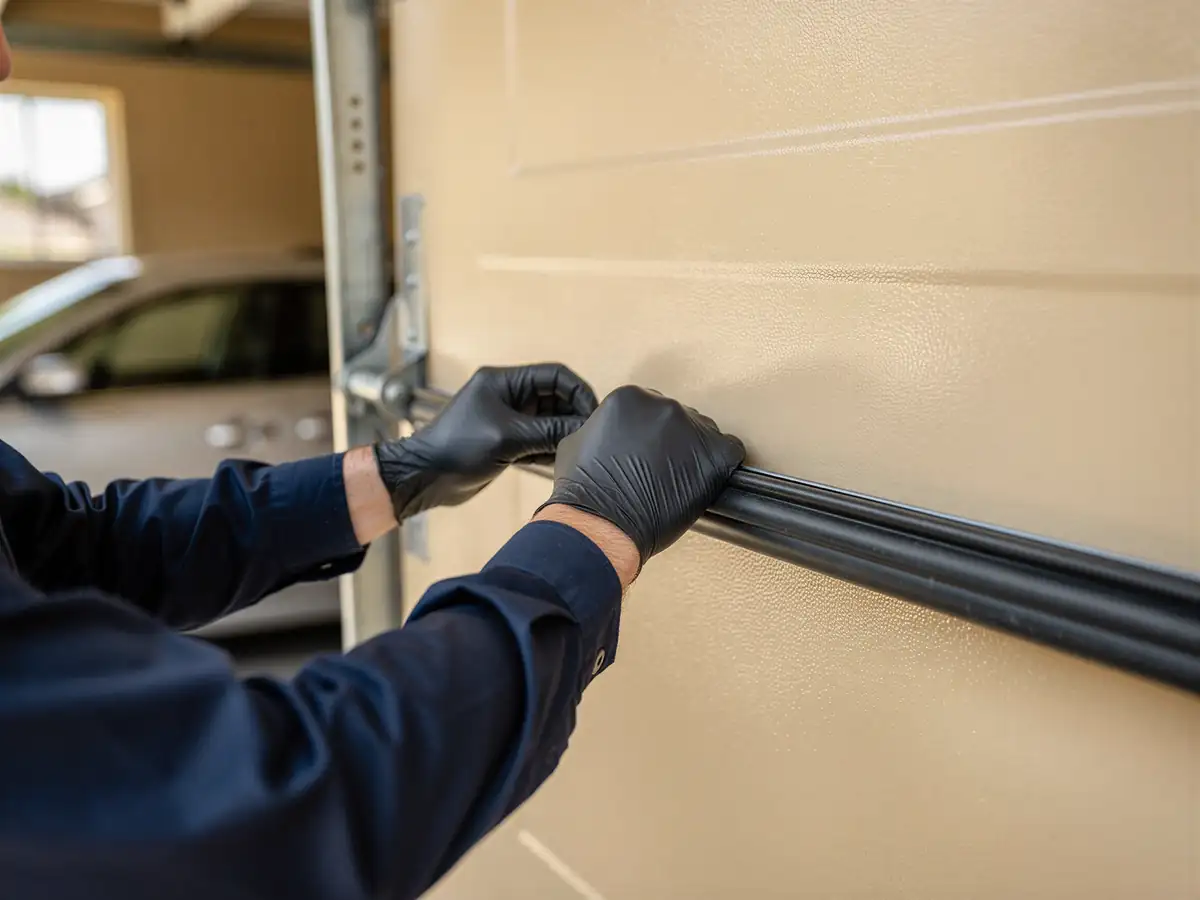
Given the climate here runs cold with real severe-weather stretches, we lean toward insulated panels and weatherstripping rated for that swing rather than a bare single-skin door that will telegraph every cold snap into the garage. That's not an upsell pitch - it's what holds up against a Virginia winter when the garage shares a wall with living space, which is common in houses this age.
We don't stock every opener brand on the market, and if you want a specific smart-home integration tied to a system we don't carry, we'll tell you that upfront rather than install something we can't fully support later.
Why It Happens Here
Wakefield's housing is part of a broader pattern across roughly 38 named areas in this service territory where most homes went up in the 1960s and 70s
And Wakefield's 1968 median puts it right in the middle of that wave rather than at the newer edge like some nearby areas. Older openings, older framing tolerances, and decades of settling are the root of most of the installation complications we run into out here, more than anything about the specific street.
With roughly 3,765 households in Wakefield itself
It's a smaller pocket than some of the surrounding areas we cover, but the housing age issue is the same one driving replacement calls across comparable 1960s-stock neighborhoods nearby. Add a cold-climate band with real severe-weather stretches, and insulation and weatherstripping end up mattering more here than in a milder region, since a bare door loses more to a January cold snap than it would somewhere that doesn't see that kind of winter.
- 3,765 households