Why It Happens Here
Fort Hunt's median household income runs $210,471
Well above the $143,796 median across the rest of our service area. That number matters more than it sounds like it should, because it changes when a repair is worth doing versus when replacement is the smarter spend. On a lower-value block, a homeowner stretches a worn opener another two years. Here, the math often flips sooner - the cost of a service call is small against the house, so people fix small faults before they become big ones, and they replace aging openers and springs before they fail at 6 a.m. on a work morning.
The housing itself tells its own story
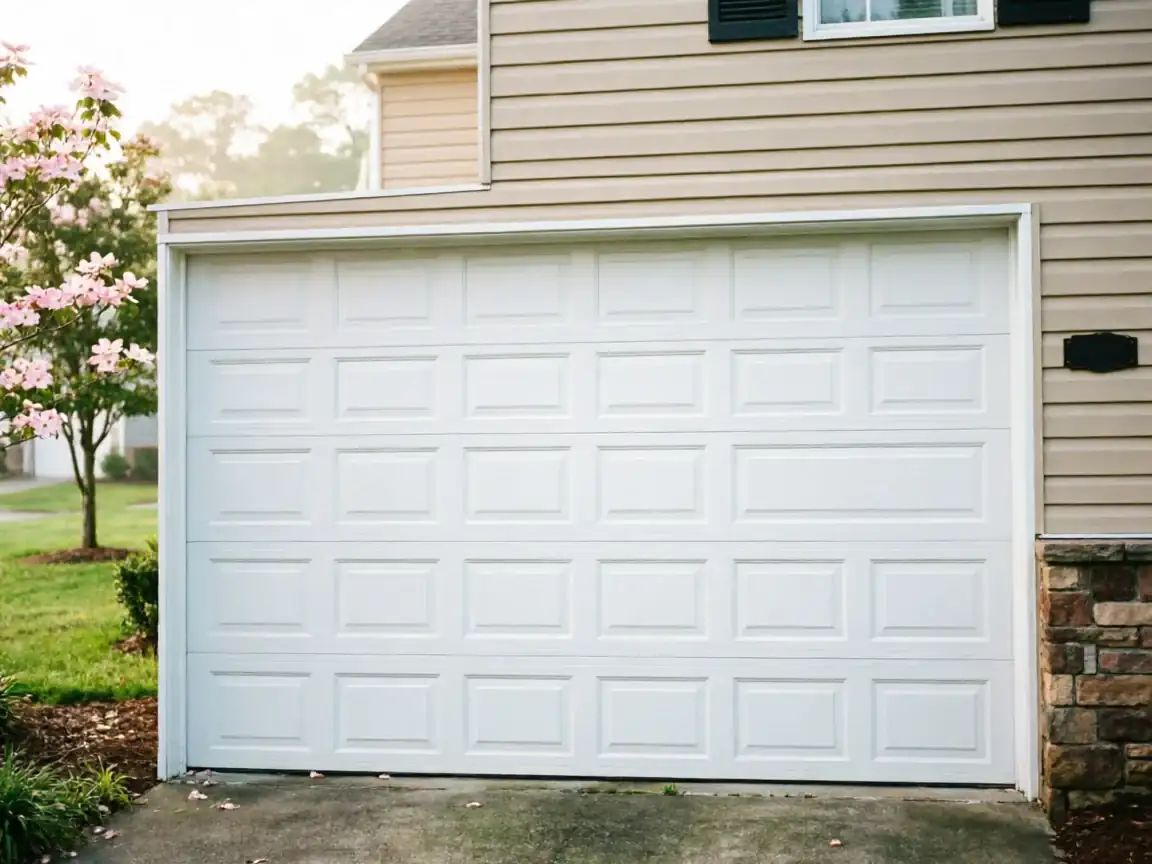
Across the wider area we cover, homes went up mostly in the 1960s and 70s, with a median build year of 1978. Fort Hunt sits older than that median - most of its houses date to around 1963, a decade before torsion springs and steel-backed panels became the standard fit on this side of the region. That means a lot of original or near-original hardware: single torsion springs undersized for today's heavier insulated doors, chain-drive openers with bare gears, and tracks that were never leveled to current spec.
On top of the age, this area sits in a climate zone we classify as cold-severe
Temperature swings work metal fatigue into cables and springs faster than warm-climate towns ever see, and they turn stiff grease into a grinding noise by February.
How We Fix It
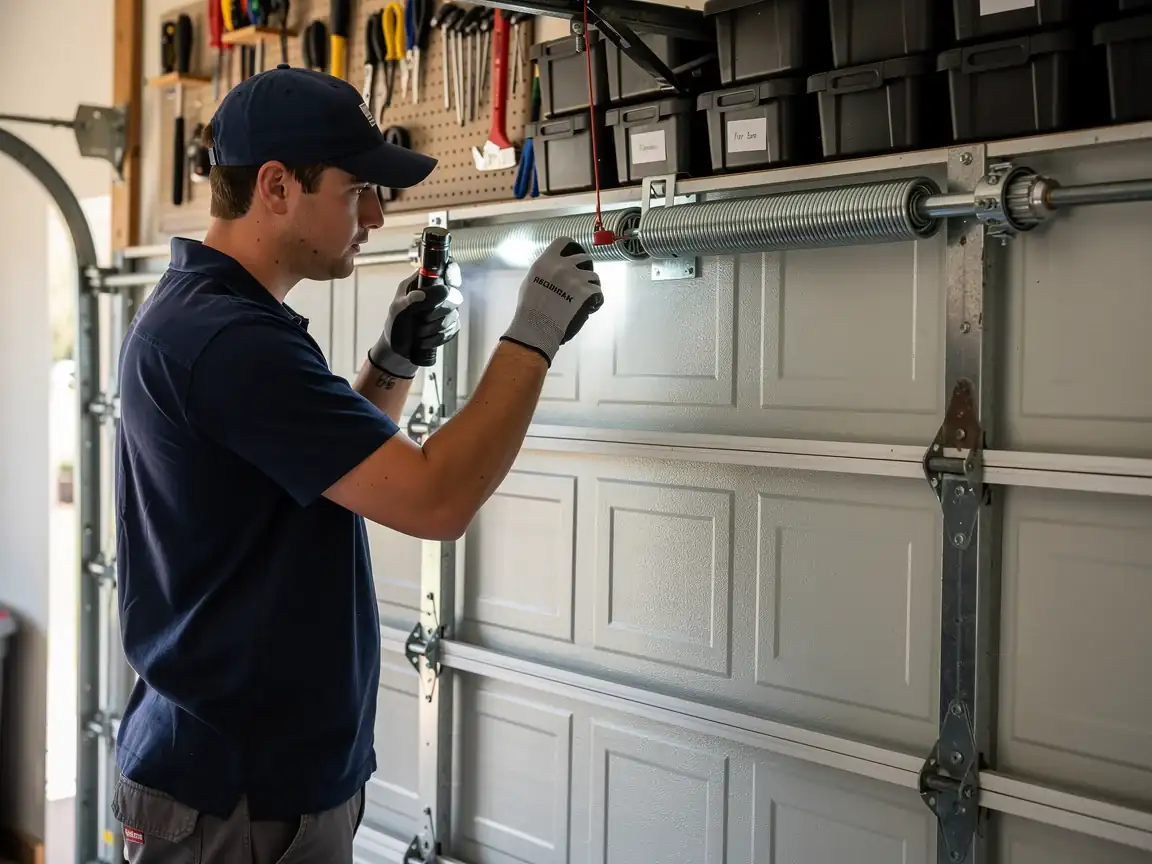
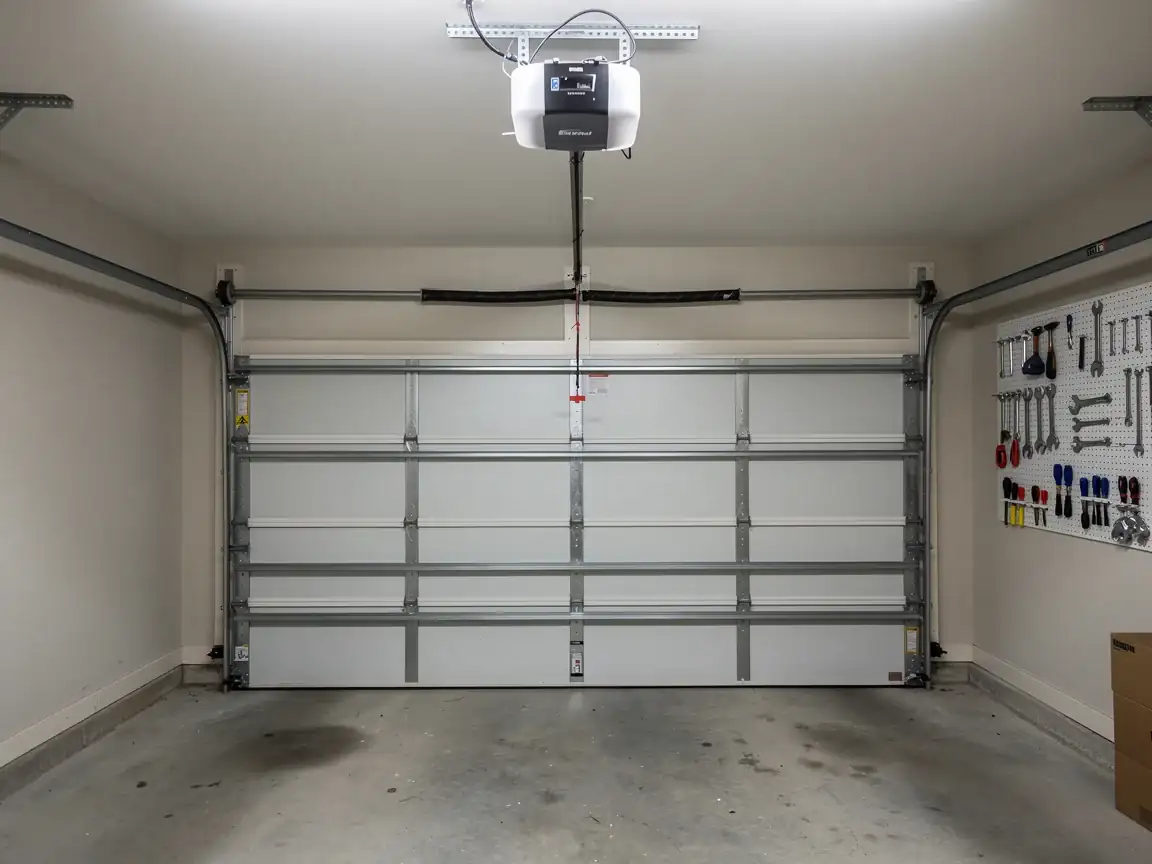
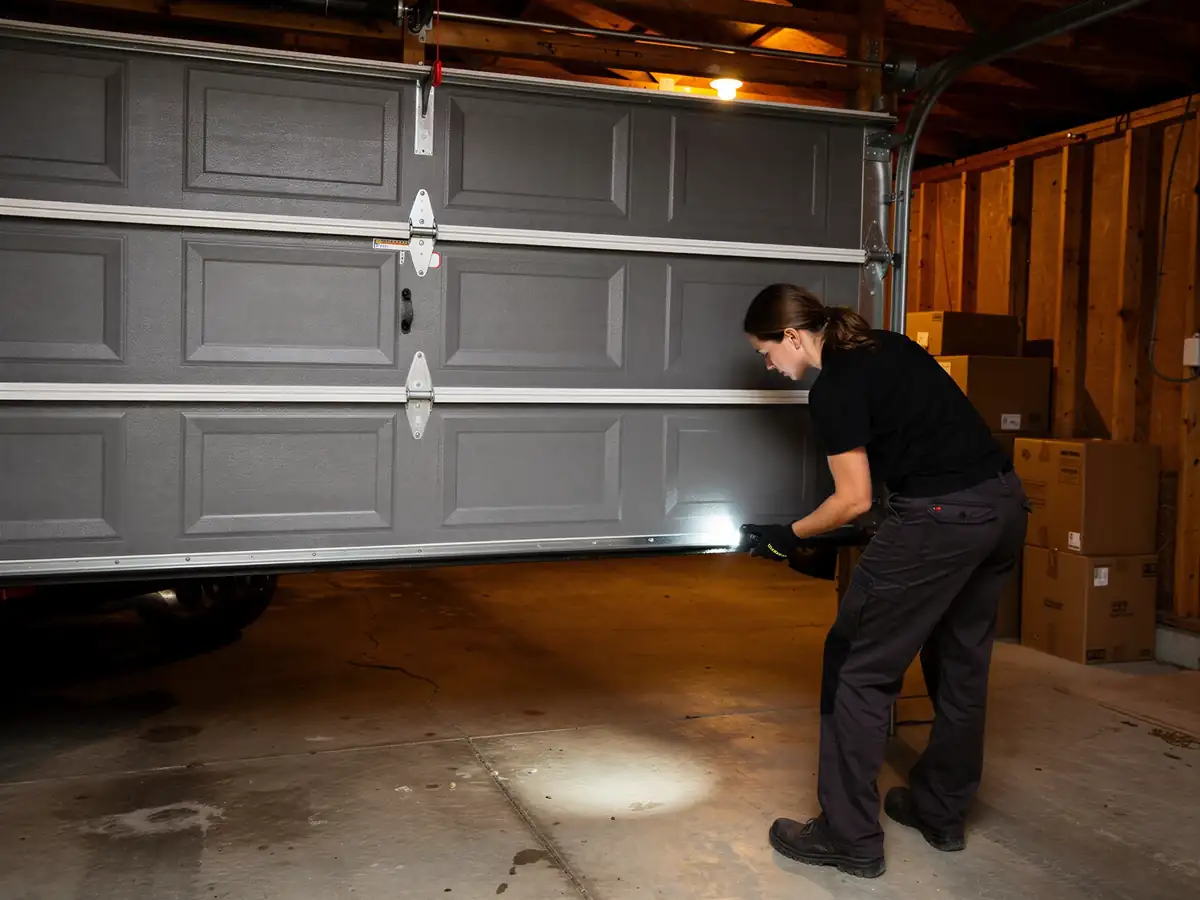
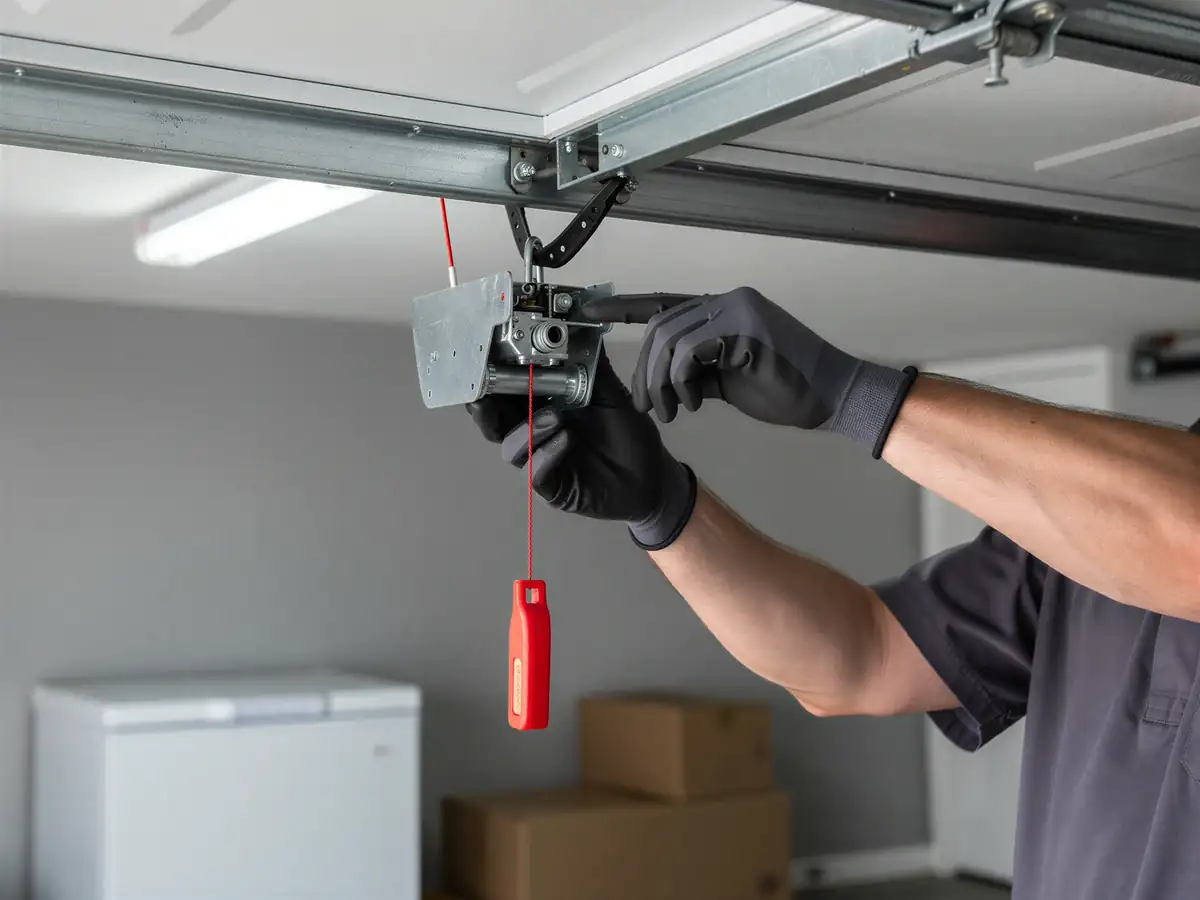
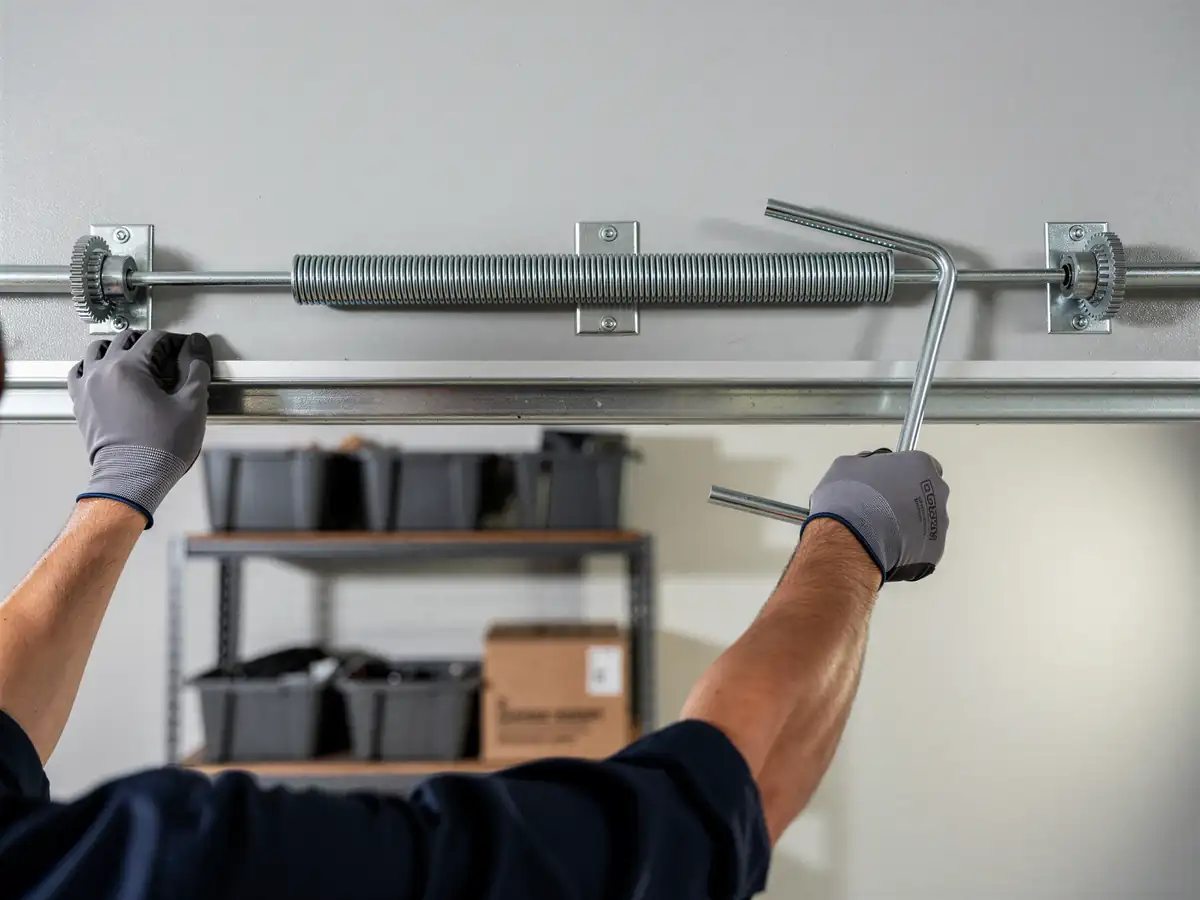
A maintenance visit here starts with the spring and cable, because that's where 1960s-era hardware shows its age first - we check torsion spring wind, cable fray, and whether the spring size still matches the door weight it's carrying (a lot of older doors have been re-skinned heavier over the years without anyone upsizing the spring). From there we go through the track alignment, roller wear, and opener gear condition, and we lubricate with a cold-rated grease instead of a general-purpose one, since the cold-severe swings here chew through anything lighter.
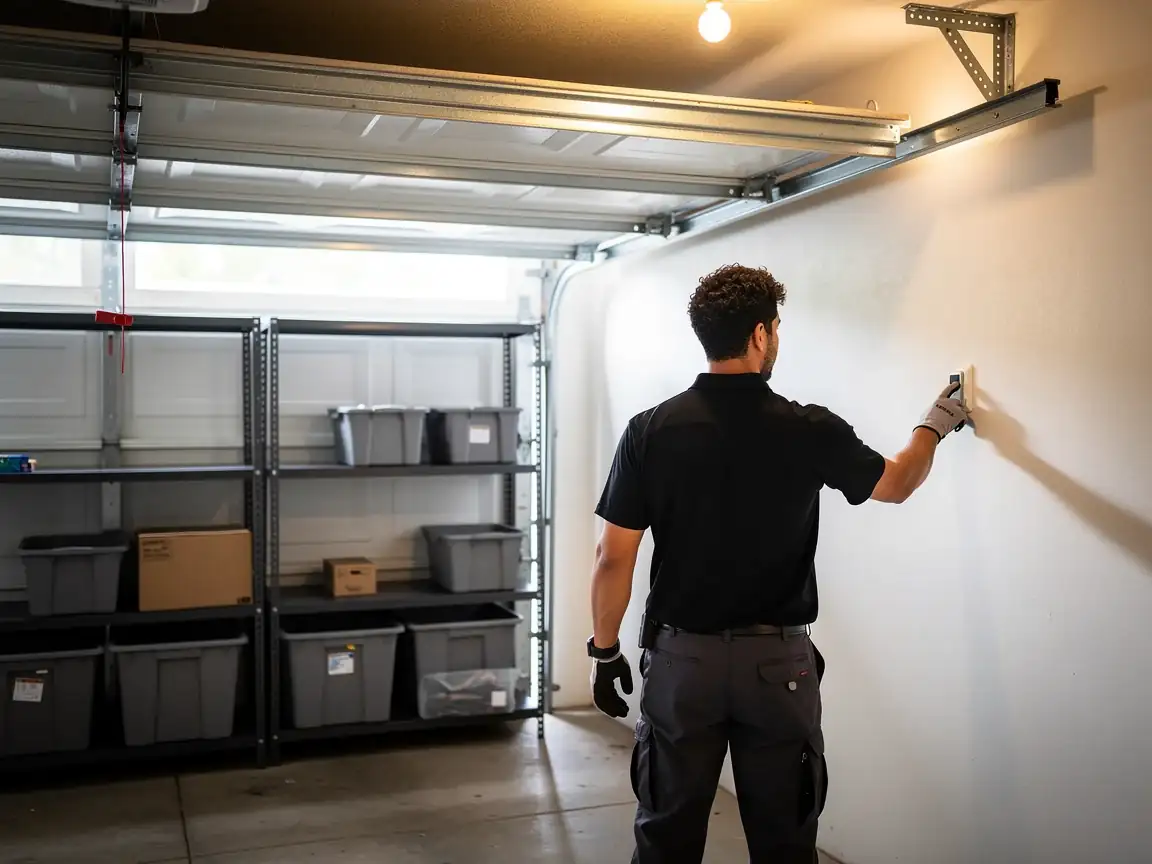
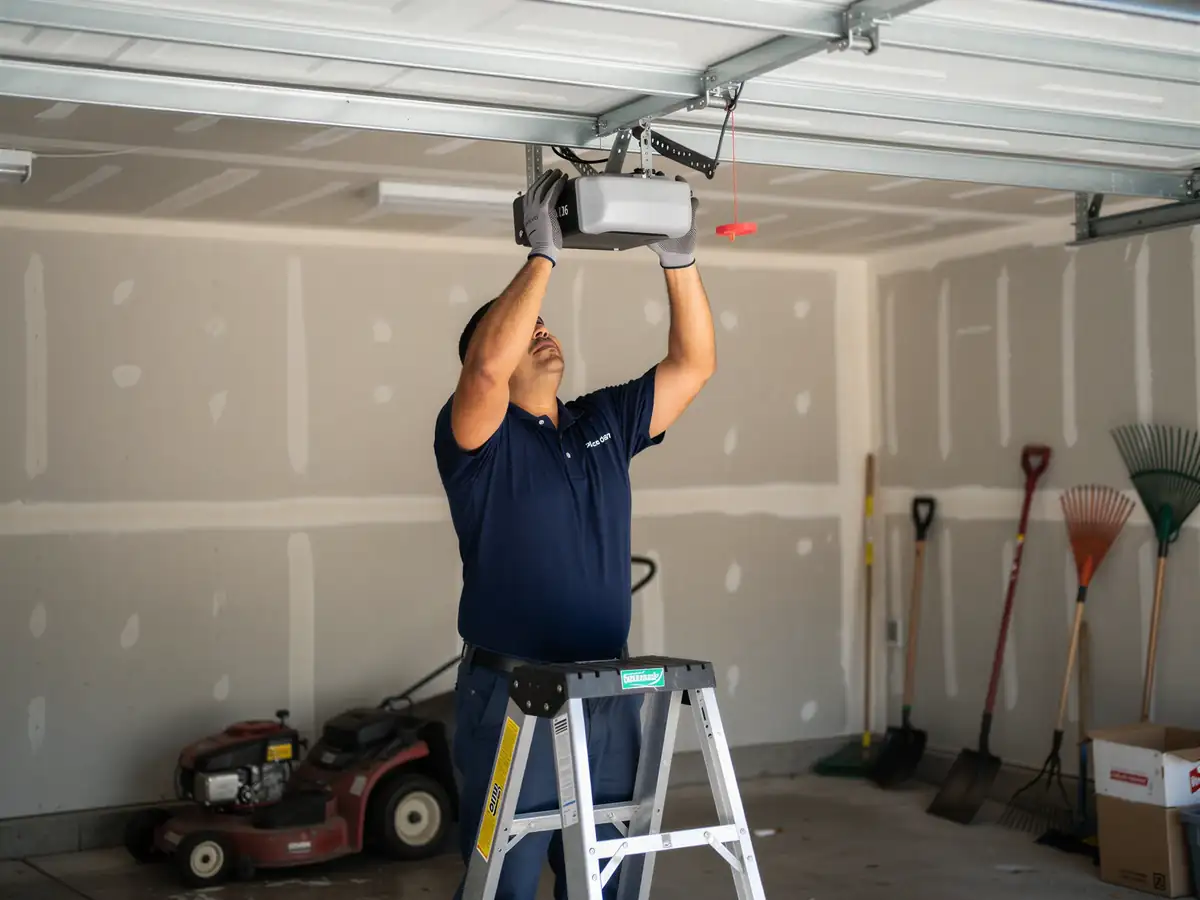
We also check the auto-reverse and force settings on the opener. On original chain-drive units from this era, those settings drift over time, and a door that won't reverse off a dropped object is a safety problem, not a convenience one.
Here's the honest limit: if the spring, opener, and track are all original to a 1963 build, sometimes the right call is to say so plainly rather than patch three failing parts separately. We'll tell you when the math points to replacement instead of another maintenance visit - that's not a sales pitch, it's just what the hardware is telling us. For the full range of what we do beyond this one service, see our maintenance page for Fairfax.
Time on the Job
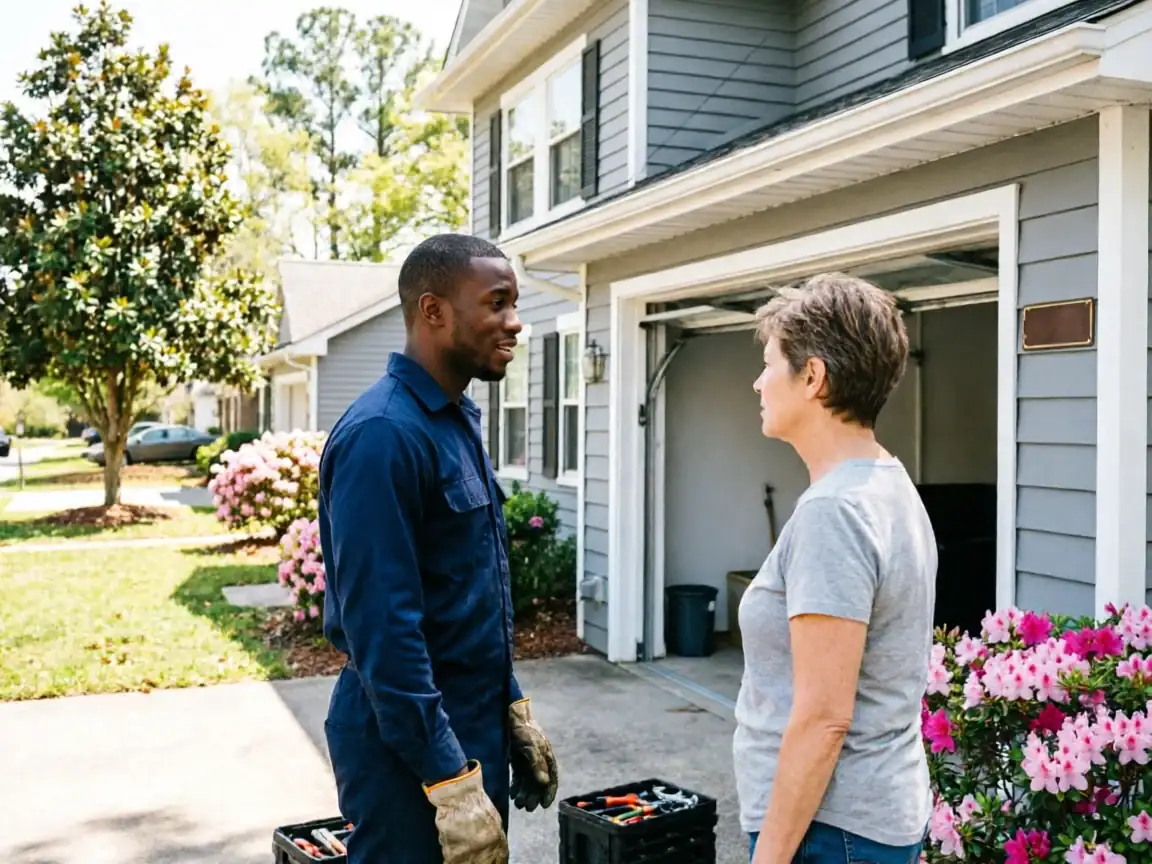
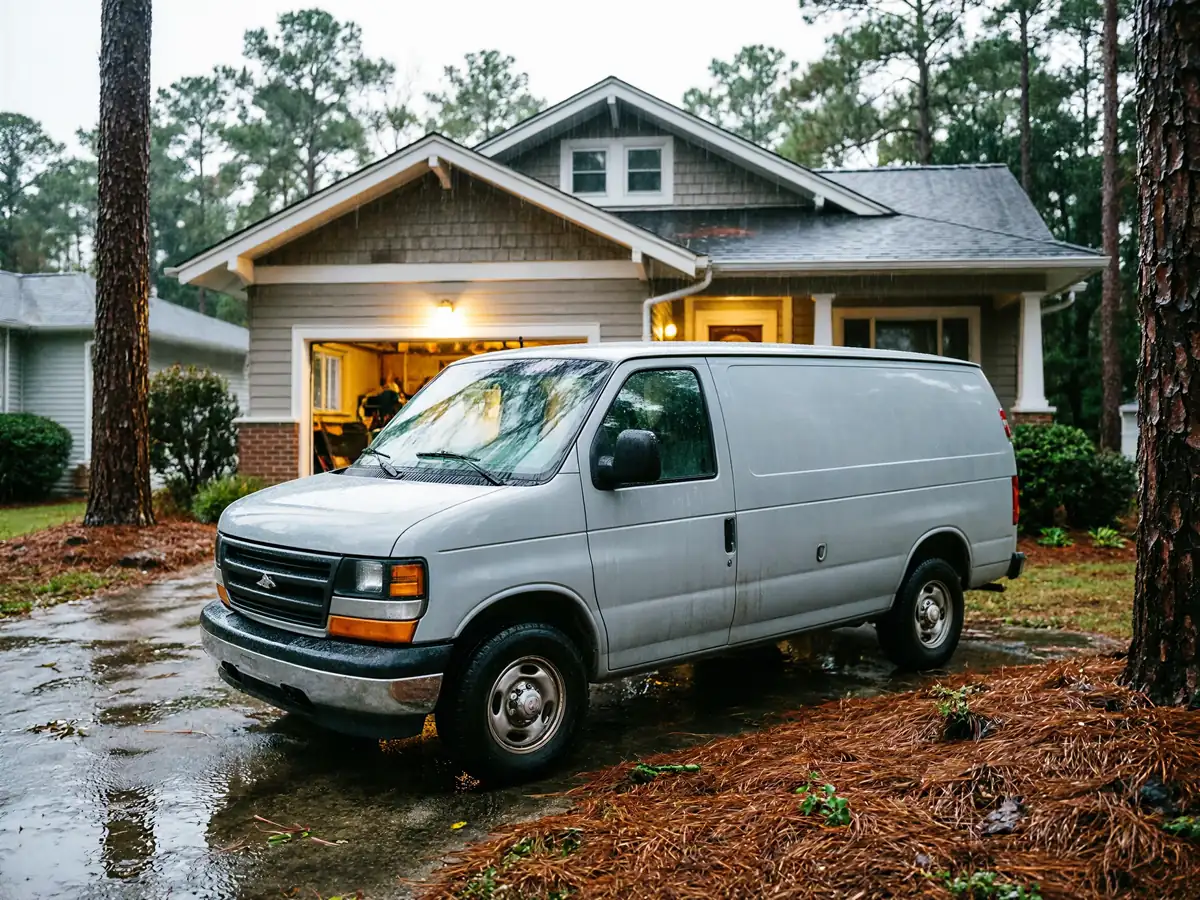
We run this route out of Fairfax, and Fort Hunt sits about 15 miles out - the longer end of our service area, so we schedule it as a planned stop rather than a same-day add-on. Once the truck is there, a standard maintenance visit covers spring tension, cable and roller inspection, track alignment, and opener calibration; houses built around 1963 with original hardware typically take a bit longer than a 1990s build, simply because there's more to check and more worn fasteners to deal with along the way.
We don't rush the spring inspection. On a torsion spring that's been under load since the Kennedy administration, a wind check takes the time it takes. If we find a cable showing wear, we'll flag it even on a routine visit rather than wait for it to fail on its own schedule.
With roughly 5,974 households in Fort Hunt, most on similar-era lots, the pattern repeats door to door - it's not a guess based on one house, it's what we see across the area, visit after visit.
Can You Do This Yourself
Some of this is fair game for a homeowner with a ladder and a Saturday morning
Wiping down tracks, checking that the photo-eye sensors are aligned and unobstructed, and listening for new grinding or popping sounds are all things you can do without any tools beyond your ears and eyes. Visual checks on cable fray near the bottom bracket are also reasonable, as long as you're not putting weight on the door while you look.
What you should not do yourself is touch the torsion spring
On a door this age, the spring is under load that can break a wrist or worse if it lets go while you're adjusting it - this is the one place where a fifteen-minute YouTube job turns into an ER visit. Lubrication is another spot worth getting right: the cold-severe swings here mean the wrong grease gums up by winter, and most hardware-store lubricant isn't rated for it.
If your opener is original to a 1960s build and the chain is loose or the gear is worn
That's also a call-a-pro job - parts for openers that old aren't always sitting on a shelf, and sourcing the right gear kit takes longer than the repair itself. Check our Fort Hunt coverage page for what else we track in this area.