Why It Happens Here
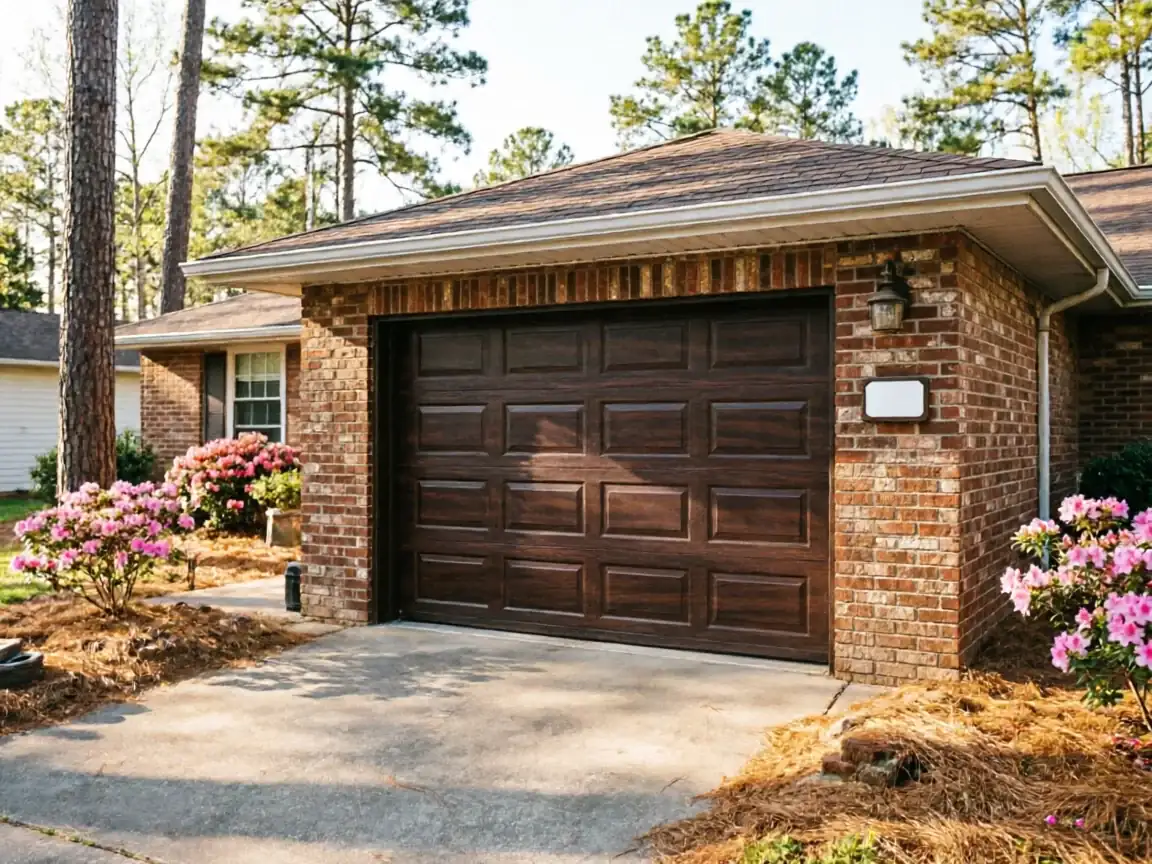
Walk down most streets in Fort Hunt and you're looking at houses built around 1963
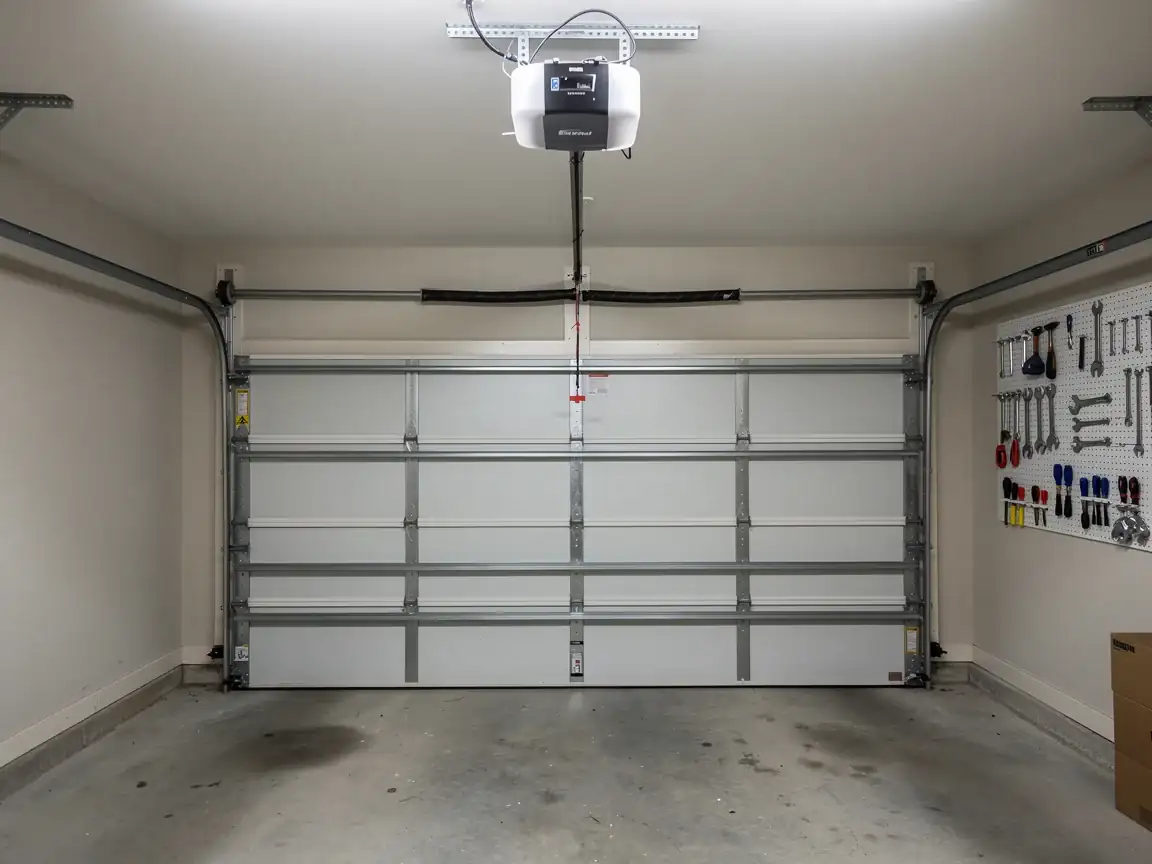
That's not a guess dressed up as a fact - it's the median year this neighborhood went up, and it matters for one reason: torsion springs don't last sixty years. A standard spring is rated for somewhere between 10,000 and 15,000 door cycles, which on an average household works out to roughly seven to twelve years before fatigue sets in. Do the math on a 1963 build and you land on a spring that's been replaced at least a few times already, or - more often than homeowners expect - one that's still original because nobody ever got around to swapping it before it finally let go on its own.
We see this pattern across Fort Hunt's 5,974 households
A door that's worked fine for years, then one cold morning the spring snaps, usually on the first hard pull of the day. Steel contracts in the cold. A spring sitting at the edge of its fatigue life doesn't need much of a push to give out, and winters here are cold enough that the stress shows up most in January and February. If your opener strains, your door won't lift by hand, or you hear a bang from the garage, that's almost always the spring, not the opener.
- 5,974 households
How We Fix It
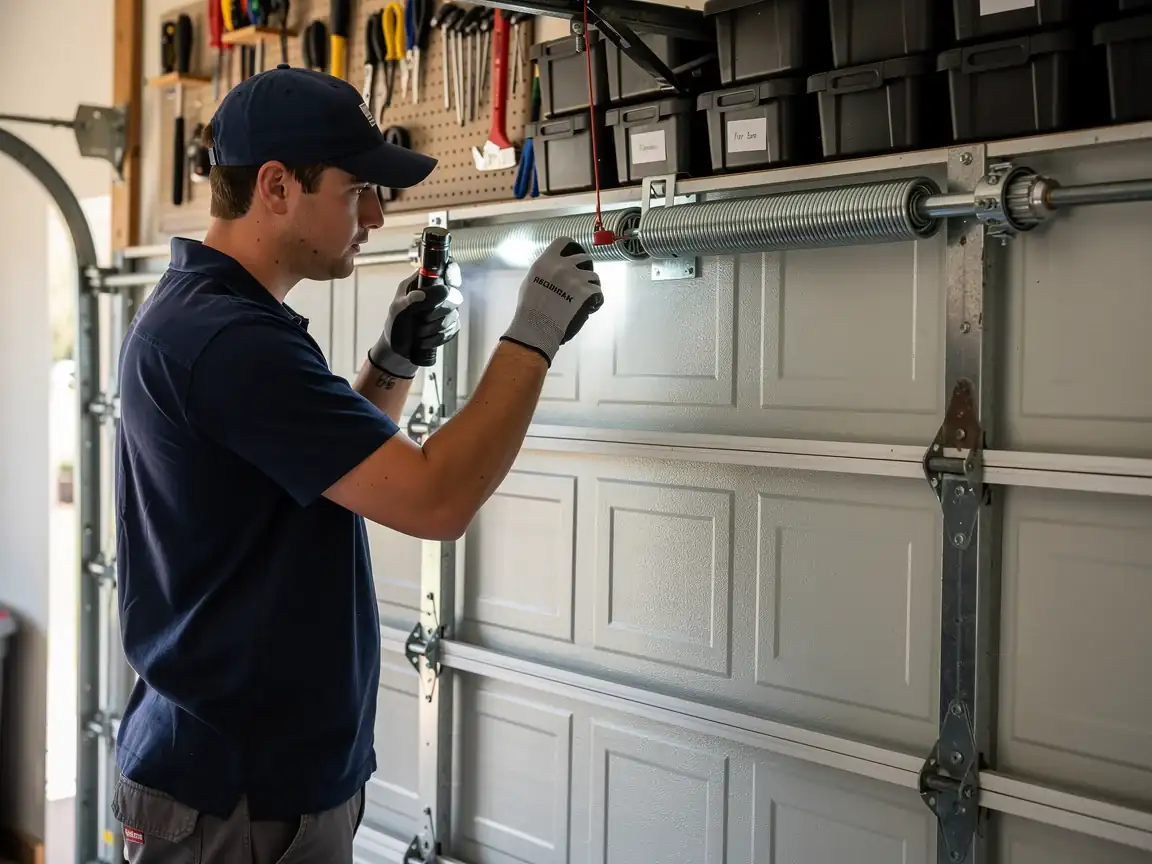
We replace torsion springs in matched pairs, even if only one side has broken. A spring that's lasted 60 years next to one that just snapped is not a spring you want carrying a 150-pound door by itself - it's close behind its twin, and leaving it in means a second call a few months out. We size the new springs to the door's actual weight and track length rather than swapping in whatever's closest, which matters more on older doors where the original hardware wasn't always matched to today's standard panel weights.
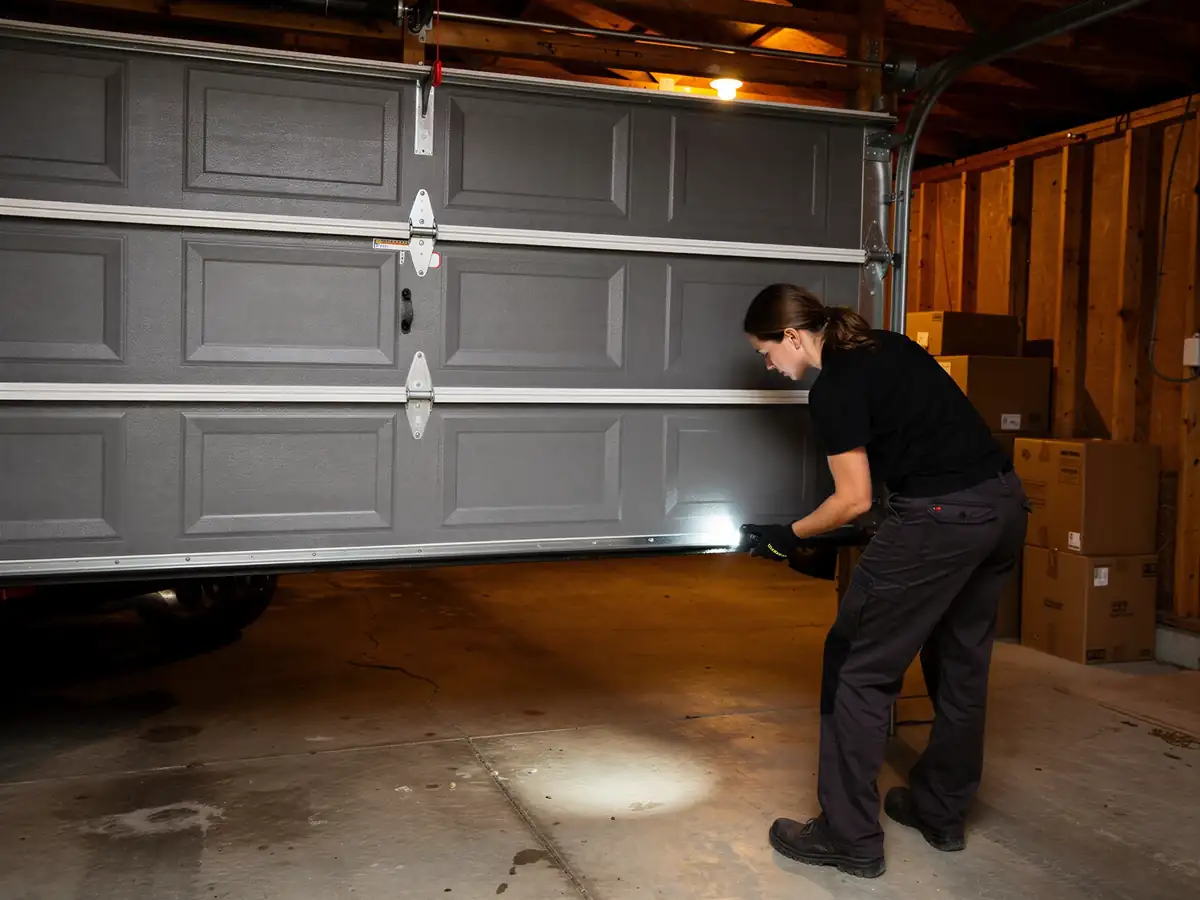
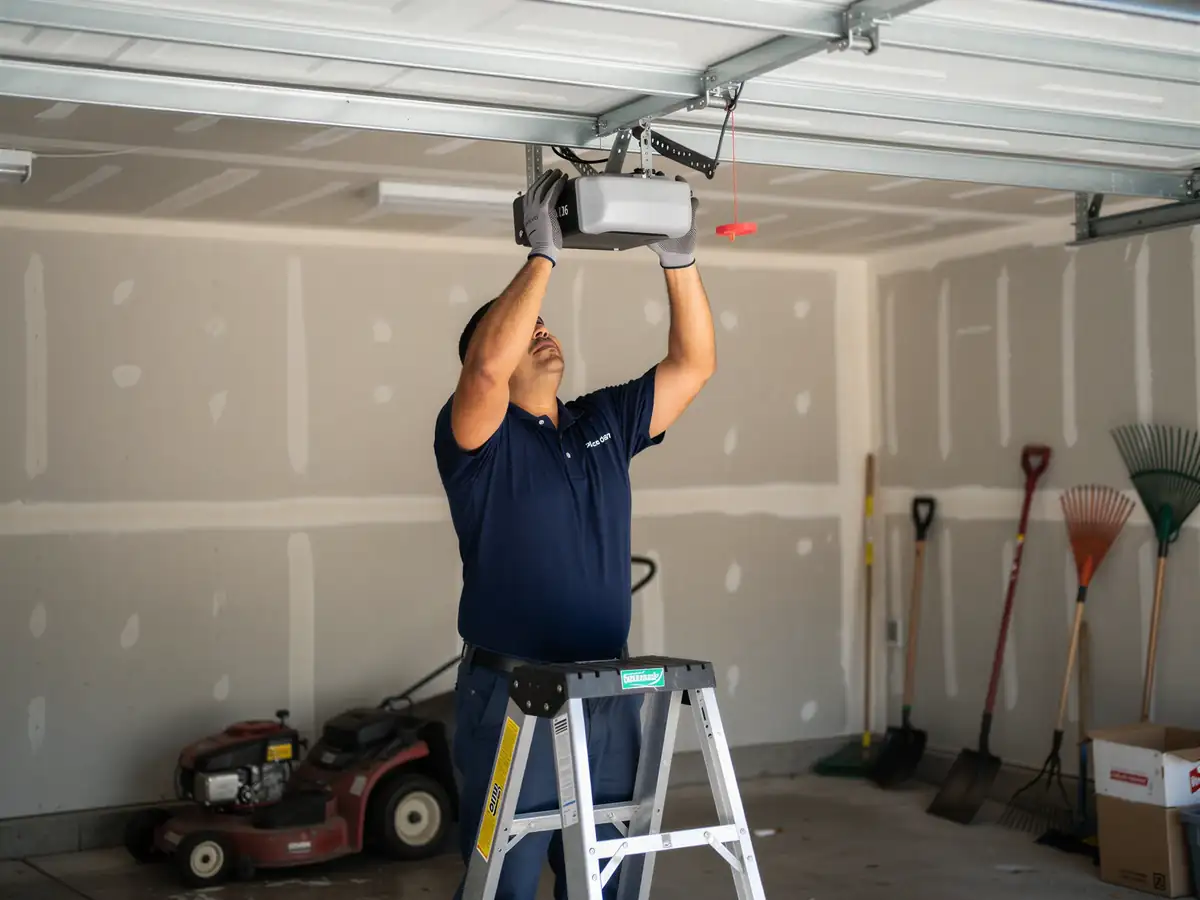
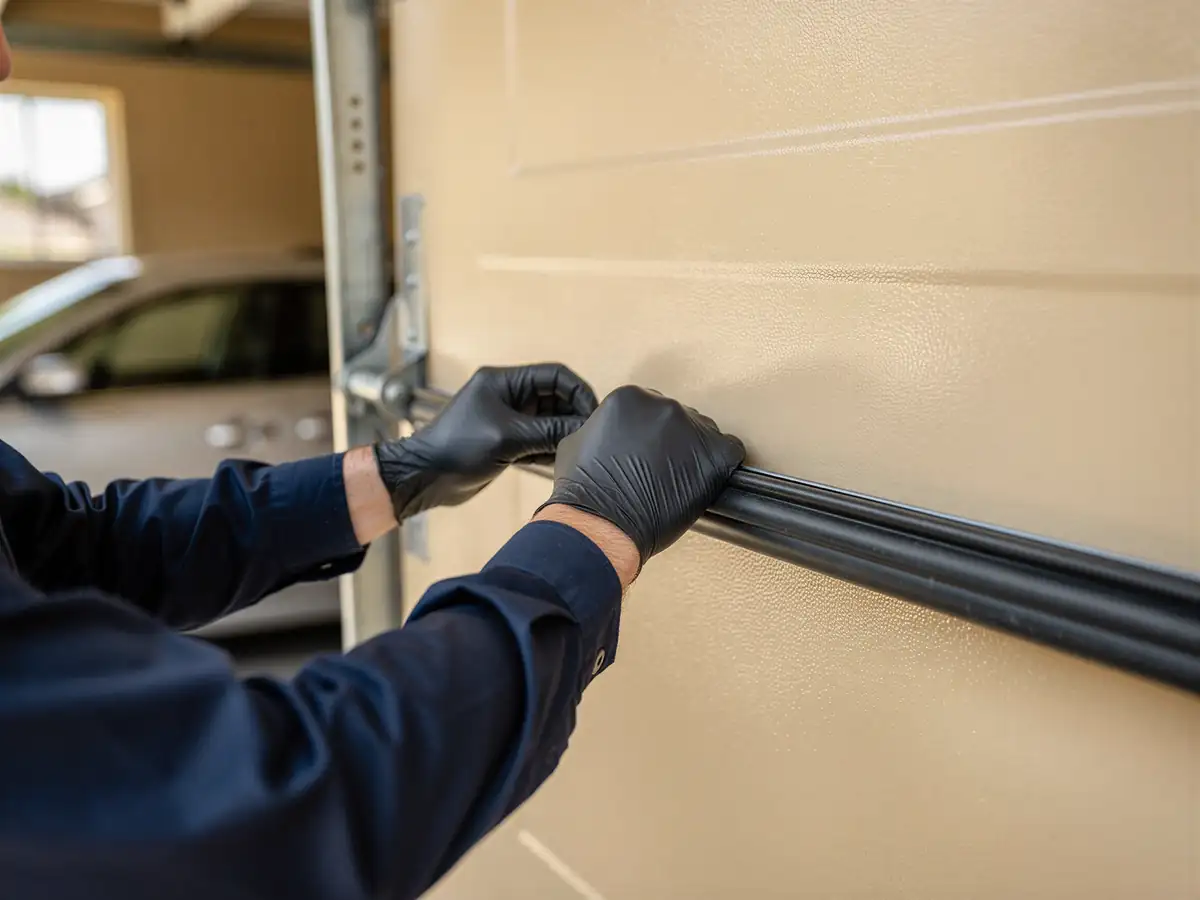
We travel out from our Fairfax shop for every Fort Hunt call - there's no local branch here, so we build the drive into the job, not into a rush. On a straightforward torsion spring swap we check the cable, drums, and bearing plates while we're in there, since on a door this age it's common for one of those to be close to failing too. We don't replace parts that don't need it. If the springs are the only thing worn, that's the only thing we touch.
Time on the Job
A single torsion spring replacement on a standard double door usually takes under an hour once we're on site, with Fort Hunt's 15-mile distance from our Fairfax shop added to the front end of the visit. Two springs, or a job where the cable or bottom bracket needs attention too, runs longer. We don't quote a fixed number here because the honest answer depends on what's on the door when we open the panel - a 1963-era door with original bearing plates takes longer to service carefully than one that had its hardware updated in the last decade.
With a median household income of $210,471 in Fort Hunt, we see more owners choose full hardware replacement over patching one worn part - not because the patch wouldn't hold, but because they'd rather not pay for a second visit in two years. That's a reasonable call on a door this old. It's not one we push; we'll tell you straight whether the rest of the hardware has life left in it or not.
Can You Do This Yourself
Don't
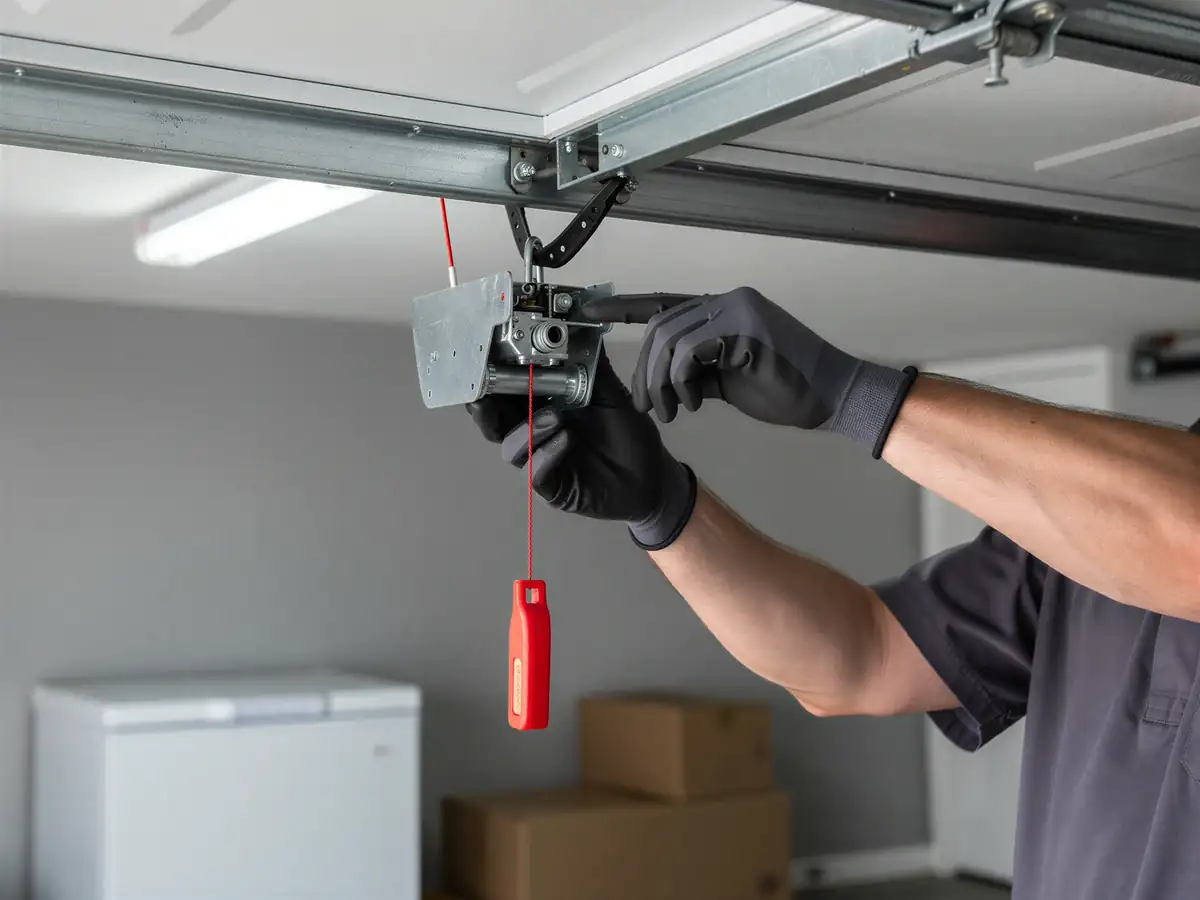
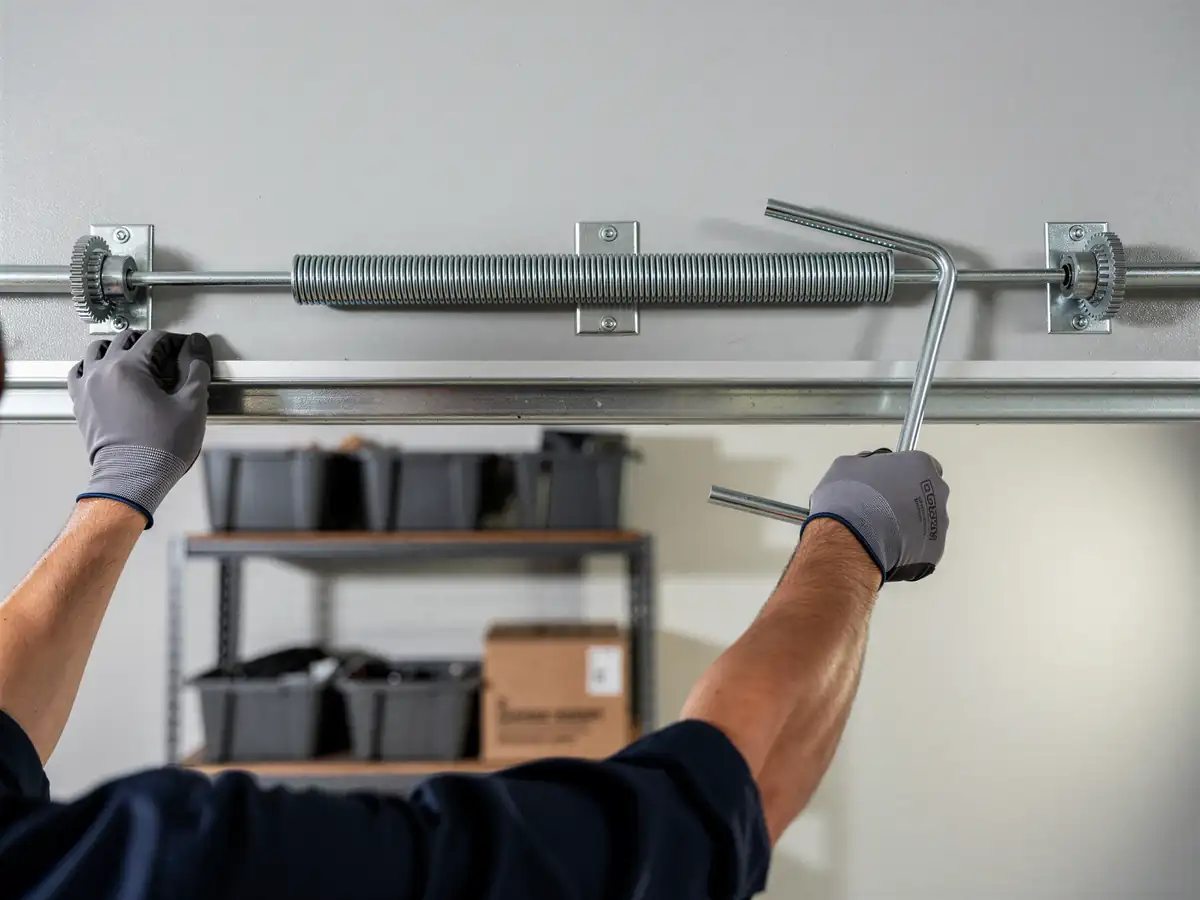
A torsion spring under tension can break a hand, a wrist, or worse if it releases while you're working on it, and the winding bars and tension gauge this job needs aren't things most garages have lying around. This is the one repair on a garage door where we'll say flatly: call someone, and it doesn't have to be us, just don't do it solo with a screwdriver and a ladder.
What you can safely check yourself
Whether the door is actually a spring problem or something simpler. If the door won't budge and the opener motor is straining or clicking without lifting the door, that points to the spring. If the door lifts but drifts or sags to one side, that's more likely a cable or track issue, which is a different repair and sometimes a cheaper one. Knowing which you've got before you call saves everyone time, even though the fix itself isn't a DIY job.