Booking a Visit
Rose Hill is a small slice of the wider service area
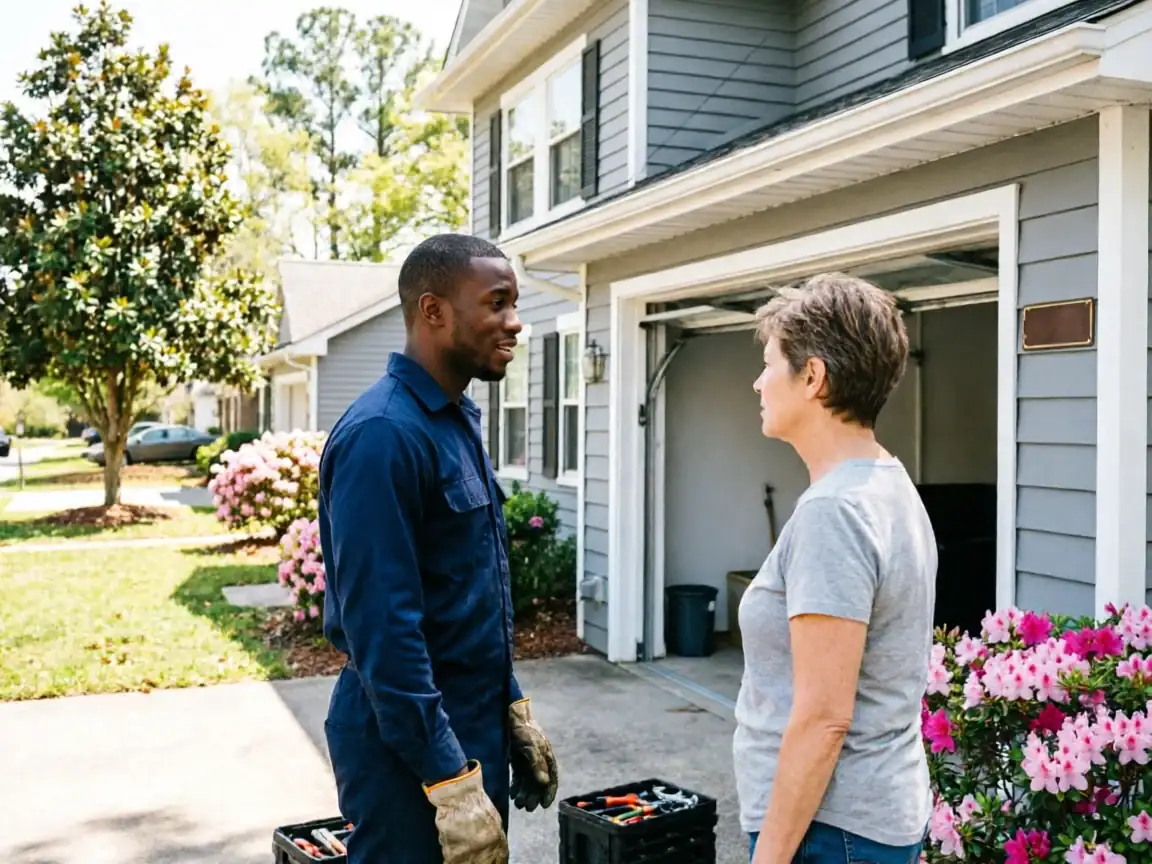
About 7,154 households, compared to the 181,054 across the whole territory we cover out of Fairfax. That size matters: it's not big enough to carry its own crew or depot, so every emergency call here is a dispatch, not a drop-in. We run the 11 miles from Fairfax when a spring snaps or a door won't budge, and we tell you that up front instead of pretending there's a truck parked around the corner.
- 7,154 households
- 11 miles
Because it's a dispatch job, we ask a few questions before we roll
Is the door stuck open or stuck shut, is anyone trying to force it, does the opener hum without moving the door. Those answers tell us what to load before we leave rather than guessing once we're on-site. If a part isn't something we carry stock of for older torsion setups, we'll say so rather than quote a fix we can't actually do that day.
You can see what's covered from this location at /coverage/rose-hill/
And if what you actually need is a broader look at what we do out of the Fairfax shop, that's at /emergency-garage-door-repair-fairfax-va.
Why It Happens Here
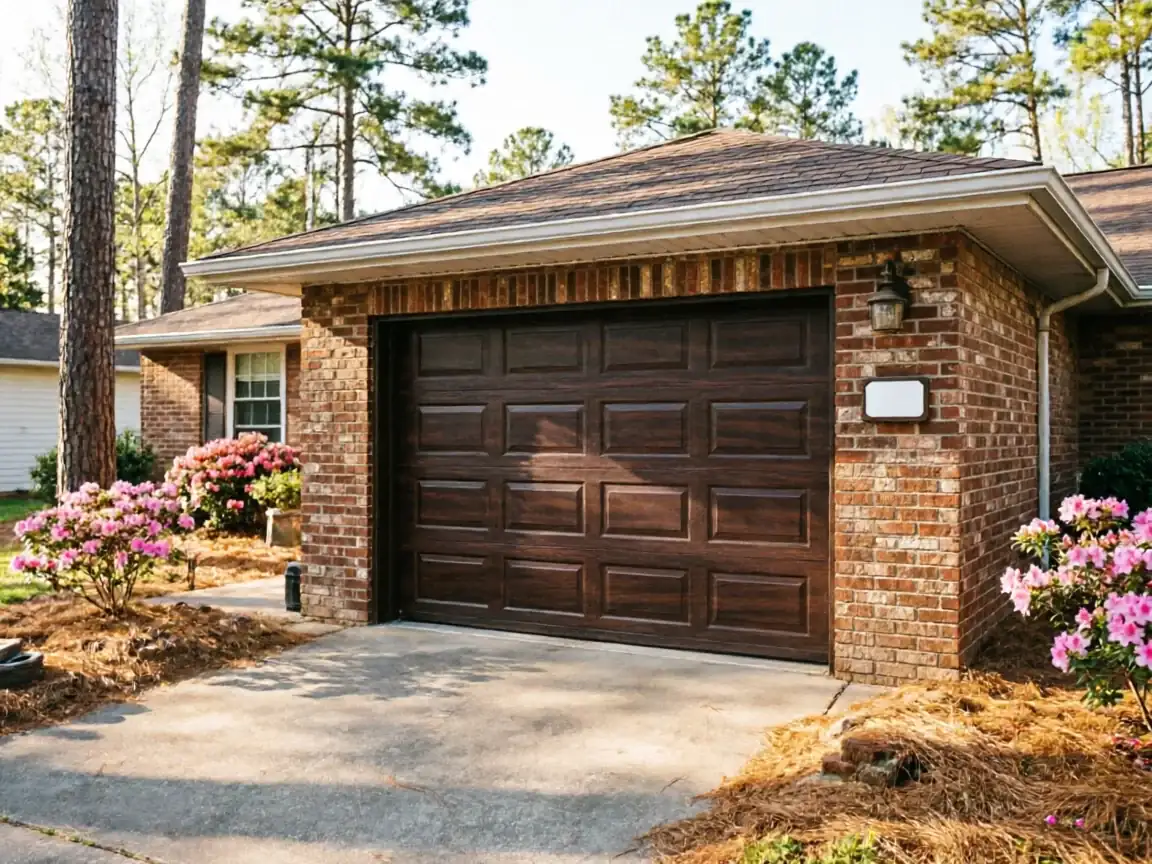
The median house in Rose Hill went up around 1967, which puts it square in the 1960s-70s band that makes up most of the stock across the 38 named areas we track. That generation of garage door came with hardware nobody designs for anymore - side-mounted torsion springs on brackets that were never meant to hold today's heavier insulated panels, and openers that have usually been swapped once or twice since the house was built, often onto the original 1960s track.
Layer the climate on top. This region sits in a cold-severe band, and a house built in 1967 wasn't insulated or weatherstripped the way a 2010 build is. Cold metal contracts, torsion springs lose a little tension every winter, and cables that have flexed for five decades start to fray at the drum. None of that is a defect - it's just what happens to hardware this age in a climate this hard on steel.
A $160,426 median household income here also means a fair number of these houses have been updated once already - new opener, same original track - which creates its own mismatch failures we see on the call.
Can You Do This Yourself
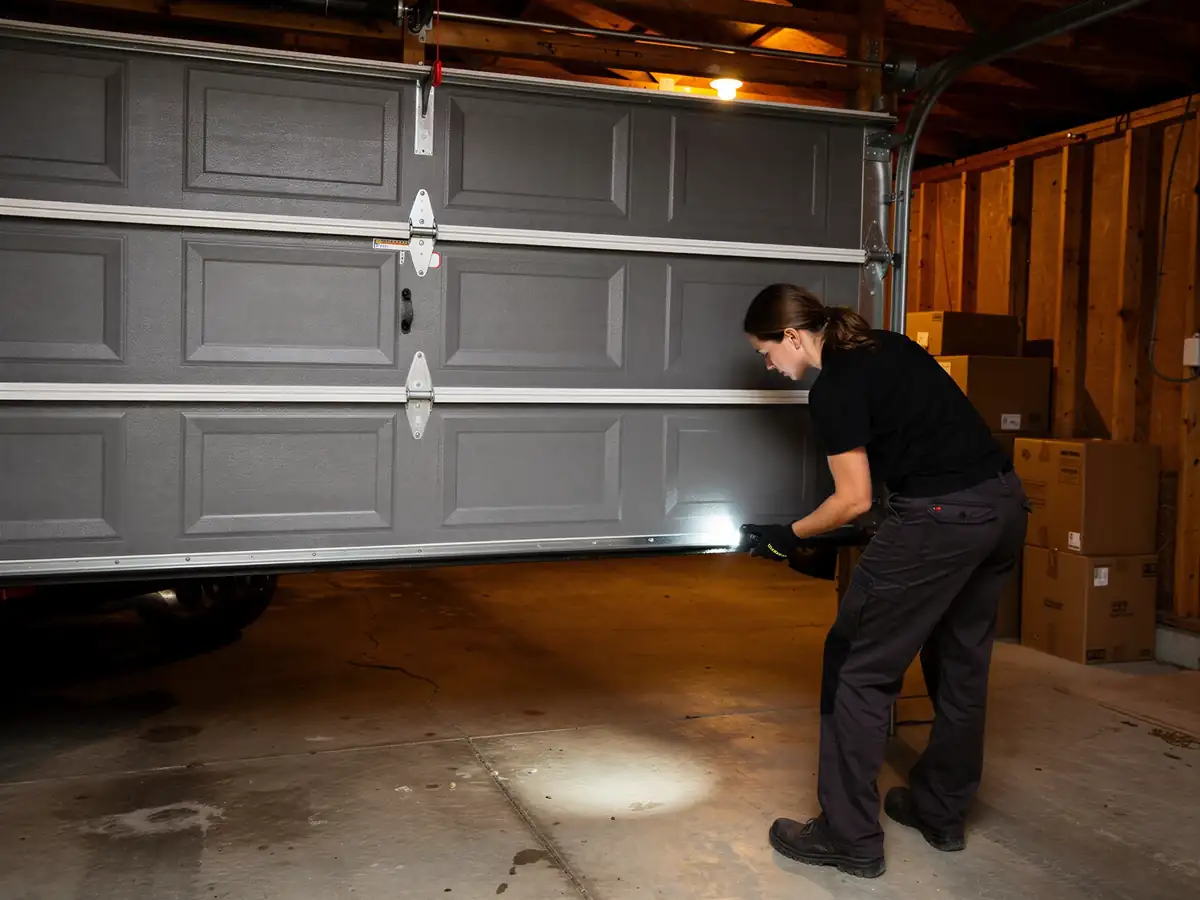
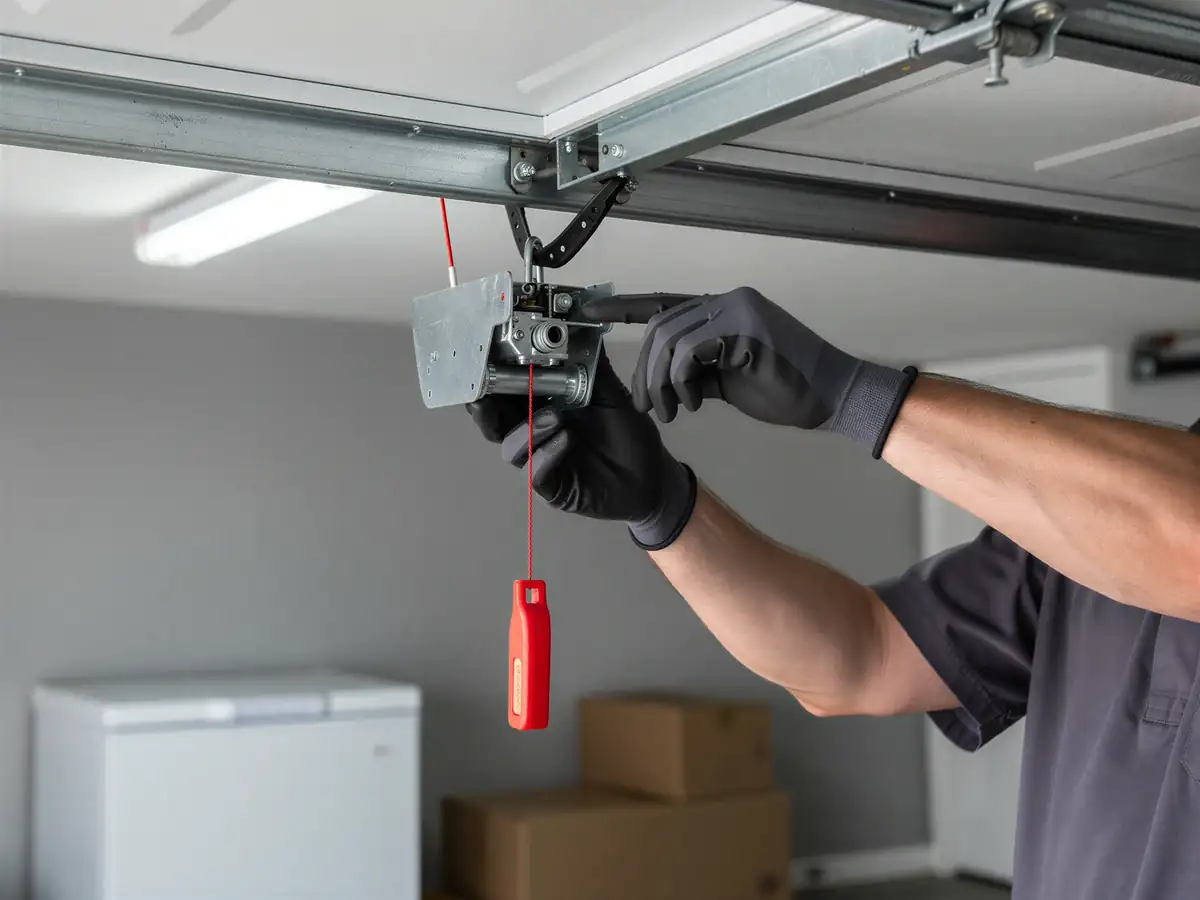
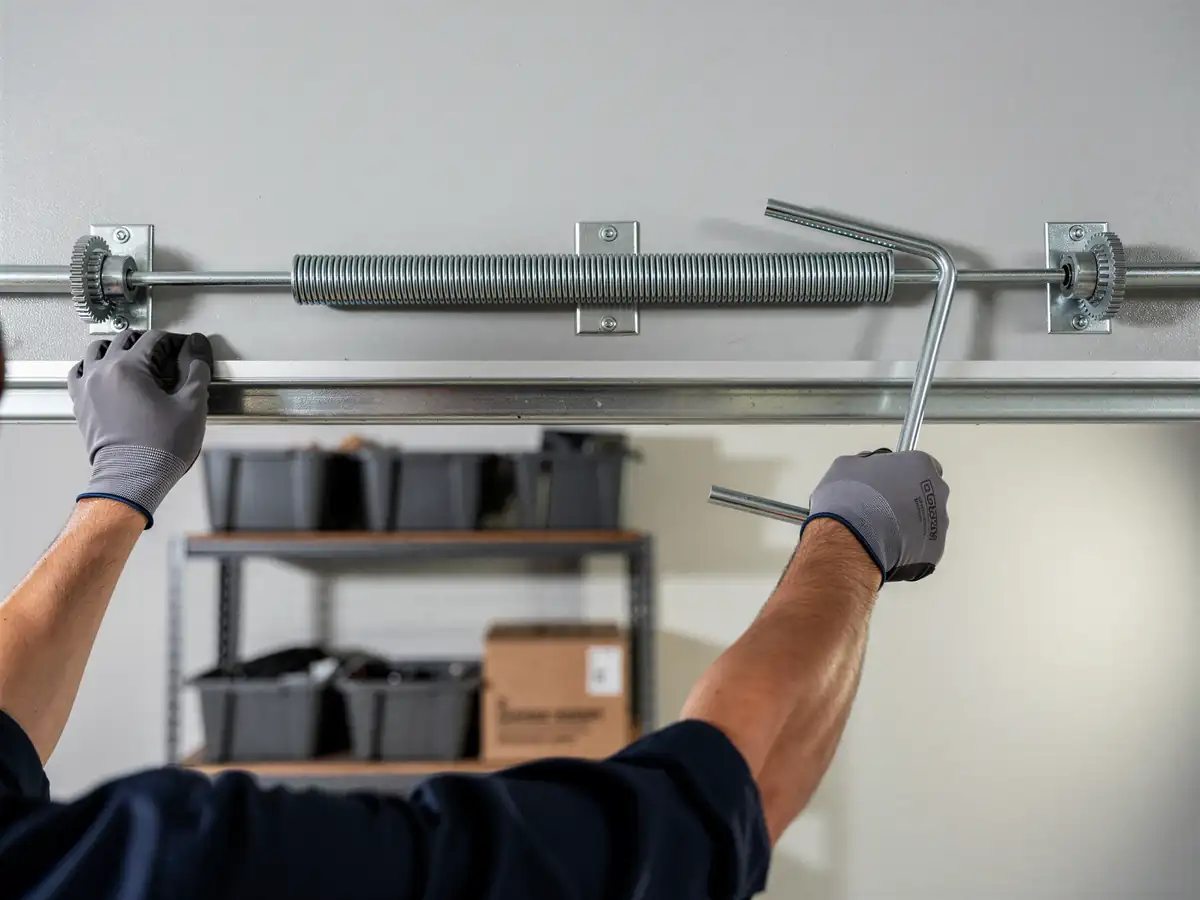
Some of what goes wrong on a 1960s-era door is safe to check yourself. If the opener hums but the door doesn't move, look at the drive gear before you call anyone - it's a known wear point on openers that have been running two or three decades. If the door won't budge and you see a gap or kink in one of the torsion springs, stop. That spring is holding more tension than most people expect from a part that size, and the brackets on houses this age weren't always reinforced when the opener was replaced.
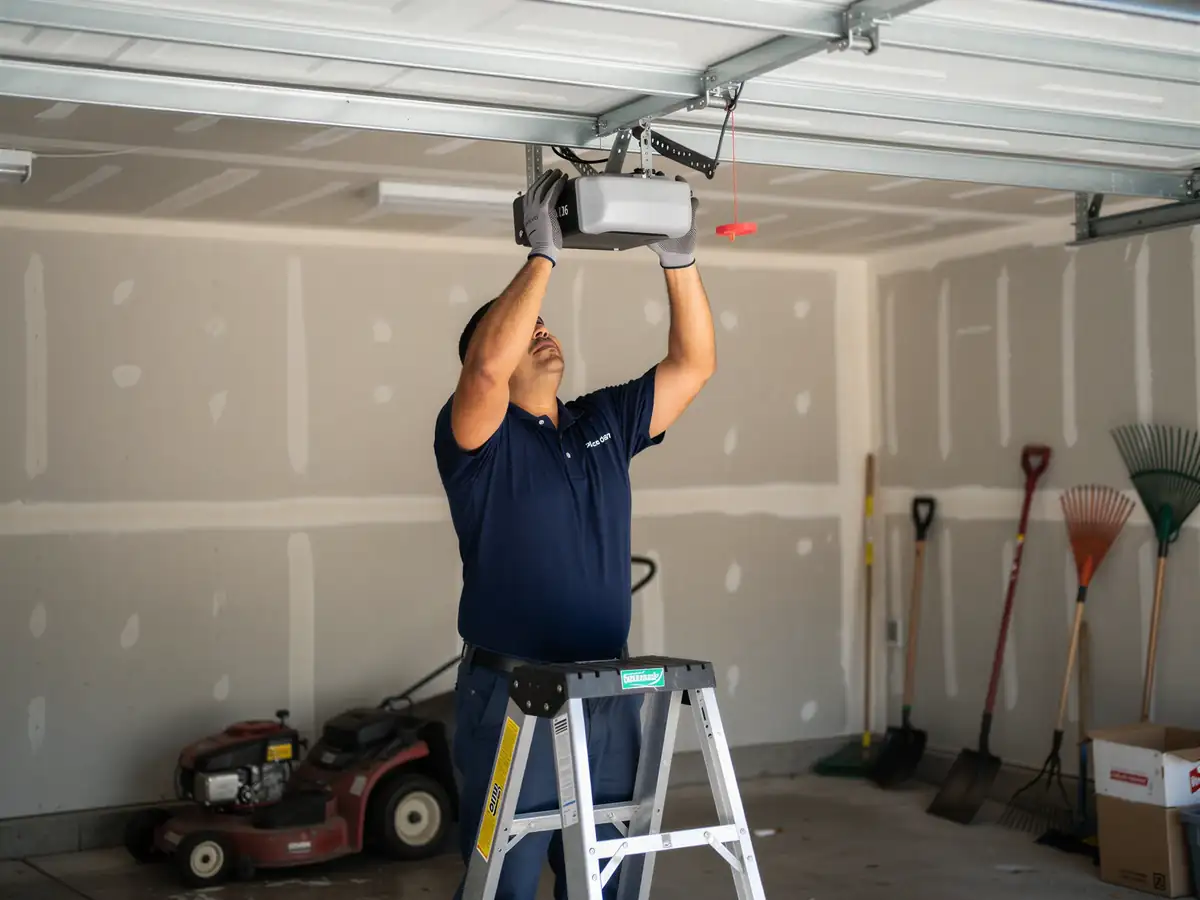
We'll be straight about a limitation here: we don't walk people through spring replacement over the phone, and we won't sell you the parts to do it yourself. It's not a trust issue - it's that a torsion spring under load has put people in the ER, and the tools to wind one safely aren't things most garages have lying around. If the fix is a sensor alignment or a loose chain, that's a five-minute job you can do with a stepladder and a little patience.
How We Fix It
On a call from Rose Hill, the first thing we check is age-appropriate
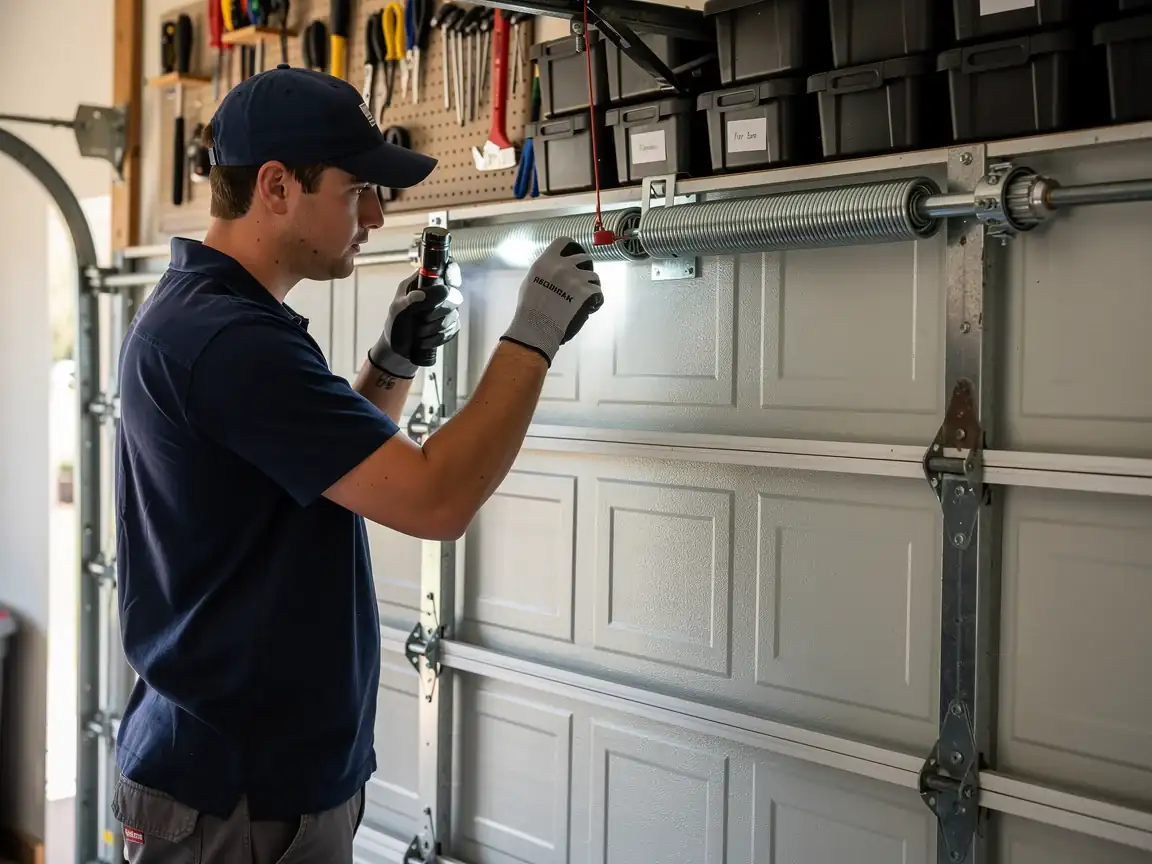
Original torsion hardware from a 1967-era build behaves differently than a system installed in the last ten years, so we bring springs sized for the older bracket spacing rather than assuming a modern standard fits. Cables and rollers get checked next - on hardware this age, a cable that looks fine can be seated wrong at the drum from a prior repair nobody logged.
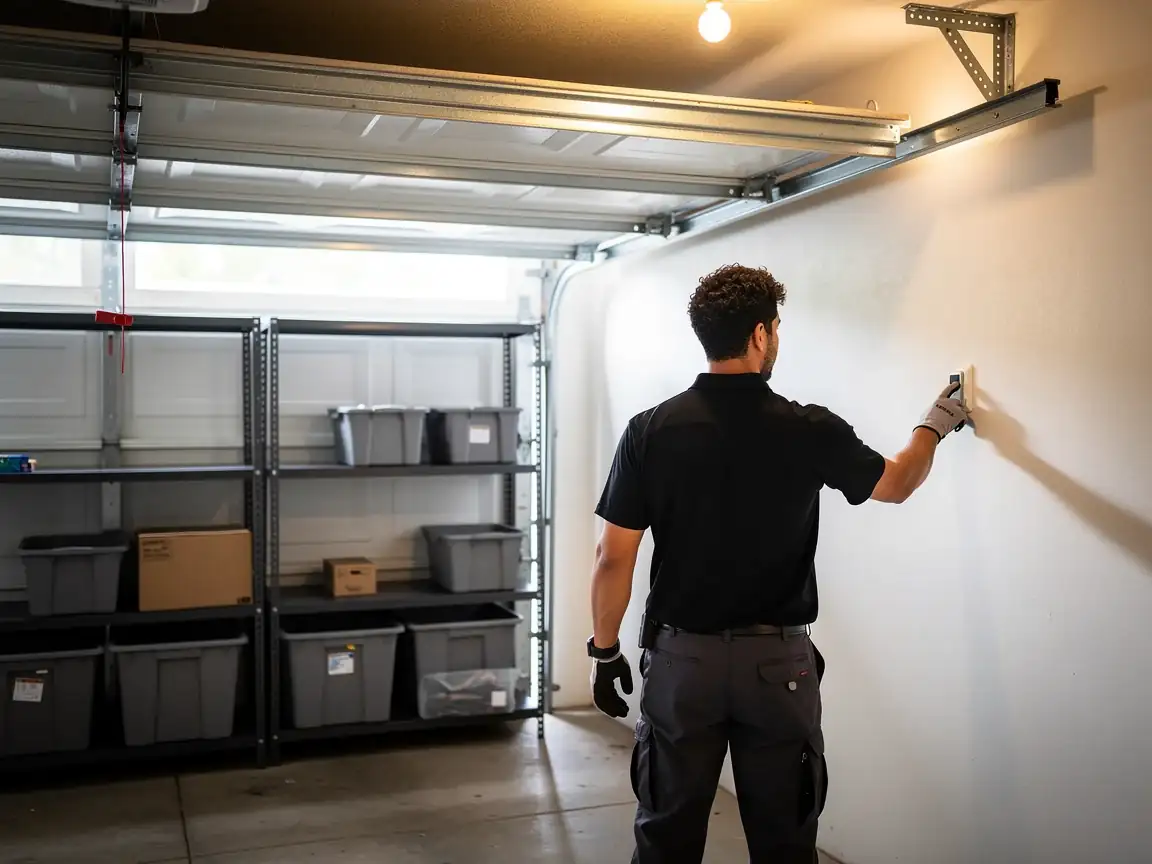
If the opener is the problem, we look at whether it was ever matched to the original track or bolted straight onto it without adjustment
Which is common on houses that have had one opener swap since the 1960s-70s build run most of this area falls into. We fix what's broken rather than replacing the whole unit by default - a full teardown only gets recommended when the track or frame itself has warped, which does happen in a cold-severe climate over fifty-plus years, but it's not the first assumption we make walking up to the door.
What You Are Seeing
A door that slams the last foot instead of lowering evenly usually means a torsion spring has lost tension - common on hardware original to a 1960s-70s build. A door that reverses partway up, or won't close past the halfway mark, is more often a sensor or track alignment issue, less tied to the house's age and more to a recent bump or a shifted bracket.
If the opener runs but the door doesn't move at all, check the drive gear or belt before assuming the motor's dead - that's the most common point of failure on an opener that's been running a decade or more in a cold-severe climate, where plastic gears get brittle. A door that's heavy to lift by hand, even with the opener disengaged, points to a spring that's lost most of its tension, and that's not a DIY fix regardless of how old the house is.